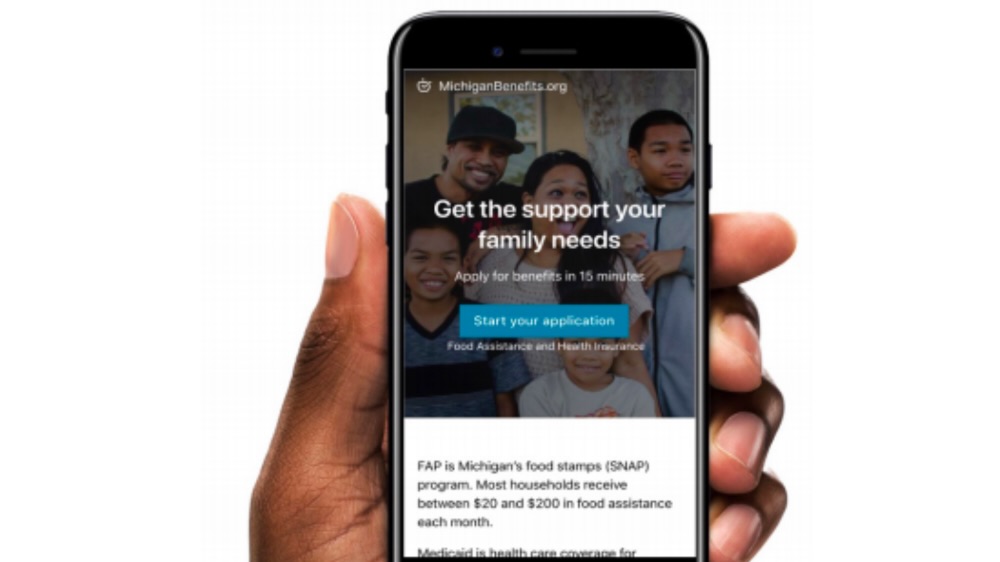
This presentation from Steph White, Cross Enrollment Coordinator at the Michigan Department of Health and Human Services offers an in-depth example on implementing cross enrollment with WIC and general tools for cross enrollment.
This report outlines critical actions states should take to maintain Medicaid coverage as the COVID-19 Public Health Emergency (PHE) concludes, aiming to prevent widespread loss of health insurance among eligible individuals.
Artificial intelligence promises exciting new opportunities for the government to make policy, deliver services and engage with residents. But government procurement practices need to adapt if we are to ensure that rapidly-evolving AI tools meet intended purposes, avoid bias, and minimize risks to people, organizations, and communities. This report lays out five distinct challenges related to procuring AI in government.
A workshop led by Elham Ali on integrating the principles of human-centered design and equity to Artificial Intelligence (AI) design, use, and evaluation.
Code for America helped expand GetCalFresh (a service that guides Californians through the SNAP application process and helps government deliver food assistance to people in need) from a small pilot into a statewide service. They also recently concluded a similar pilot in Michigan along with Civilla and the Michigan Department of Health and Human Services.
As they transition to providing more services online, there are ways governments can get creative working around talent shortages and entrenched bureaucracies.
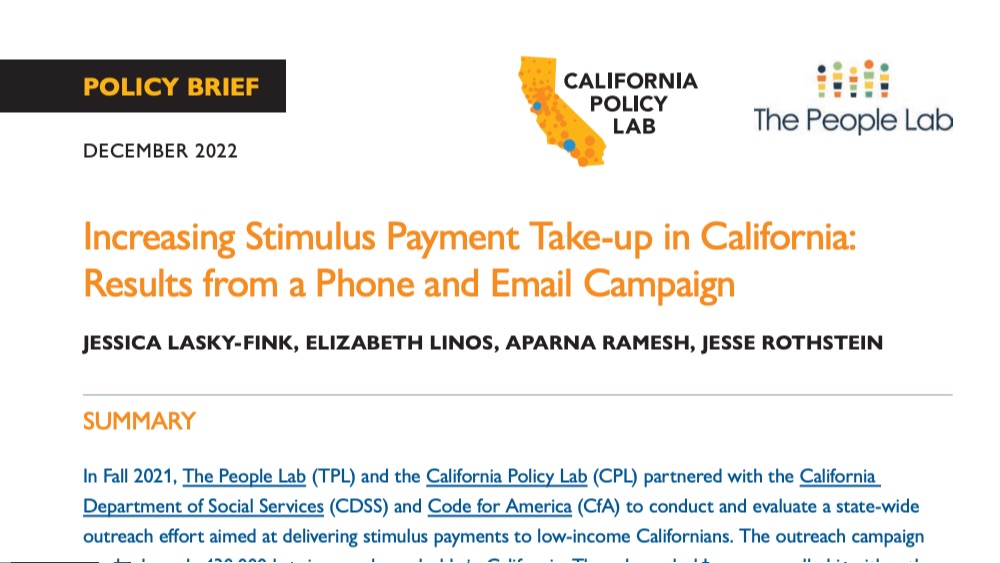
The Increasing Stimulus Payment Take-up in California report by the California Policy Lab examines barriers to accessing federal stimulus payments and provides strategies to increase take-up among eligible Californians, particularly low-income and non-filers.
We wrapped up Rules as Code Demo Day with Max Ghenis and Nikhil Woodruff, the founders of PolicyEngine. The PolicyEngine web app computes the impact of tax and benefit policy in the US and the UK. With PolicyEngine, anyone can freely calculate their taxes and benefits under current law and customizable policy reforms, and also estimate the society-wide impacts of those reforms. Policymakers and think tanks from across the political spectrum can analyze actual policy. PolicyEngine is built atop the open source OpenFisca US and UK microsimulation models and they are building an open unified data set utilizing data from the Policy Rules Database, Current Population Survey, Survey of Consumer Finances, Consumer Expenditures, tax records, and IRS Public Use File.
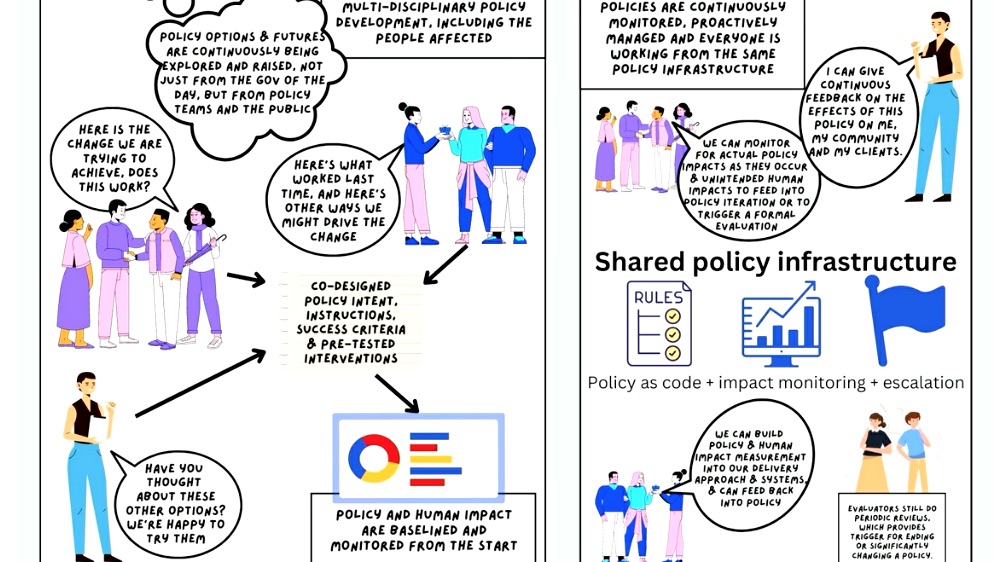
In this presentation, Pia Andrews explores how open source legislation as code can be a public utility to increase transparency, and enable better implementation and testing of government systems.
This brief analyzes the current state of federal and state government communication around benefits eligibility rules and policy and how these documents are being tracked and adapted into code by external organizations. This work includes comparisons between coded examples of policy and potential options for standardizing code based on established and emerging data standards, tools, and frameworks.