This article details the collaboration between Miami-Dade County, community partners, and technologists to enhance climate resilience by allowing residents to report and access information on extreme heat conditions affecting their commutes.
An event recap from one of FormFest 2024's breakout sessions featuring speakers from the Canadian Digital Service and the National Head Start Association.
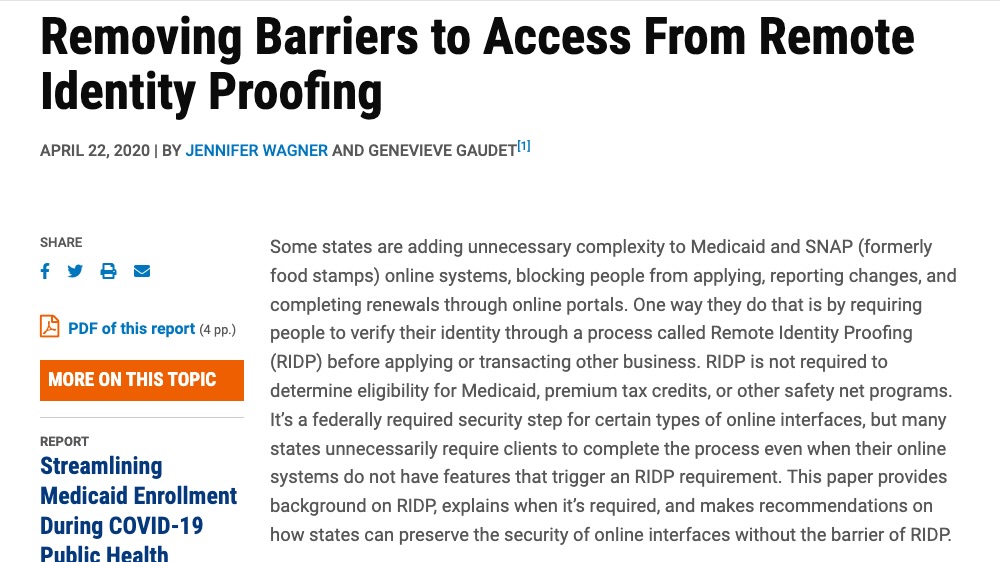
This report offers best practices for public agencies implementing digital identity verification, emphasizing privacy, equity, and security in the delivery of government services.
This explores how tax credit systems can be redesigned to better meet the needs of families, especially those facing systemic barriers to filing and receiving benefits.
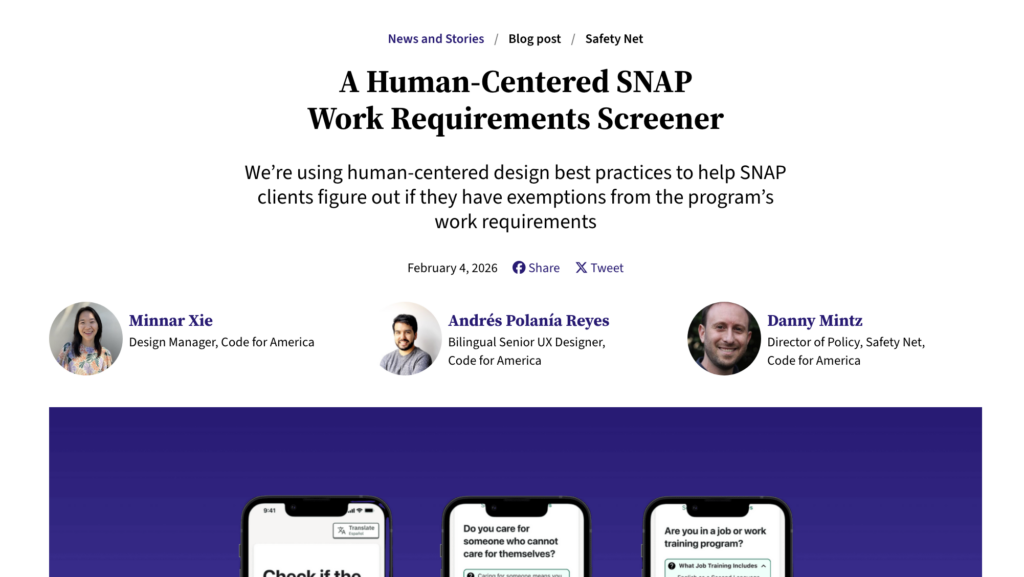
This blog post details the development of a human-centered screening tool designed to help SNAP clients identify and report exemptions from work requirements.
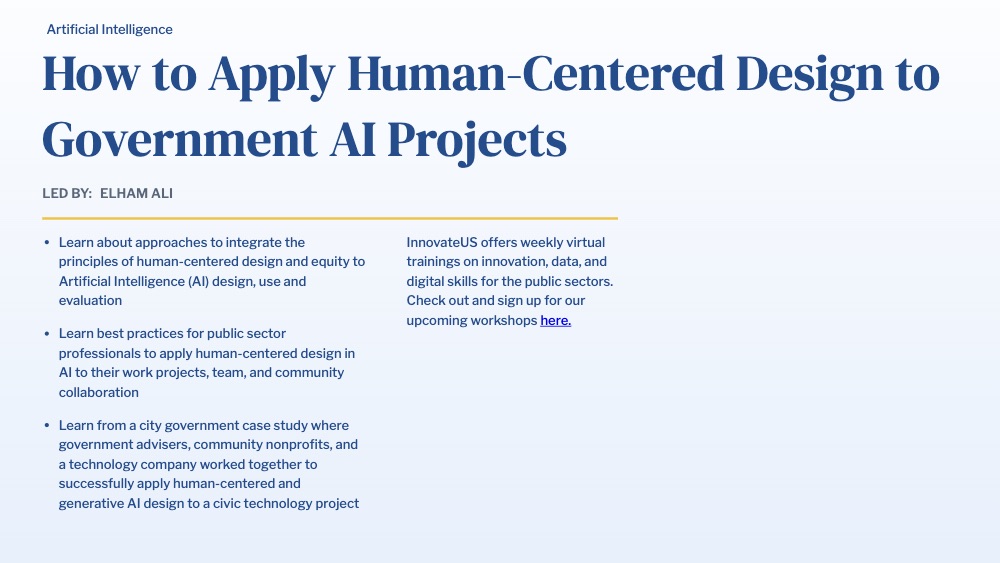
A workshop led by Elham Ali on integrating the principles of human-centered design and equity to Artificial Intelligence (AI) design, use, and evaluation.
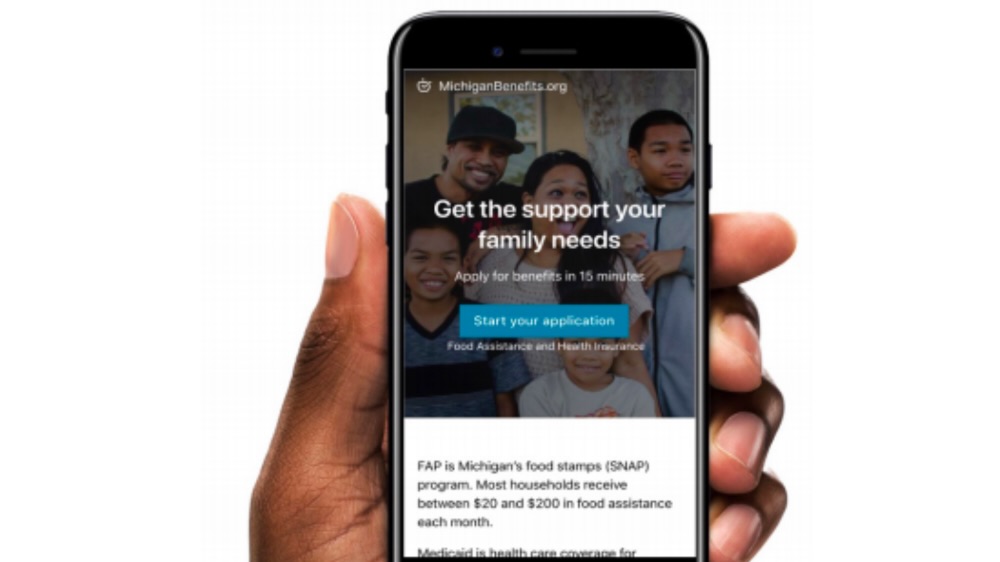
Code for America helped expand GetCalFresh (a service that guides Californians through the SNAP application process and helps government deliver food assistance to people in need) from a small pilot into a statewide service. They also recently concluded a similar pilot in Michigan along with Civilla and the Michigan Department of Health and Human Services.
As they transition to providing more services online, there are ways governments can get creative working around talent shortages and entrenched bureaucracies.