Guidance for City of Long Beach, CA staff on how to uplift community voices through user research to create services that are accessible to all City residents.
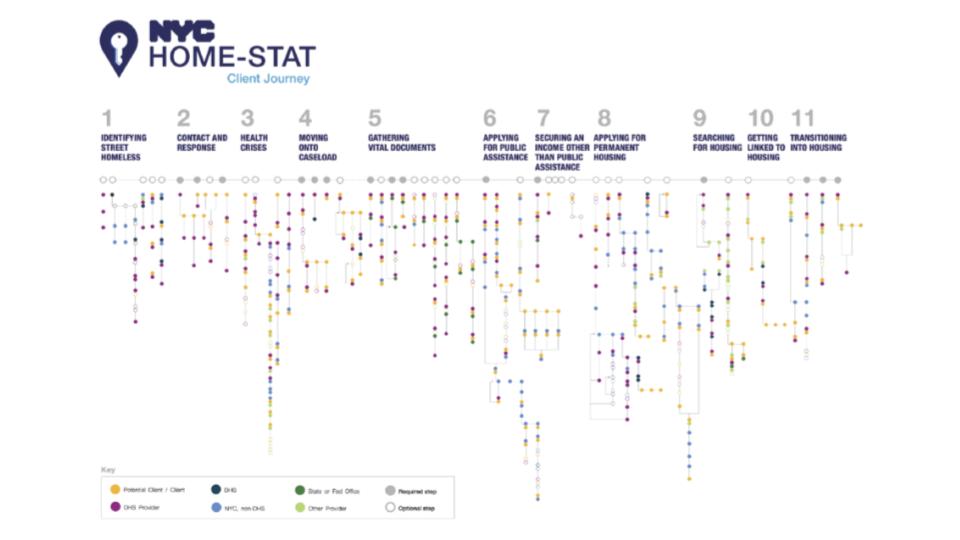
HOME-STAT partners existing homeless response and prevention programs with new innovations designed to better identify, engage, and transition homeless New Yorkers to appropriate services and, ultimately, permanent housing.
The Policy2Code Prototyping Challenge explored utilizing generative AI technology to translate U.S. government policies for public benefits into plain language and code, culminating in a Demo Day where twelve teams showcased their projects for feedback and evaluation.
The City of San José’s Citywide Data Strategy sets a three-year roadmap to unify data practices across departments, strengthen equity and transparency, and leverage data and AI to improve public services
The Tempe City Council set five strategic priorities for the community. The Strategic Management and Innovation Office is working with every department to find measurements to ensure that our city’s actions reflect these priorities.
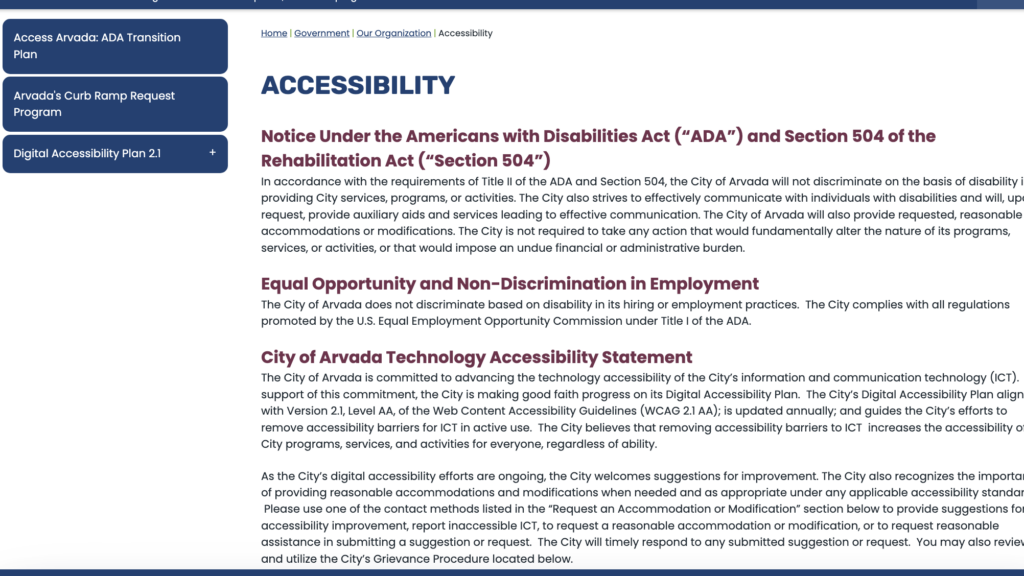
This accessibility webpage outlines the City of Arvada’s commitment to making its digital services, programs, and information accessible to people with disabilities.
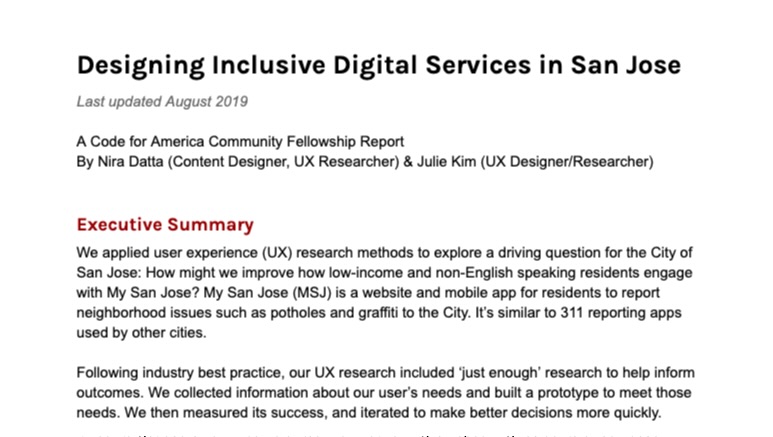
Applying UX research methods, the City of San Jose worked to improve how low-income and non-English speaking residents engaged with My San Jose, a website and mobile app for residents to report neighborhood issues to cities. They used a Spanish and Vietnamese translator to conduct interviews with target users, then detailed major findings and corresponding recommendations in this report.