This session from FormFest 2024 focused on how governments are scaling their SNAP benefits programs, with Maryland’s improved integrated benefits application and the Office of Evaluation Sciences’ changes to questions on the SNAP application.
This session from FormFest 2024 focused on how to help people get the assistance they need from the U.S. Department of Health and Human Services’ work on the Low Income Home Energy Assistance Program (LIHEAP) and the Maryland Social Services Administration’s work to improve welfare support for kinship caregivers.
This article examines how the City of Long Beach, California, collaborated with TOPC to develop a digital tool aimed at enhancing community engagement and expanding urban tree canopy coverage.
This impact report showcases how the city used technology to expand digital equity, modernize services, and responsibly deploy emerging tech to better serve New Yorkers.
New York City Office of Office of Technology and Innovation (OTI)
This roadmap outlines NYC’s strategy to achieve digital equity by expanding broadband access, improving digital literacy, and fostering cross-agency coordination.
A report assessing City of San José's AI governance practices against the NIST AI Risk Management Framework, identifying gaps, and outlining recommendations to strengthen AI oversight and accountability.
This 2015 project presentation outlines the vision, research, and product requirements for DAHLIA, San Francisco’s online platform to centralize and simplify affordable housing searches and applications.
San Francisco Mayor's Office of Housing and Community Development
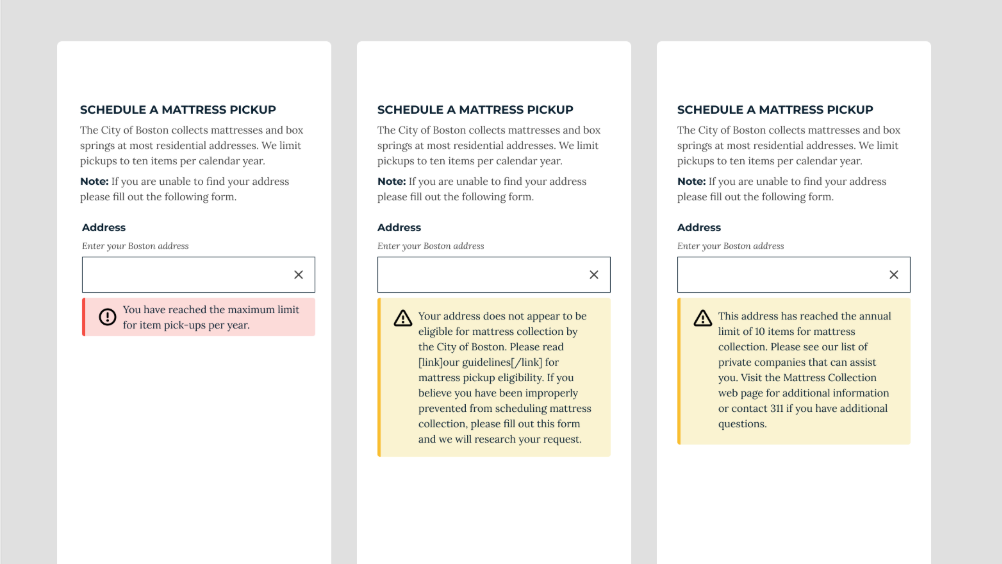
These Figma artifacts illustrate the end-to-end design of Boston’s digital mattress recycling service, including resident scheduling flows, mobile interfaces, alerts, and design system components.
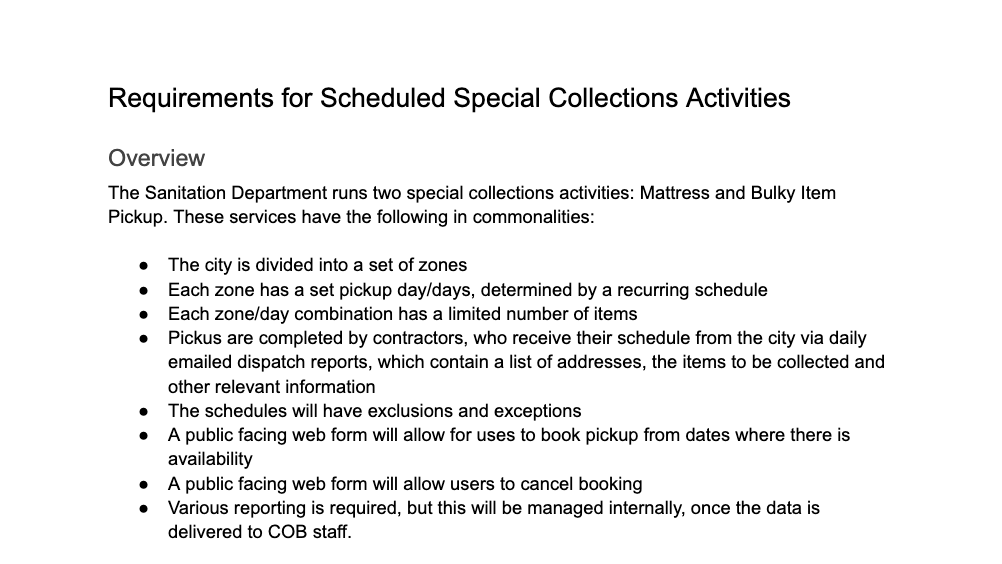
This exploratory brief outlines the City of Boston’s phased plan to build a digital system for scheduling, managing, and reporting mattress and bulky item recycling pickups.
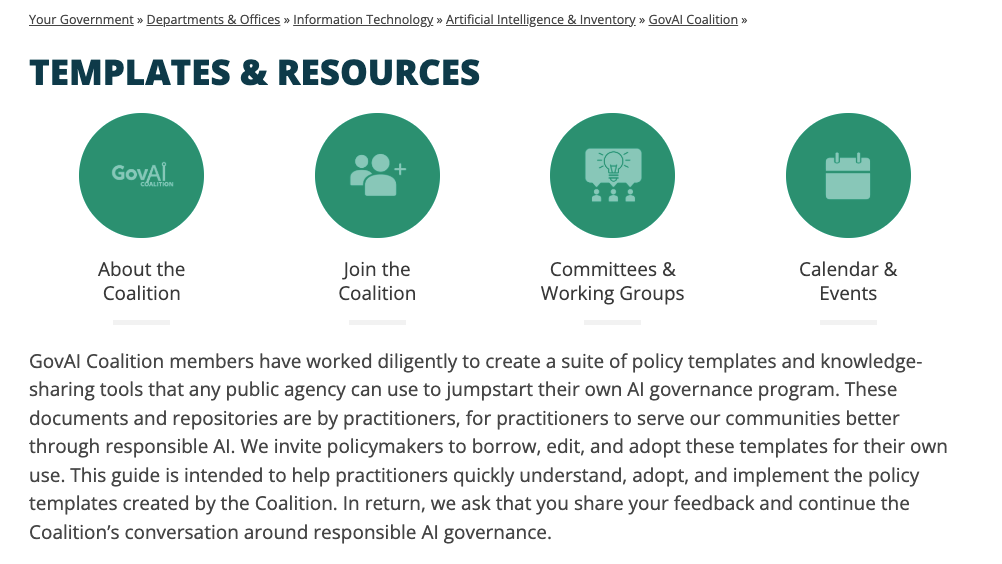
A publicly-available suite of policy templates and knowledge-sharing tools offered by the GovAI Coalition (via the City of San José) to help public agencies launch or refine responsible AI governance programs.