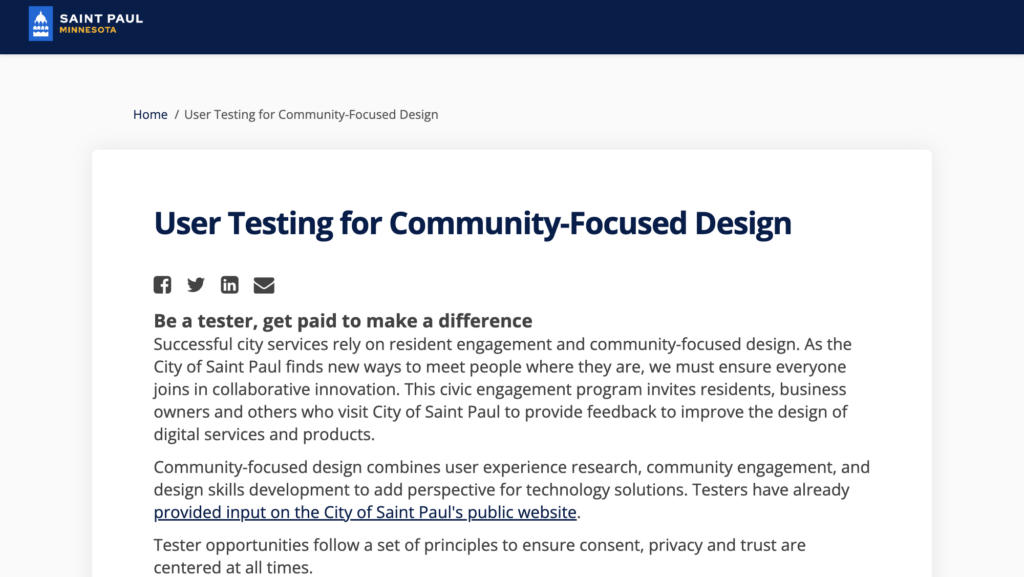
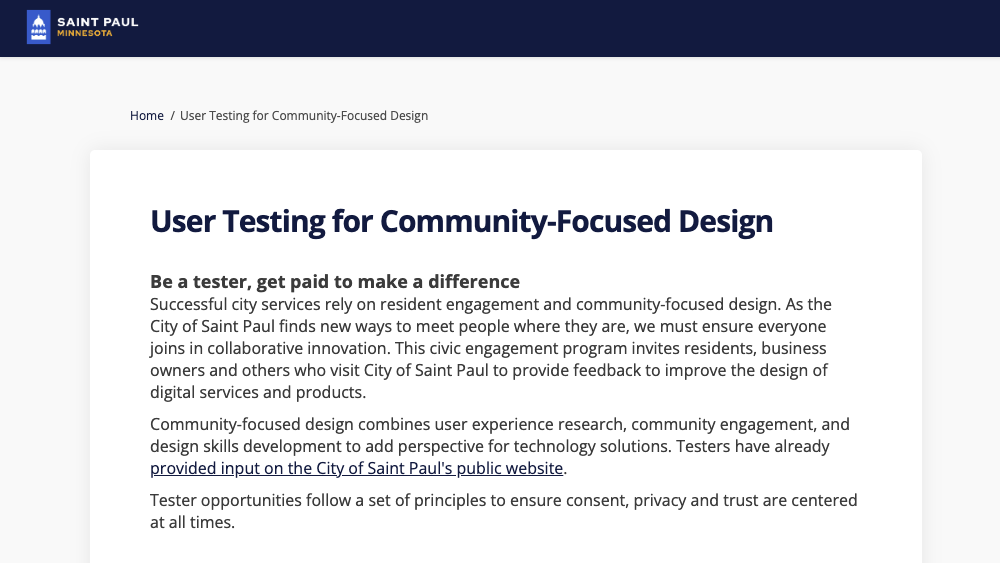
City of Saint Paul's website for community members to sign up to participate in paid research opportunities in order to test and provide feedback on the design of digital services and products.
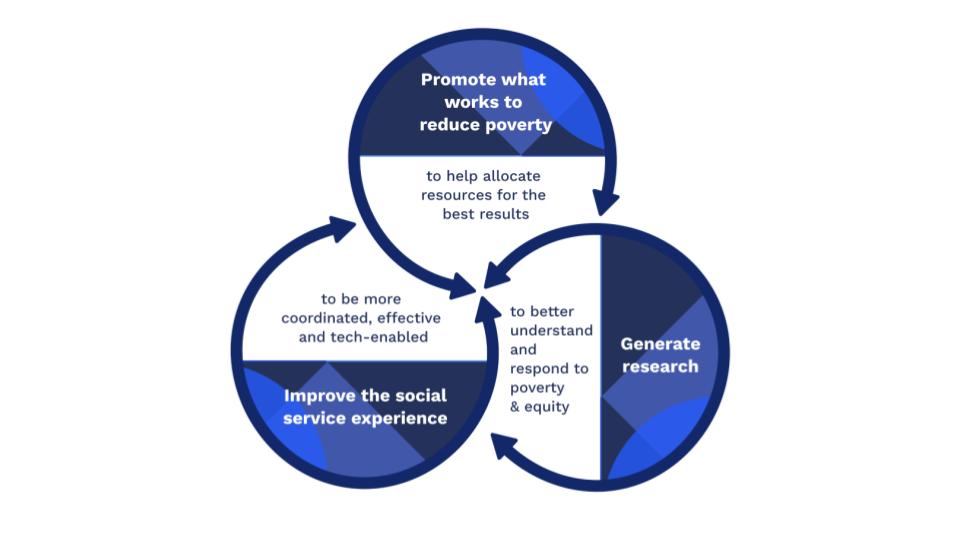
This retrospective looks at the way the NYCOpportunity initiative worked across City government, partnering with agencies to initiate new approaches and enhance city practices. It also highlights key areas of focus for the NYC Opportunity team between 2014 and 2021.
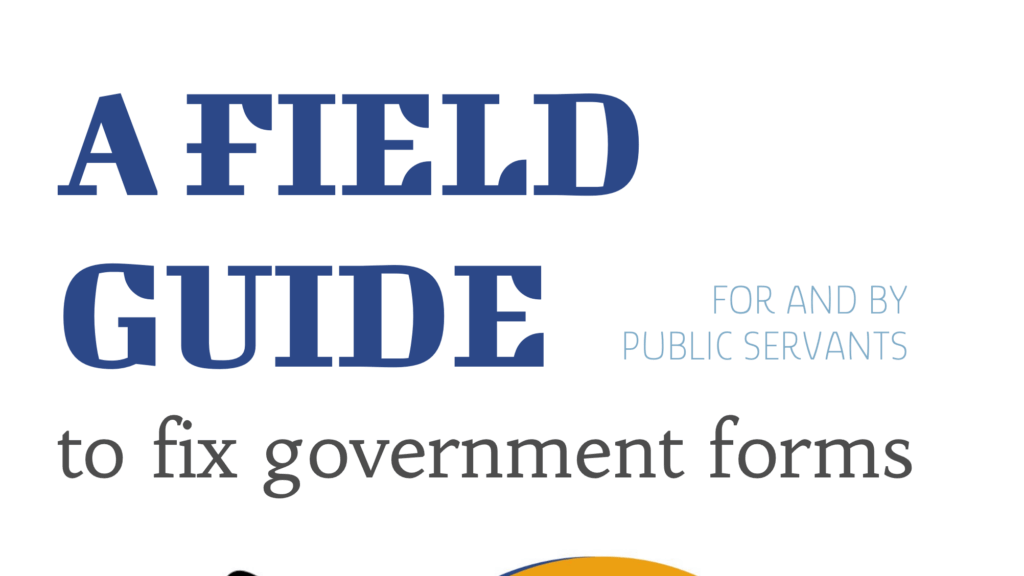
A practical, research-based handbook from The Lab @ DC that teaches public servants how to redesign confusing government forms through user-centered, evidence-based design methods.
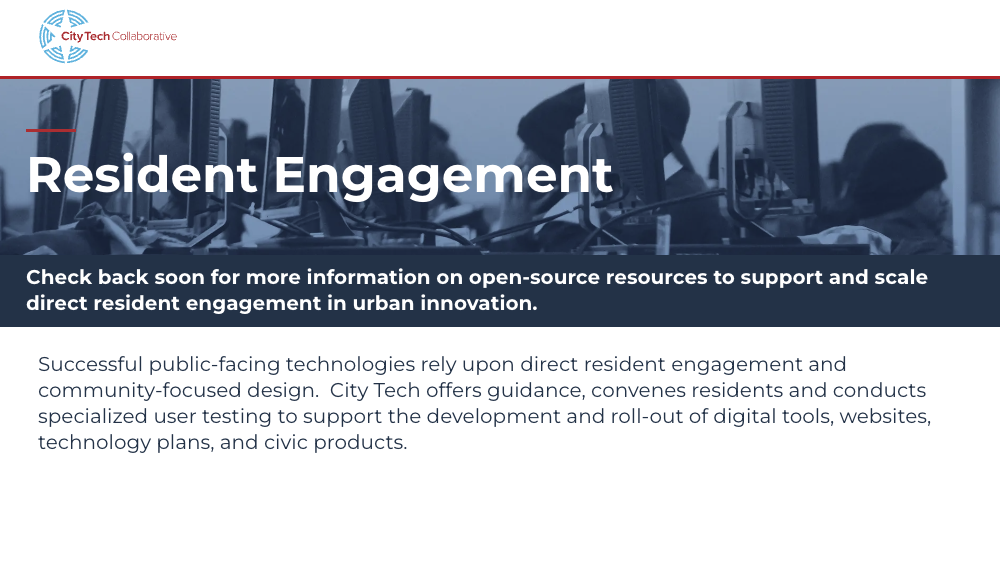
Articles and resources from the Resident Engagement section of the City Tech's Civic User Testing group (CUTgroup) website. CUTgroup was a 1,600+ member civic engagement program that invited Chicago residents to contribute to emerging technology while providing public, private, and social sector partners with feedback to improve product design and deployment.
The SDCI User Research Participant Compensation Policy establishes guidelines for providing honoraria to user research participants, ensuring equitable, ethical, and inclusive engagement in SDCI’s UX research.
Seattle Department of Construction & Inspections (SDCI)
DSN Spotlights are short-form project profiles that feature exciting work happening across our network of digital government practitioners. Spotlights celebrate our members’ stories, lift up actionable takeaways for other practitioners, and put the examples we host in the Digital Government Hub in context.
This case study explores how the City of Akron developed a community tree map to engage residents in urban forestry efforts, enabling them to identify, grow, and care for trees in their neighborhoods.
A practical toolkit that provides plain-language writing resources, checklists, and guidance to help government and public-service teams write content that is clear, accessible, and centered on community needs.