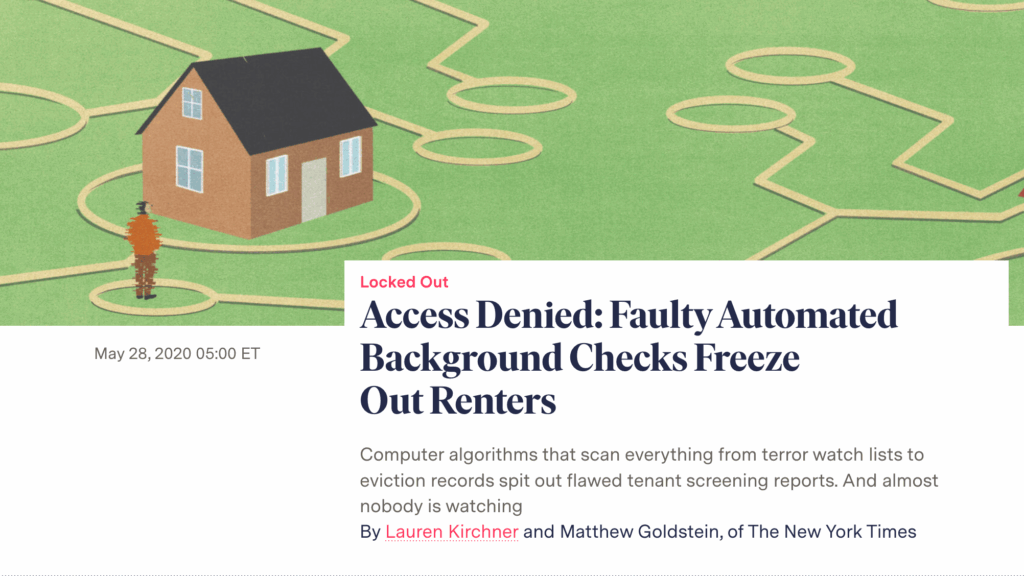
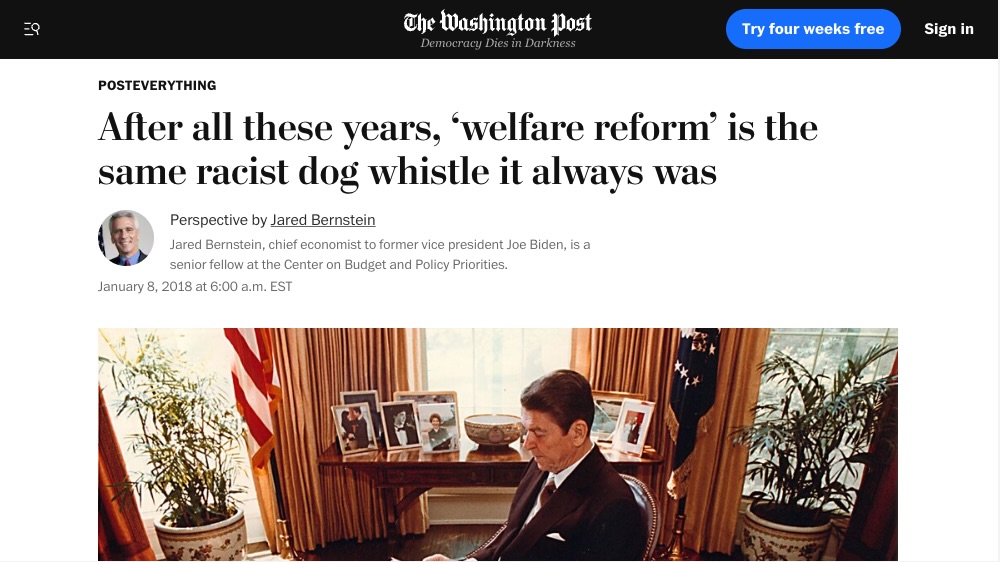
This reporting explores how algorithms used to screen prospective tenants, including those waiting for public housing, can block renters from housing based on faulty information.
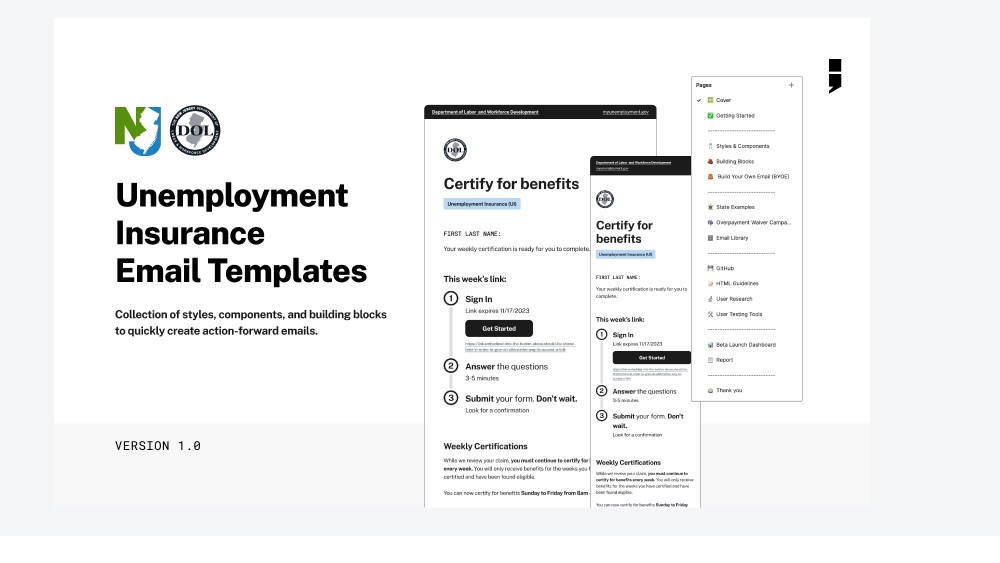
This kit contains a collection of styles, components, and building blocks to quickly create action-forward emails for Unemployment Insurance programs within the U.S.
This article reviews two examples of how Nava has used open-source technologies to bring human-centered testing practices to government services software.
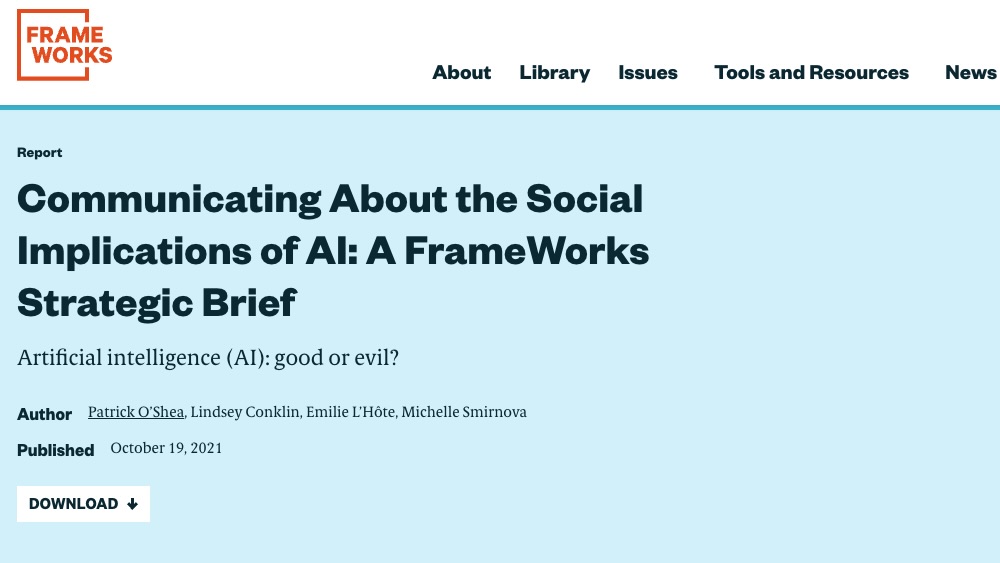
Research identified five key obstacles that researchers, activists, and advocates face in efforts to open critical public conversations about AI’s relationship with inequity and advance needed policies.
Inclusive design means making design choices that take into account personal identifiers like ability, race, economic status, language, age, and gender. This resource walks folks through an introduction to inclusive design, focusing on accessibility and equity.
The pandemic has shown how difficult it can be for the US to succeed with major technology projects. Various leading design thinkers discuss strategies for building more efficient and effective government technology.
Building modular, open-source, human-centered software is necessary to create equitable government services fit for the digital age. Nava emphasizes addressing large scale digital service challenges by building and releasing small, modular software components that are loosely-coupled by well-defined APIs. This enables agencies to quickly and conistently deliver services that help people immediately, whilst also building a flexible foundation for long-term technical evolution.
This guide by Cyd Harrell serves as a comprehensive manual for technologists aiming to engage effectively in public sector projects, offering practical advice on navigating government partnerships and driving impactful change.