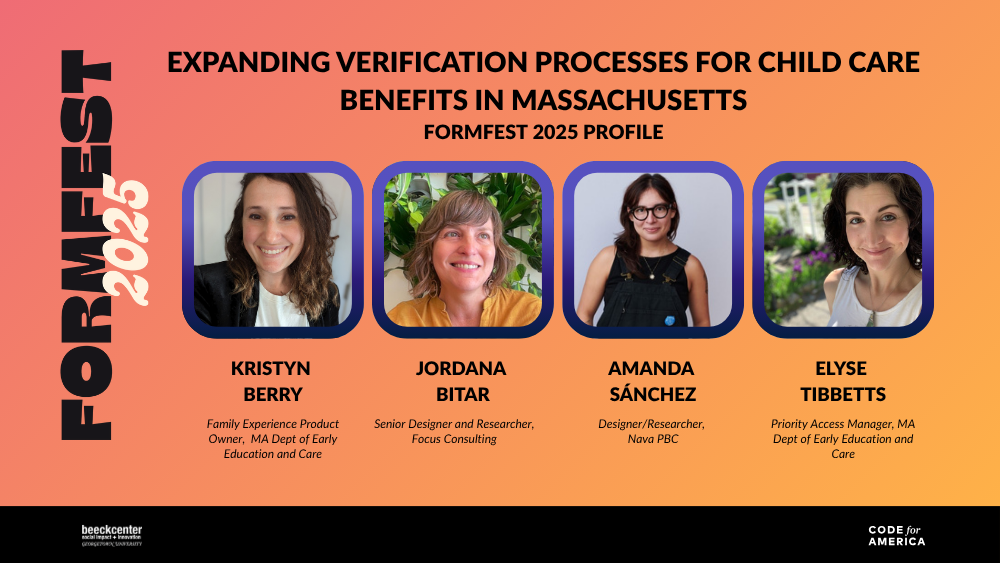
This FormFest profile examines how Massachusetts’ Department of Early Education and Care is modernizing its child care benefits system through human-centered design, making verification and application processes simpler, more compassionate, and more efficient for families and staff.
This publication explains the fundamentals of state IEE systems—including the technology, opportunities, risks, and stakeholders involved. It is a resource for state officials, advocates, funders, and tech partners working to implement these systems.
A11y Jam session focused on how local governments are advancing DOJ accessibility compliance using practical, resource-conscious strategies across high-impact digital services.
A summary of the initial CMS guidance (CMCS informational bulletin) on how states should implement Medicaid work reporting requirements under H.R. 1, clarifying high-level expectations and key technical points.
The Long Beach Tree Map shows trees throughout the Long Beach region which centralizes, organizes, and visualizes information regarding where and how many trees as well as their type.
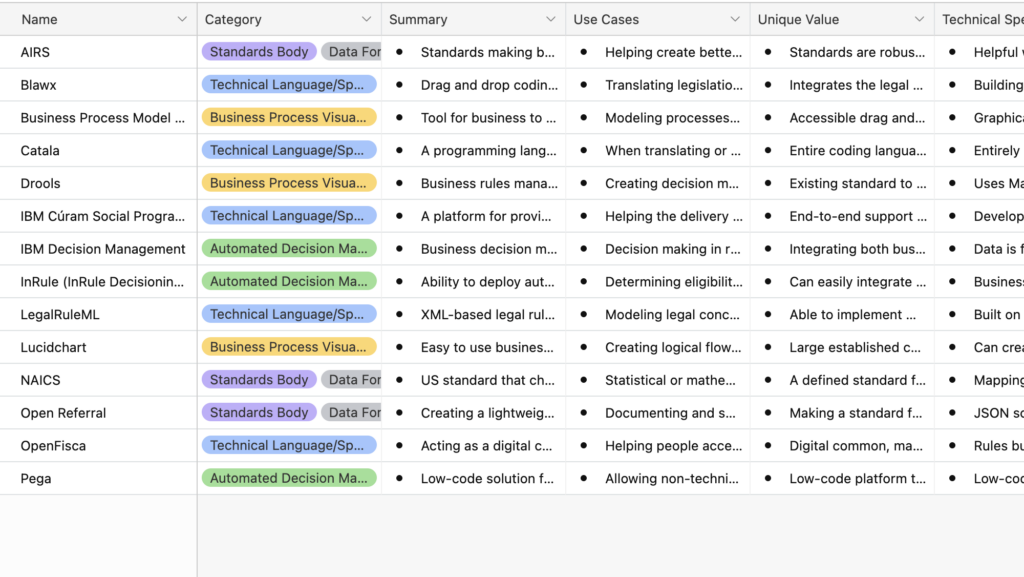
There are frameworks available that could inform the standardization of communicating rules as code for U.S. public benefits programs. The Airtable communicates the differences between the frameworks and tools. Each entry is tagged with different categories that identify the type of framework or tool it is.
This page includes data and observations about authentication and identity proofing steps specifically for online applications that include child care applications.
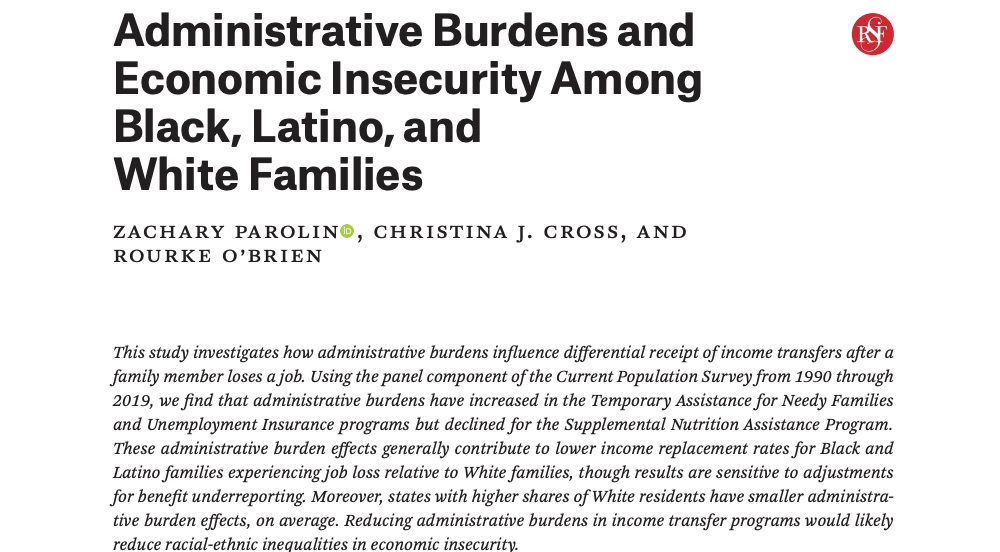
This study investigates how administrative burdens influence differential receipt of income transfers after a family member loses a job, looking at Unemployment Insurance, Temporary Assistance for Needy Families, and the Supplemental Nutrition Assistance Program.
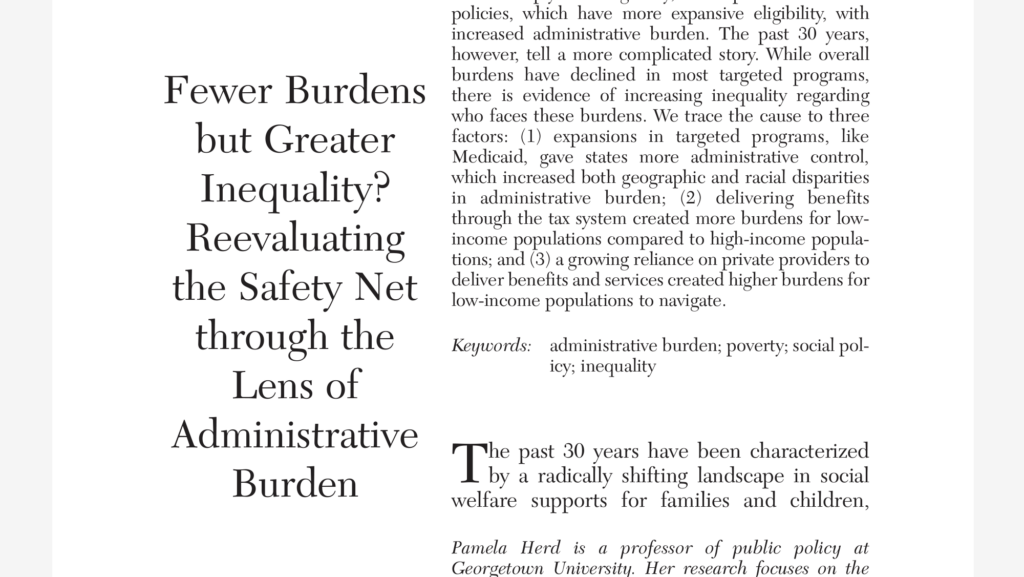
This article examines how administrative burdens in U.S. social safety net programs have changed over the past 30 years, showing that while average burdens have declined, inequality in who faces these burdens has grown.
The ANNALS of the American Academy of Political and Social Science