An event recap from one of FormFest 2024's breakout sessions featuring speakers from the state of Maryland's Department of Social Services and the U.S. Department of Health and Human Services (HHS).
An event recap from one of FormFest 2024's breakout sessions featuring speakers from Digital Service Teams across the United States and the Department of Veteran Affairs.
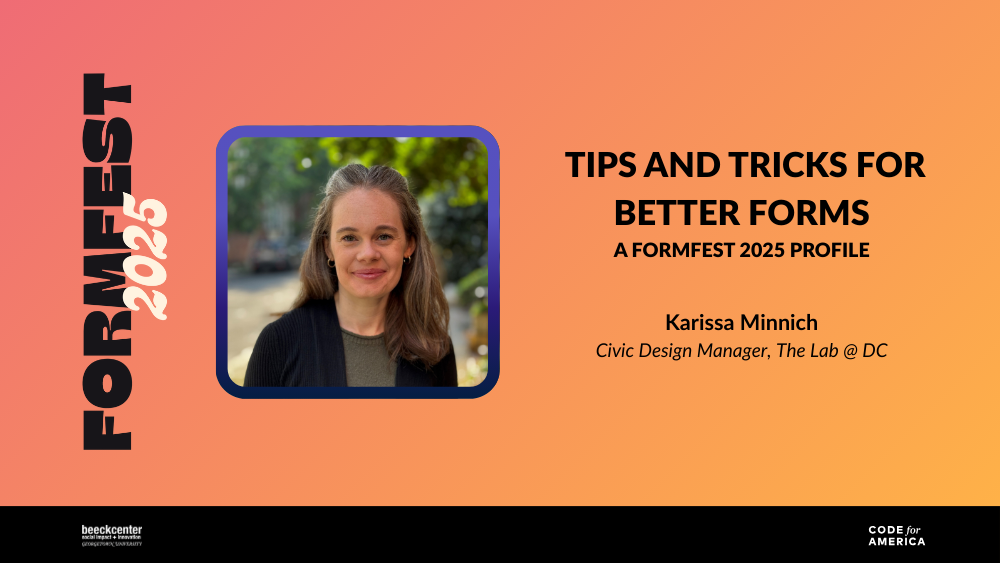
A profile on FormFest speaker Karissa Minnich, a civic design manager with The Lab @ DC, whose innovative approach to redesigning government forms has transformed paperwork into a model of human-centered design.
The Digital Service Network (DSN) spoke with three staff members from the Digital Transformation Team in Montgomery County Public LIbraries—Maddie Schellhardt, Raymond Bryson, and Emily Lamancusa, to learn more about the county's efforts to advance digital service delivery and inclusion
DSN Spotlights are short-form project profiles that feature exciting work happening across our network of digital government practitioners. Spotlights celebrate our members’ stories, lift up actionable takeaways for other practitioners, and put the resources + examples we host in the Digital Government Hub in context.
DSN Spotlights are short-form project profiles that feature exciting work happening across our network of digital government practitioners. Spotlights celebrate our members’ stories, lift up actionable takeaways for other practitioners, and put the resources + examples we host in the Digital Government Hub in context.
Drawing on the Beeck Center’s research on government, nonprofit, academic, and private sector organizations that are working to improve access to safety net benefits, this report highlights best practices for creating accessible benefits content.
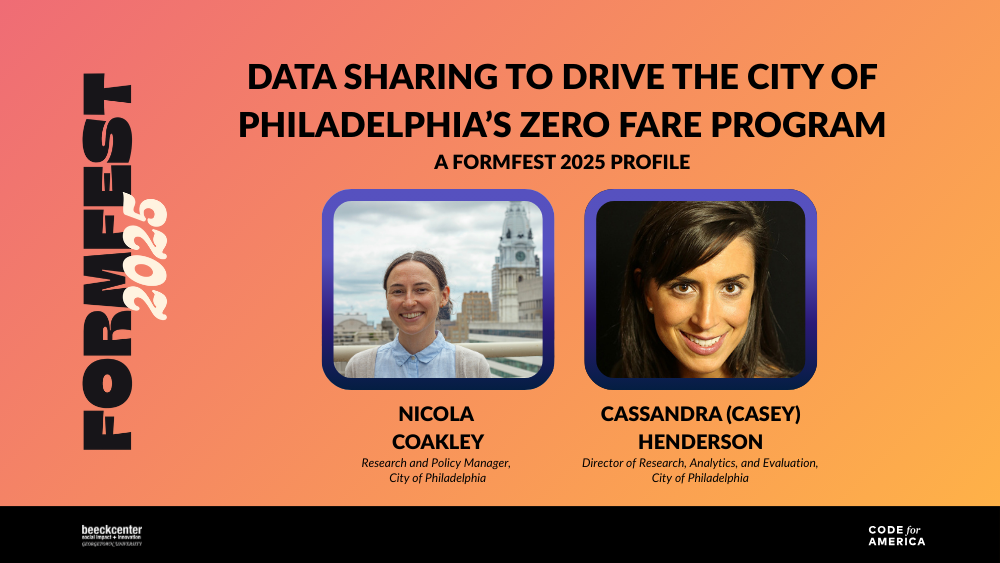
This FormFest profile explores how Philadelphia leveraged cross-department data sharing to launch its Zero Fare program, auto-enrolling eligible residents in unlimited transit benefits while tackling the challenge of outreach and trust-building to deliver passes effectively.