An event recap from one of FormFest 2024's closing main stage session featuring speakers from the City of Portland, Oregon and New York City, New York.
An event recap from one of FormFest 2024's breakout sessions featuring speakers from the Canadian Digital Service and the National Head Start Association.
Explore The State of State Digital Transformation—your gateway to the Beeck Center’s landscape research into how states are modernizing government operations and services. This interactive map gives public servants, policymakers, practitioners, and researchers a faster, clearer way to glean insights from our research into the policies, teams, tools, and tactics shaping state digital transformation today.
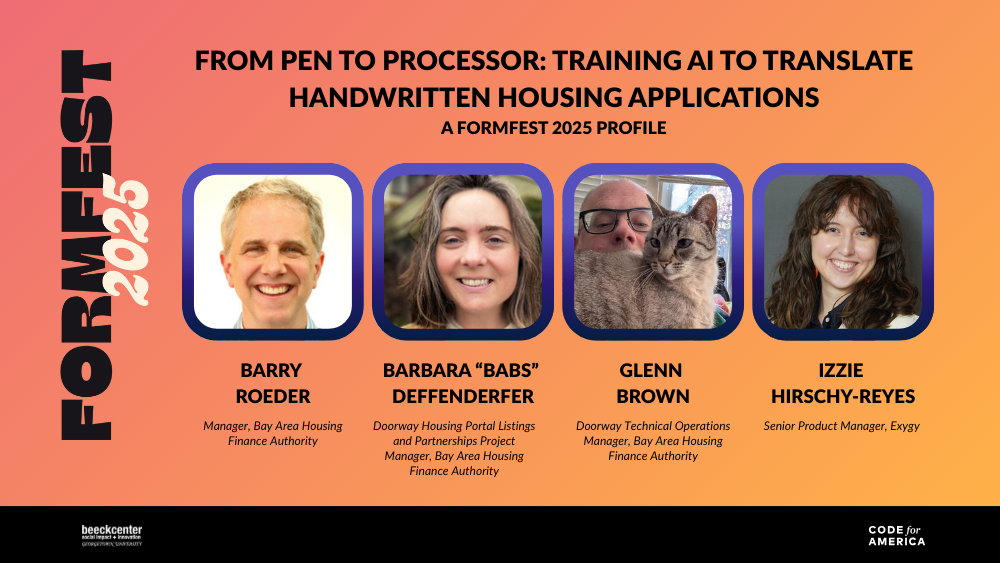
A profile on FormFest spearker’s Barry Roeder, Barabara Deffenderfer, Glenn Brown, and Izzie Hirschy-Reyes highlighting how the Bay Area Housing Finance Authority and its partners use AI and human-centered design to streamline paper housing applications.
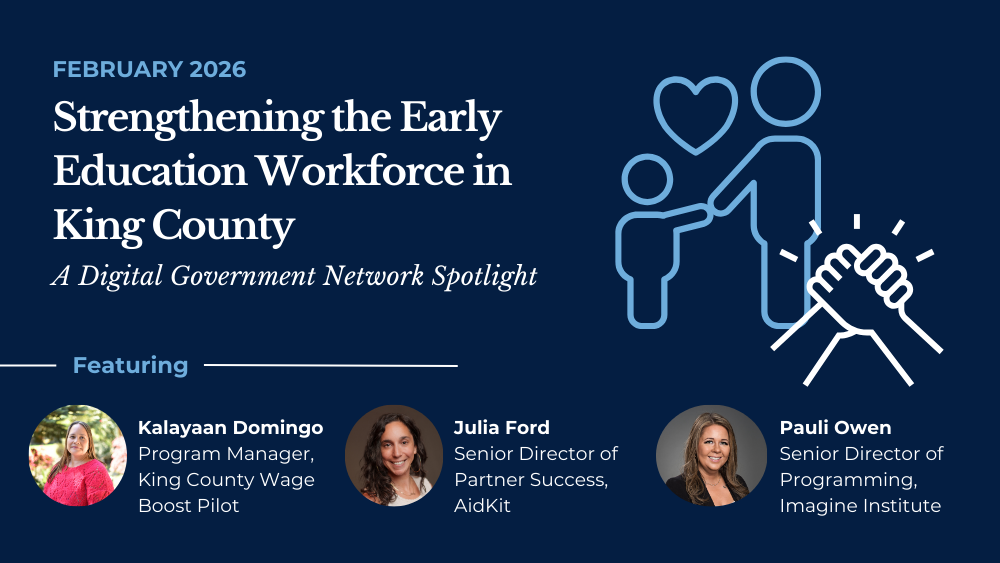
DGN Spotlights are short-form project profiles that feature exciting work happening across our network of digital government practitioners. Spotlights celebrate our members’ stories, lift up actionable takeaways for other practitioners, and put the resources + examples we host in the Digital Government Hub in context.
DGN Spotlights are short-form project profiles that feature exciting work happening across our network of digital government practitioners. Spotlights celebrate our members’ stories, lift up actionable takeaways for other practitioners, and put the resources + examples we host in the Digital Government Hub in context.
Recapping the work and achievements of the Digital Benefits Network (DBN), Digital Service Network (DSN), and the State Chief Data Officers Network (CDO) in 2025.
Practitioner Picks is a quarterly series designed to add fresh resources to the Digital Government Hub’s library, helping people improve government digital service delivery. Each issue spotlights resources chosen by practitioners in a specific service delivery area along with their insights on why these picks are valuable additions to the Hub.
This session from FormFest 2024 walked attendees through some of the major changes AI is bringing to form design. Learn about the National Head Start Association’s use of AI to reduce administrative burden and the Canadian Digital Service’s tips for protecting government applications systems from AI.
The Digital Service Network worked closely with stakeholders from the Texas Education Academy (TEA) to develop resources for a structured approach in helping identify and better understand core challenges in government digital delivery.