On May 19, 2023, the Digital Benefits Network published a new, open dataset documenting authentication and identity proofing requirements across online SNAP, WIC, TANF, Medicaid, child care (CCAP)applications, and unemployment insurance applications. This page includes data and observations about authentication and identity proofing steps specifically for online unemployment insurance applications.
This resource describes how different agencies have updated their systems to increase online and mobile access to benefits information and applications, including using text messages to share benefits information with residents.
A11y Jam session focused on how local governments are advancing DOJ accessibility compliance using practical, resource-conscious strategies across high-impact digital services.
This guide is a practical introduction to Digital Service Teams (DSTs) for state and local governments. It is designed to help leaders interested in standing up new government DSTs understand what they are, why they exist, and how they are structured, staffed, funded, and more.
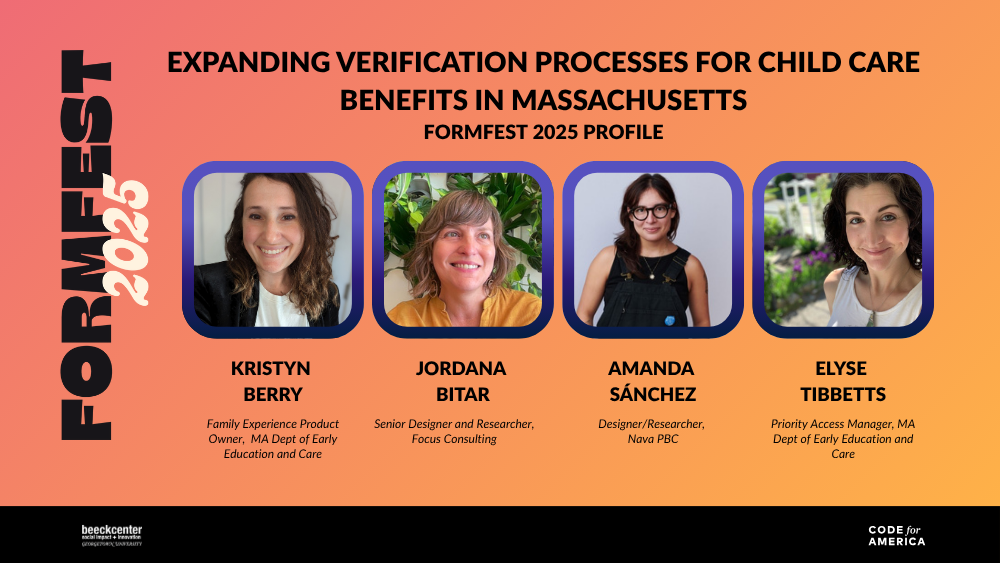
This FormFest profile examines how Massachusetts’ Department of Early Education and Care is modernizing its child care benefits system through human-centered design, making verification and application processes simpler, more compassionate, and more efficient for families and staff.
The DBN’s Rules as Code Community of Practice (RaC CoP) creates a shared learning and exchange space for people working on public benefits eligibility and enrollment systems — and specifically people tackling the issue of how policy becomes software code.
Tech Talent Project has partnered with American Enterprise Institute, the Beeck Center for Social Impact + Innovation at Georgetown University and New America to release a series of memos to help states make quick, meaningful progress in building technical capacity while avoiding past pitfalls.