This report examines how state governments organize and manage human services programs, analyzing various agency structures and their impact on service delivery and coordination with the health care sector.
This report explores how despite unresolved concerns, an audit-centered algorithmic accountability approach is being rapidly mainstreamed into voluntary frameworks and regulations.
This webpage links to materials ASPE has prepared as it leads work on how federal agencies and programs can meaningfully and effectively engage people with lived experience.
Office of the Assistant Secretary for Planning and Evaluation (ASPE)
This report puts forth an anti-racist reimagining of Medicaid and CHIP that actively reckons with the racist history of the Medicaid program and offers principles and recommendations that capitalize on the transformative potential of the programs. The principles center the voices and agency of program participants and prioritize direct community involvement at all stages of the policy process.
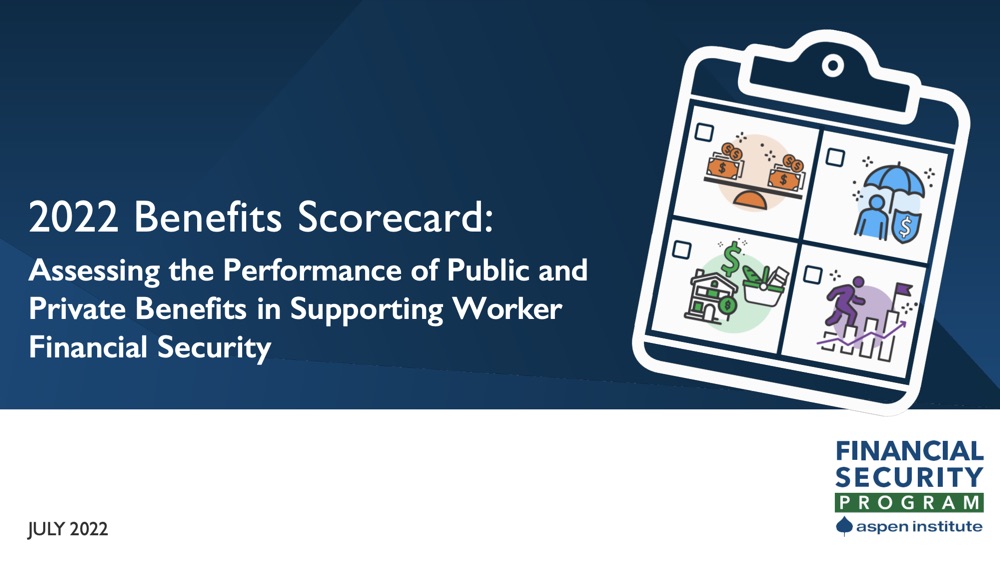
This resource allows policymakers, employers, benefits providers, and researchers assess benefits performance for constituents and identify opportunities in market and policy innovation to ensure equitable benefits distribution.
This Code for America article discusses how tax filing can be a powerful tool for economic justice, highlighting efforts to make the tax system more accessible and equitable for low-income individuals.
Code for America CEO introduces the Safety Net Innovation Lab in a TED Talk, their initiative to work with state governments to reimagine and rebuild delivery of accessible and equitable benefits. This article also includes the video of Renteria’s talk and a transcript.
This study examines public attitudes toward balancing equity and efficiency in algorithmic resource allocation, using online advertising for SNAP enrollment as a case study.
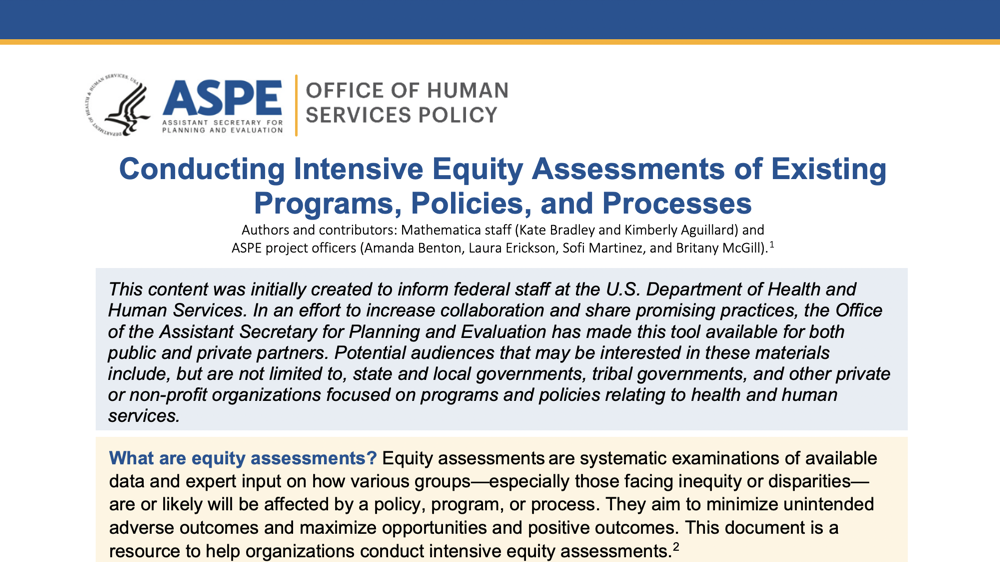
Initially created to inform federal staff at the U.S. Department of Health and Human Services, this tool describes how to conduct intensive equity assessments of existing programs, policies, and processes. It may be useful for state and local governments, tribal governments, and other private or non-profit organizations focused on programs and policies relating to health and human services.
Office of the Assistant Secretary for Planning and Evaluation (ASPE)
This guide touches on everything from Code for America’s core research philosophy, to our approach to ethics and trauma-informed research, to specific research methods. It also includes plenty of practical tips on planning and executing research, as well as how to synthesize your findings into action.