The U.S. Digital Response collaborated with a state workforce agency to develop a multilingual, user-friendly system for retroactive Pandemic Unemployment Assistance (PUA) applications, enhancing claimant comprehension and reducing administrative strain.
Technology that automates different processes can save time for caseworkers and constituents, but it can also significantly reduce the transparency of government operations. This paper describes how Pennsylvania advocates addressed the low rate of automated Medicaid renewals.
This report highlights lessons learned from improving economic stability and well-being outcomes for young parent families, focusing on interagency collaboration, community engagement, data-driven improvement, and aligned services to guide future efforts.
The Digital Service Network (DSN) spoke with Chief Digital Officer (CDO) Julia Gutiérrez of the Digital Services (DS) Team in the Department of Innovation and Technology (DoIT) and Chief Mariangely Solís Cervera of Boston’s Equity and Inclusion Cabinet.
A profile on FormFest speakers Sarah Rodriguez, Emily Lippolis, and Verenice Ramirez, featuring stories about their motivations for working on public sector form innovation.
Michigan's UIA director, Julia Dale, is leading the agency through transition by prioritizing lived experience, hope, grit, and values. Virginia's SNAP Program Manager, Michele Thomas, highlighted the success of Sun Bucks, a summer EBT child nutrition program that fed over 700,000 kids in its first year.
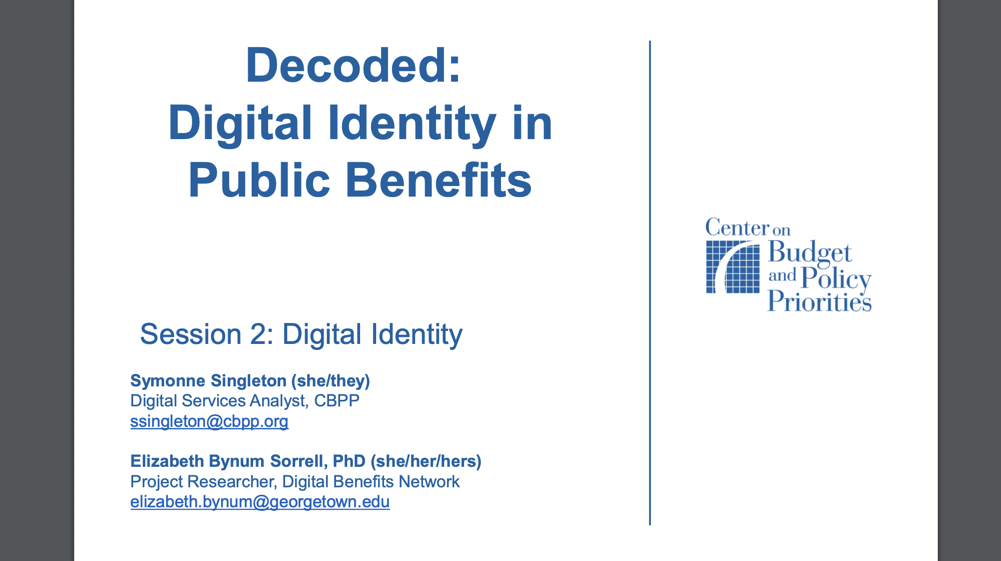
In 2024, the Center on Budget and Policy Priorities and Digital Benefits Network led a workshop to explore key terms related to digital identity, and provide ecosystem-level context on how authentication and identity proofing may show up in the online benefits experience and impact clients. This resource links to the presentation slides.