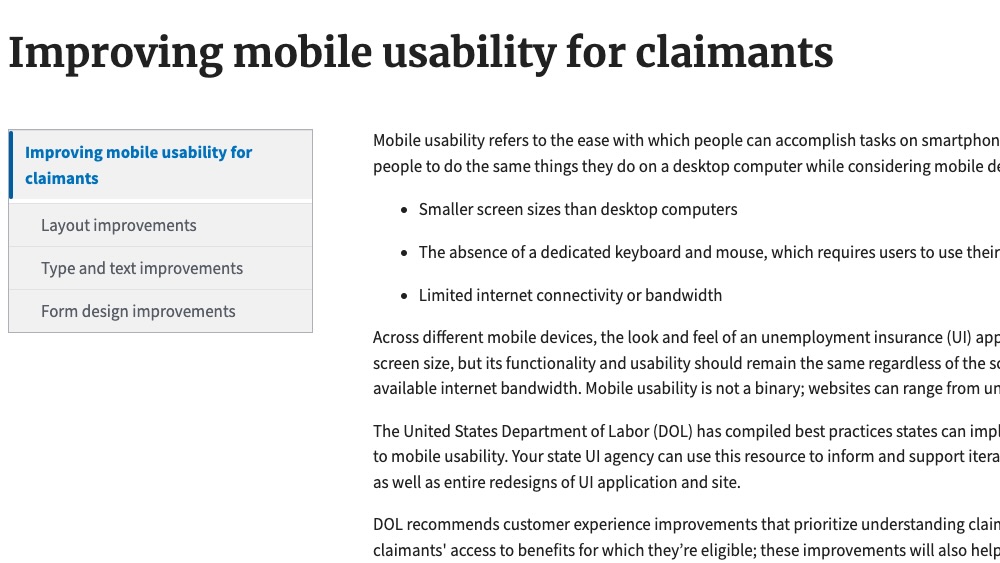
This webpage from the U.S. Department of Labor (DOL) provides guidance on improving mobile usability for Unemployment Insurance (UI) systems to enhance customer experience and accessibility.
Eligible people struggle to maintain their case status for critical safety net services, often due to administrative hurdles and poor communication. Code for America piloted text message reminders to support Louisianans, which helped clients avoid costly churn. Text messages are an underrated, efficient solution for human service agencies to meet client expectations and improve case outcomes.
The Decide Methods help you derive insights from the information gathered during the Discovery phase. You’ll validate initial assumptions, develop a deeper understanding of workflows and processes, and develop design hypotheses.
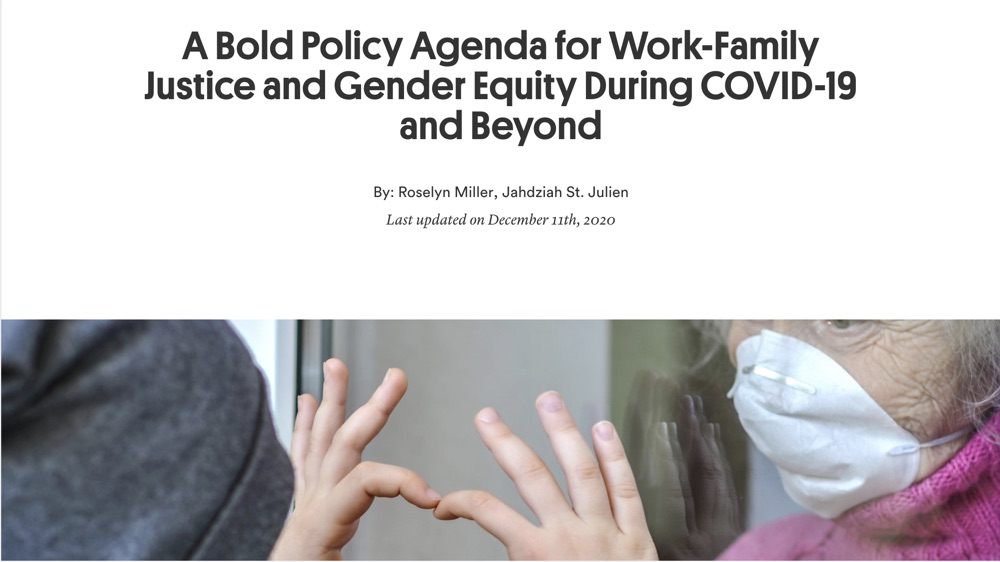
New America spoke to to the people at the frontlines of the pandemic—professional caregivers, family caregivers, parents, and essential workers—to understand the policy interventions people need most. This report discusses ideas for policymakers, private sector leaders, and community innovators to use in pursuit of work-family justice and equity across race, gender, and class.
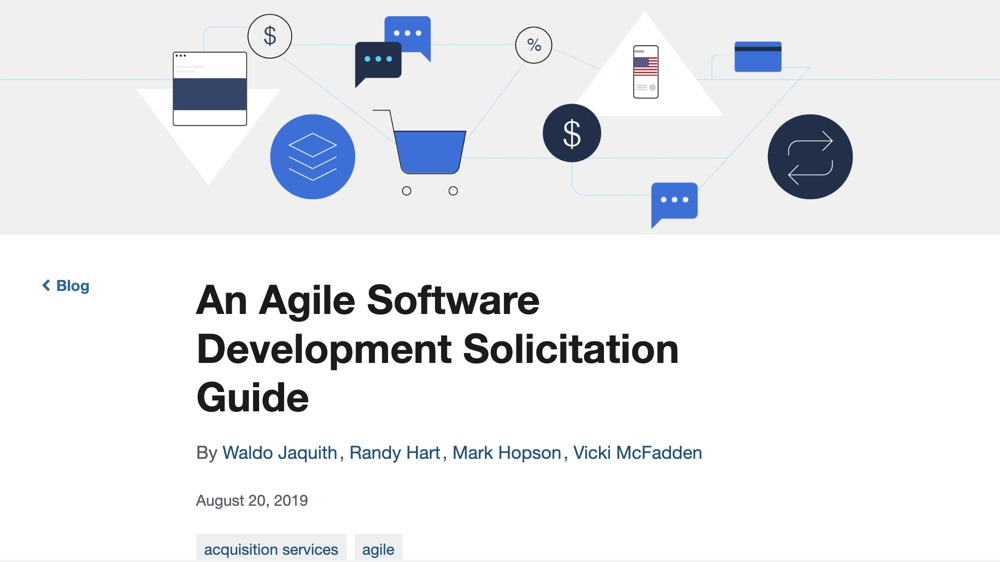
Government solicitations to procure custom software are often long, complicated, and take months. By using 18F’s agile contract format, agencies can hire an agile software contractor with a quickly-written dozen-page solicitation, allowing for immense savings in time and money.
The Medicaid Renewals Playbook offers strategies for technologists assisting states in streamlining Medicaid renewal processes during the COVID-19 Public Health Emergency unwinding.
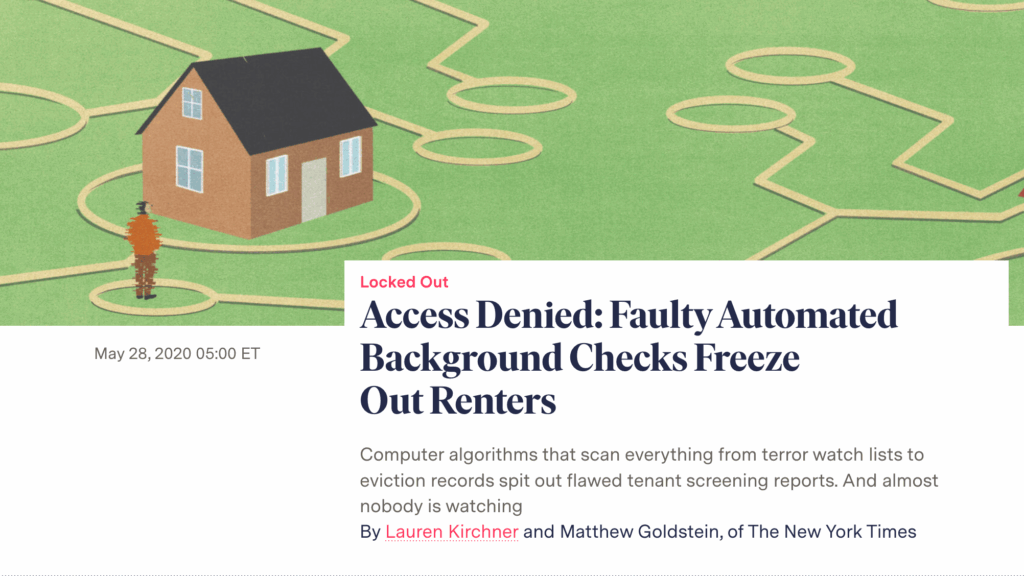
This reporting explores how algorithms used to screen prospective tenants, including those waiting for public housing, can block renters from housing based on faulty information.
Initially created to inform federal staff at the U.S. Department of Health and Human Services, this tip sheet provides key considerations for how organizations can identify potential diverse external partners, conduct outreach to them, and build and sustain productive relationships with them.
Office of the Assistant Secretary for Planning and Evaluation (ASPE)
This blog post discusses strategies that states can implement to make public assistance applications more accessible during the COVID-19 crisis, emphasizing the importance of flexibility in application processes to accommodate increased demand and social distancing measures.
This report provides specific actions the federal government could take to reduce identity fraud and establish a whole-of-government victim redress approach.
These guidelines from the National Institutes of Standard and Technology provide technical requirements for federal agencies implementing digital identity services.
National Institute of Standards and Technology (NIST)