This annual report details the state’s strategic use of technology to enhance digital services, cybersecurity, equity, and efficiency across government, improving access and outcomes for all Minnesotans.
The Governor's Office of Administration is seeking an informational technology executive 2 to join our growing and innovative Commonwealth Office of Digital Experience PA team! This position is responsible for providing strategic business analysis services to the CODE PA Office. This position collaborates with stakeholders to better understand and document the capabilities needed to address challenges in the meeting the Commonwealth digital experience objectives. If this sounds like the job for you, apply today!
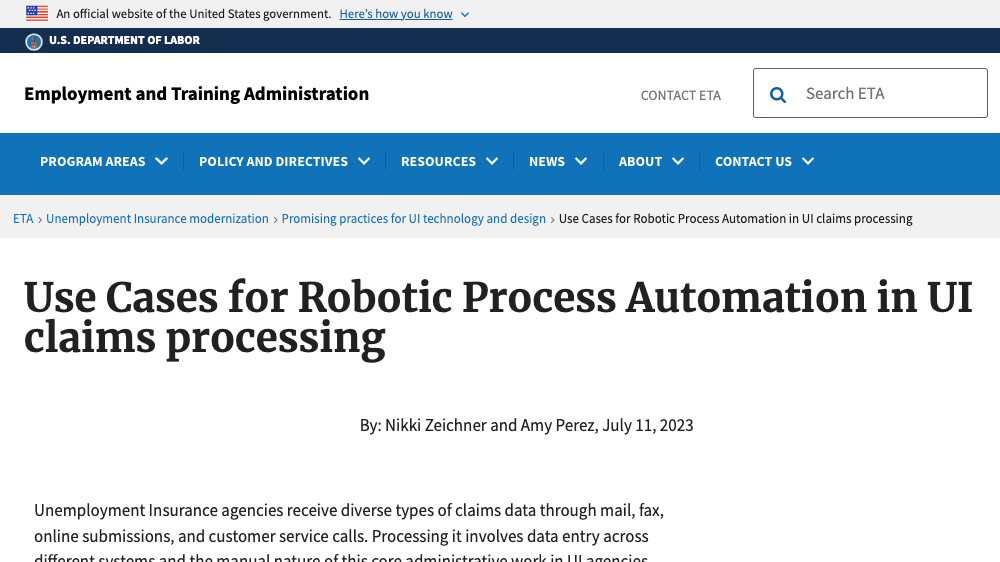
For the past year, modernization teams at the Department of Labor (DOL) have been helping states identify opportunities to automate rote, non-discretionary, manual tasks, with the goal of helping them speed up the time that it takes to process claims. This post provides more context on Robotic Process Automation (RPA) and potential use cases in unemployment insurance.
This publication shares ten ways states can improve start-to-finish customer experience for unemployment insurance claimants. These approaches can increase overall equitable access and system integrity for UI administration.
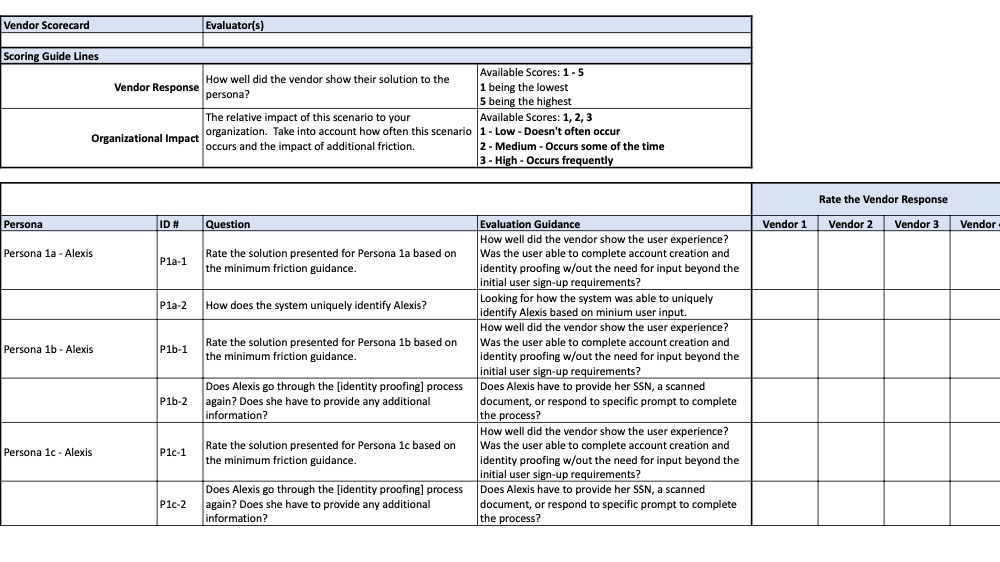
This scoring matrix from the California Employment Development Department (EDD) shows how the agency evaluated vendor proposals for a new identity proofing approach, based on vendors' ability to serve different user personas.
State of California Employment Development Department (EDD)
Digital service (DS) teams across the public sector are working to improve how services are delivered to residents. These teams exist at all levels of government and are iteratively using data, technology, and human-centered design to reframe how residents interact with government.