This annotated bibliography compiles key resources on data linkage and integration for research and statistical purposes, focusing on best practices, governance, and technical considerations.
The strategic plan outlines intentions to responsibly leverage artificial intelligence (AI) to enhance health, human services, and public health by promoting innovation, ethical use, and equitable access across various sectors, while managing associated risks.
U.S. Department of Health and Human Services (HHS)
This brief outlines the U.S. federal government’s framework to identify, reduce, and address administrative burdens through a series of executive orders, legislative actions, and updated policies focused on improving customer experience and increasing access to government benefits.
This memorandum provides guidance to Federal agencies on how to broaden public participation and community engagement to improve government decision-making, enhance transparency, and build trust by engaging with communities, especially underserved groups.
The State Chief Data Officer Tracker, created by the Beeck Center’s Digital Service Network and Data Labs teams, is a first-of-its-kind resource that tracks the evolving role of CDOs in state governments and their efforts to advance data-informed decision-making and collaboration across agencies.
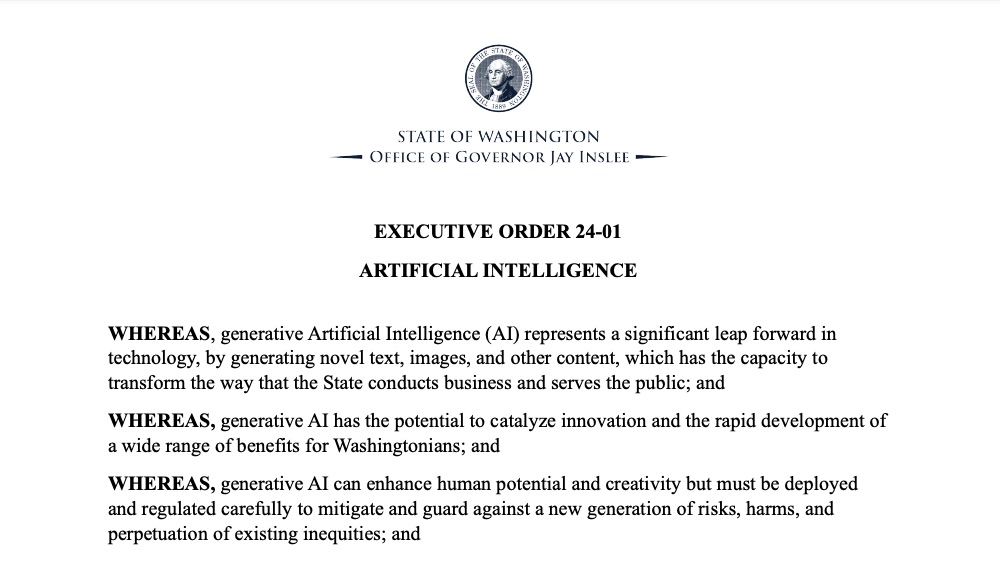
This executive order establishes a statewide effort to enhance accessibility by requiring all state agencies to use clear, concise, and easily understandable language in written communications.
These fact sheets provide detailed, state-specific data illustrating SNAP's role in reducing hunger and bolstering local economies across the United States
This panel discussion from the Academy's 2025 Policy Summit explores the intersection of artificial intelligence (AI) and public benefits, examining how technological advancements are influencing policy decisions and the delivery of social services.
This article details the collaboration between Miami-Dade County, community partners, and technologists to enhance climate resilience by allowing residents to report and access information on extreme heat conditions affecting their commutes.
A collaborative resource document detailing the civic tech support offerings, state and local government resources, and civic tech organizational support.
This is the summary version of a report that documents four experiments exploring if AI can be used to expedite the translation of SNAP and Medicaid policies into software code for implementation in public benefits eligibility and enrollment systems under a Rules as Code approach.