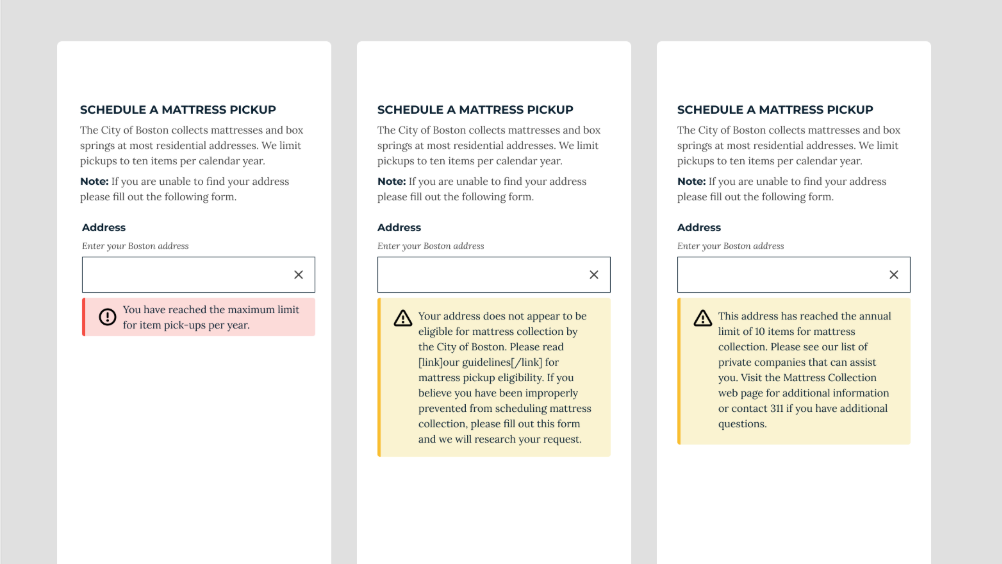
These Figma artifacts illustrate the end-to-end design of Boston’s digital mattress recycling service, including resident scheduling flows, mobile interfaces, alerts, and design system components.
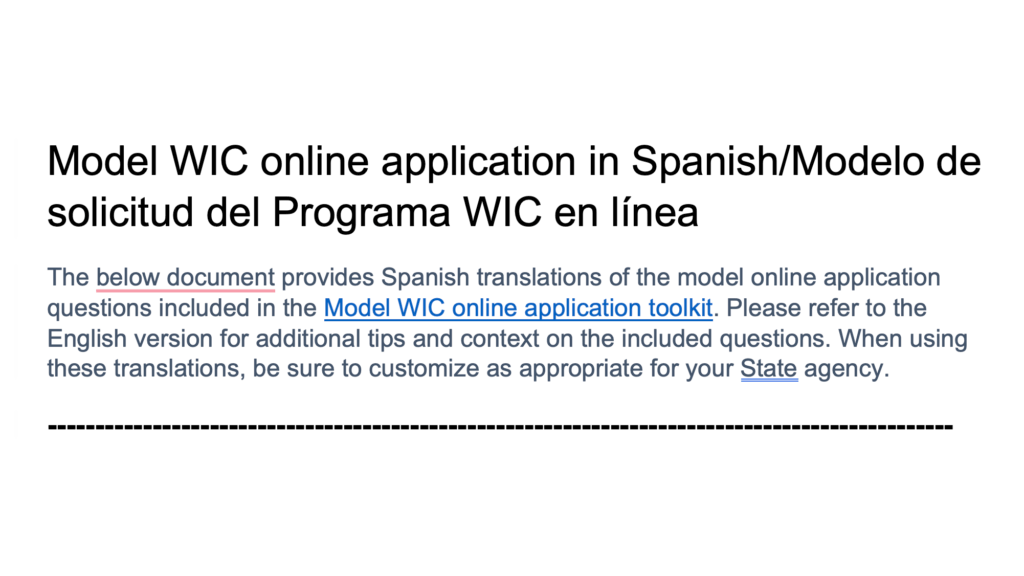
This document is the Spanish-language version of the Model WIC Online Application. It provides a full set of translated application questions and instructions for applying to the Special Supplemental Nutrition Program for Women, Infants, and Children (WIC).
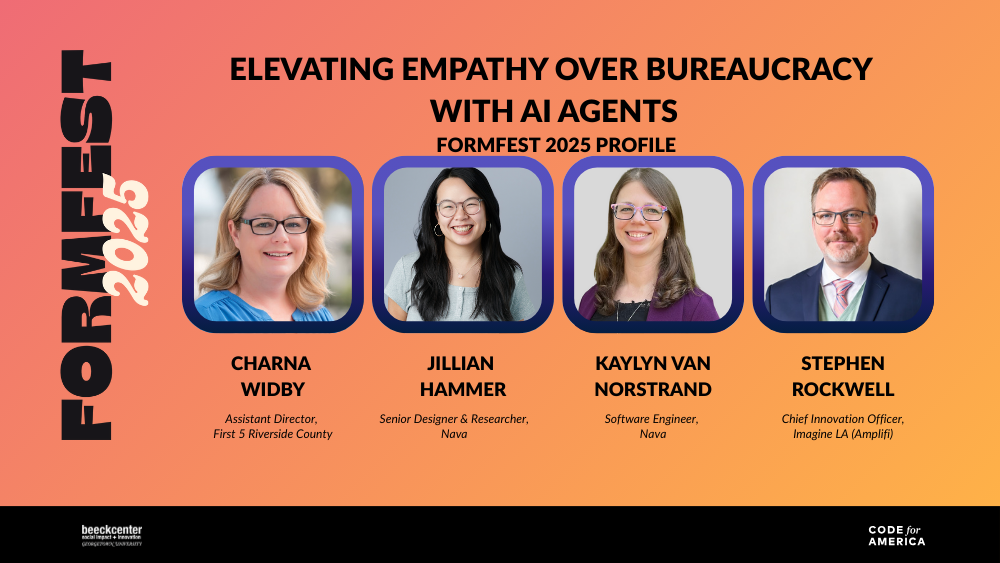
This FormFest profile highlights Riverside County’s pilot of AI-powered interviews that streamline benefit applications, reducing bureaucratic burden on families in crisis while freeing caseworkers to focus on human connection.
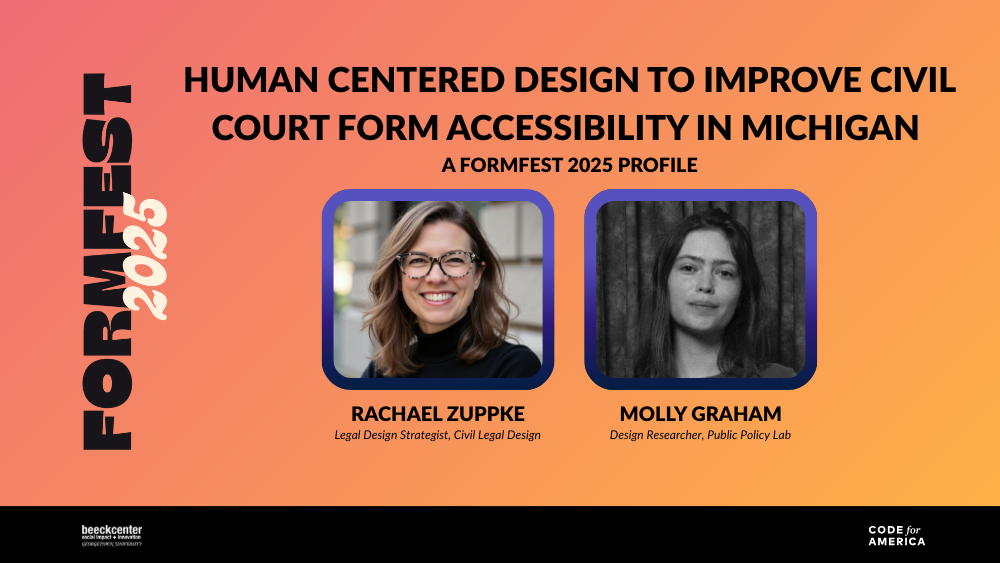
This FormFest profile highlights Rachael Zuppke and Molly Graham’s work to redesign Michigan’s civil court forms using human-centered design, making them more accessible for people who must represent themselves in critical cases like eviction, family law, and guardianship.
This budget request details ADES's FY2027 funding priorities—including developmental disability services, child care, IT modernization, and compliance with H.R. 1—and outlines projected fiscal impacts, caseload growth, and programmatic needs across the state
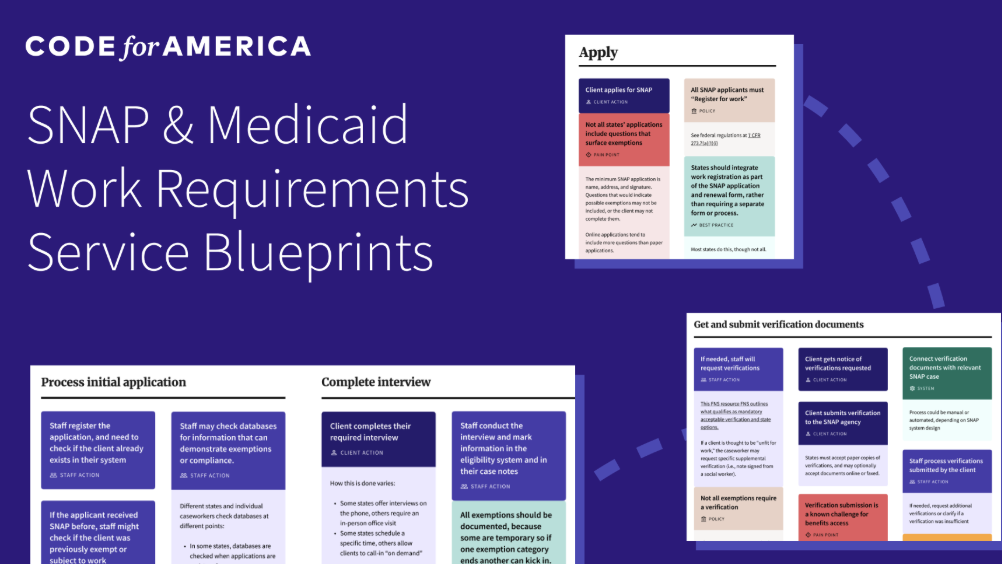
This file contains two, state-agnostic service blueprints that visualize how the new work requirements policy passed as part of H.R. 1 impacts the process of applying for, determining, and maintaining eligibility for SNAP and Medicaid benefits.
This slide deck describes the main mechanisms in a dynamic analysis of H.R. 1, explains the changes to SNAP, and explains the macroeconomic effects and budgetary feedback of those changes.
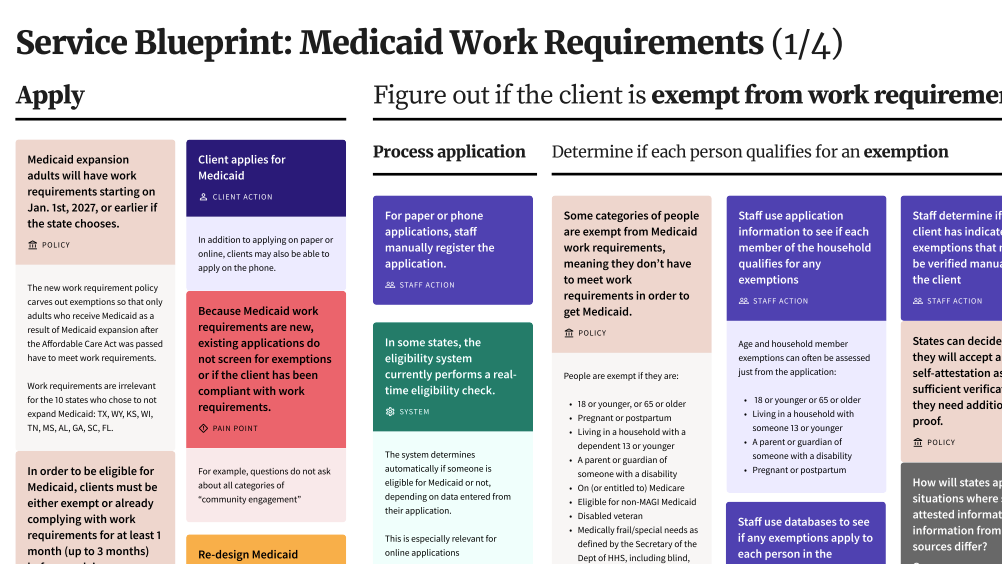
This 8.5x11 service blueprint visually maps how Medicaid work requirements will function once implemented in 2027, detailing each policy step, system interaction, and client experience to help states identify administrative challenges and opportunities for human-centered redesign.
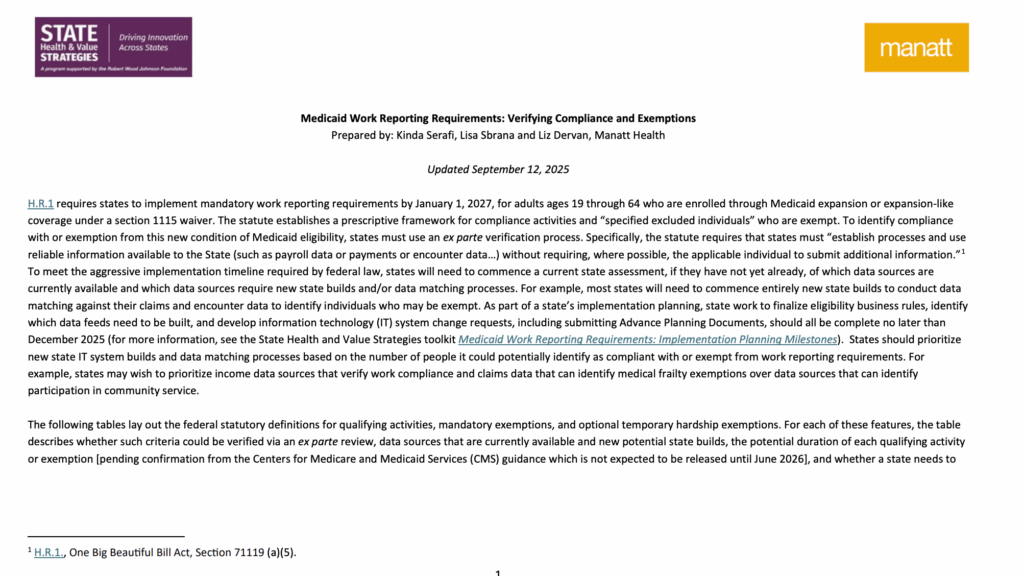
This report provides detailed guidance for states on how to verify compliance with and exemptions from Medicaid work reporting requirements established under H.R. 1.
This framework provides a structured approach for ensuring responsible and transparent use of AI systems across government, emphasizing governance, data integrity, performance evaluation, and continuous monitoring.
This report outlines best practices for developing transparent, accessible, and standardized public sector AI use case inventories across federal, state, and local governments
A publicly-available suite of policy templates and knowledge-sharing tools offered by the GovAI Coalition (via the City of San José) to help public agencies launch or refine responsible AI governance programs.