Medicaid and SNAP have reduced racial and ethnic disparities in healthcare access and food security, but some administrative and eligibility policies continue to create inequitable barriers.
This blog post discusses strategies that states can implement to make public assistance applications more accessible during the COVID-19 crisis, emphasizing the importance of flexibility in application processes to accommodate increased demand and social distancing measures.
The article discusses how state agencies can effectively use text messaging to communicate with Medicaid and SNAP enrollees, especially following a 2021 FCC ruling that permits automated texts for informational purposes.
This case study highlights how Illinois is modernizing its student data infrastructure and interagency data sharing to increase access to SNAP and Summer EBT benefits for eligible children and families, particularly those facing systemic barriers.
American Public Human Services Association (APHSA)
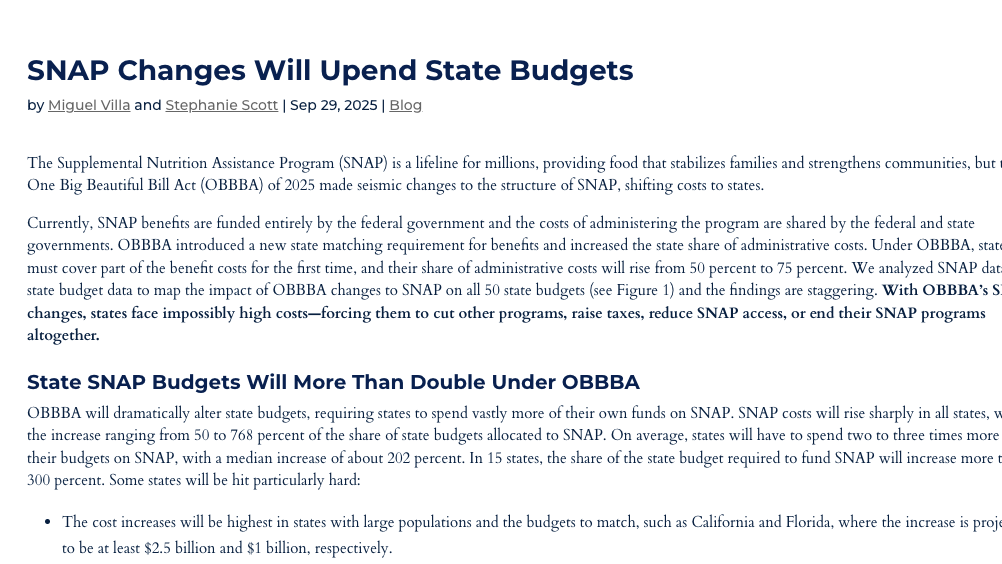
This blog analyzes how the One Big Beautiful Bill Act (OBBBA) will dramatically shift SNAP costs onto state governments, projecting massive budget increases and fiscal strain.
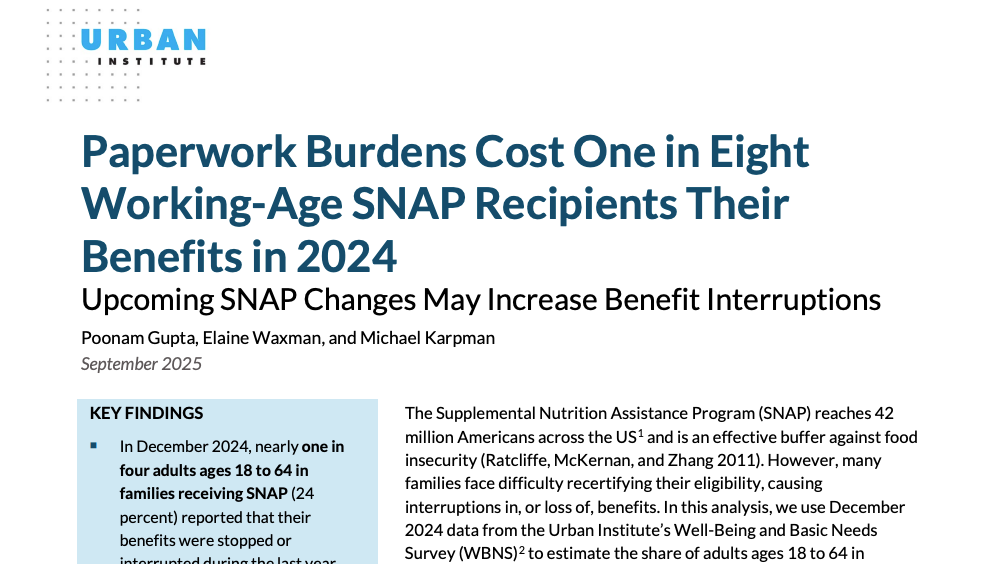
This report analyzes how administrative burdens in SNAP caused one in eight working-age adults to lose benefits in 2024, with future federal policy changes expected to worsen disruptions
This research article explores how framing income eligibility guidelines in either dollar amounts or as a percentage of the Federal Poverty Line (FPL) affects public attitudes toward program access and administrative burdens in Medicaid and SNAP.
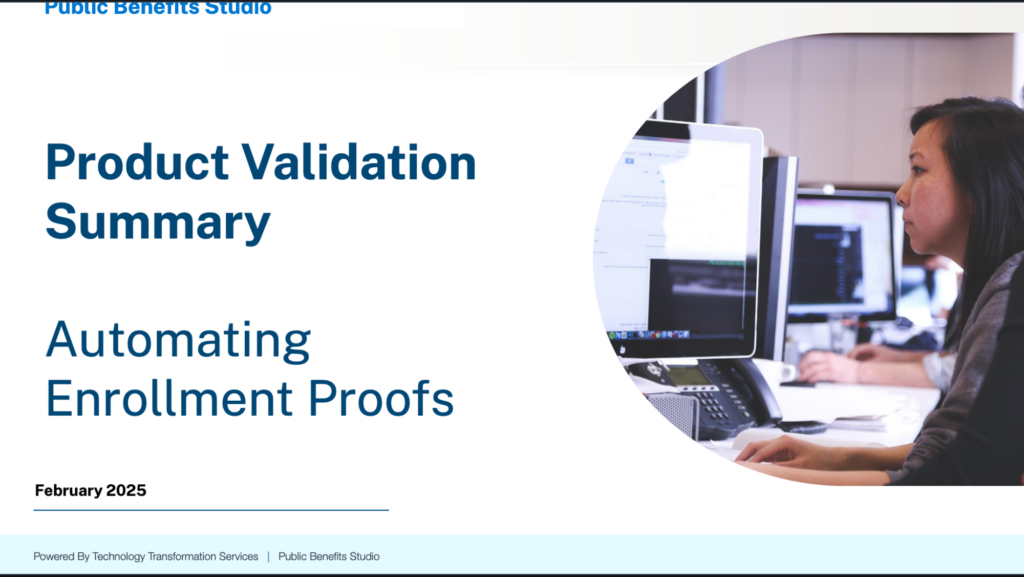
This product validation summary deck explores federal opportunities to automate cross-program enrollment proofs and reduce manual verification burdens.
This paper discusses the country’s chronic underinvestment in children and resulting outcomes, including new data on poverty rates among young children, is inextricable from the prospects of young children; and the remarkably comprehensive pandemic-era response policies, including which changes contributed most to reducing child poverty.
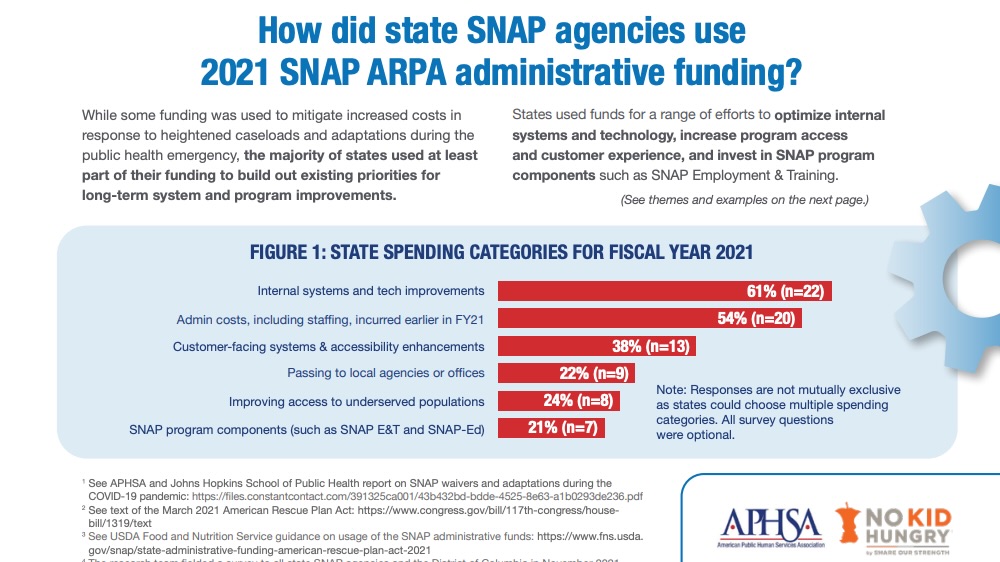
This brief shares findings from a November 2021 survey of state SNAP agencies about their use of the SNAP ARPA funds in fiscal year 2021, and their initial planned activities for fiscal year 2022 and 2023.
American Public Human Services Association (APHSA)
This report outlines how the New Jersey Department of Human Services’ Division of Family Development (DFD) and the Department of Health (NJDOH) are increasing SNAP & WIC co-enrollment through data sharing, outreach, and systems integration.
American Public Human Services Association (APHSA)