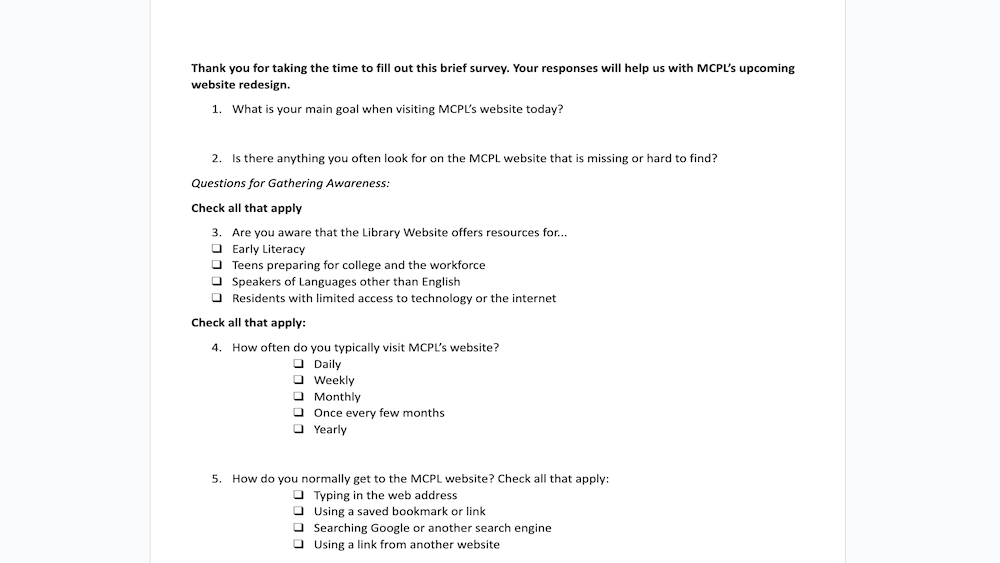
The folder for conducting user surveys for the Montgomery County Public Libraries website redesign includes materials such as Homepage Usability Questions and a comprehensive Website Survey. These tools are designed to gather user feedback on the homepage's functionality and overall website experience, helping inform improvements that align with user needs and expectations.
Montgomery County Public Library (MCPL) Digital Strategies Team
This interview template includes questions designed to help teams conduct exploratory, semi-structured interviews with government stakeholders involved in program delivery to gather information that can help them evaluate the status quo of digital delivery in their organization.
This brief synthesizes the manner in which the political and social service environments affect the intergenerational stability of non-citizen families, offering insights into programmatic supports.
American Public Human Services Association (APHSA)
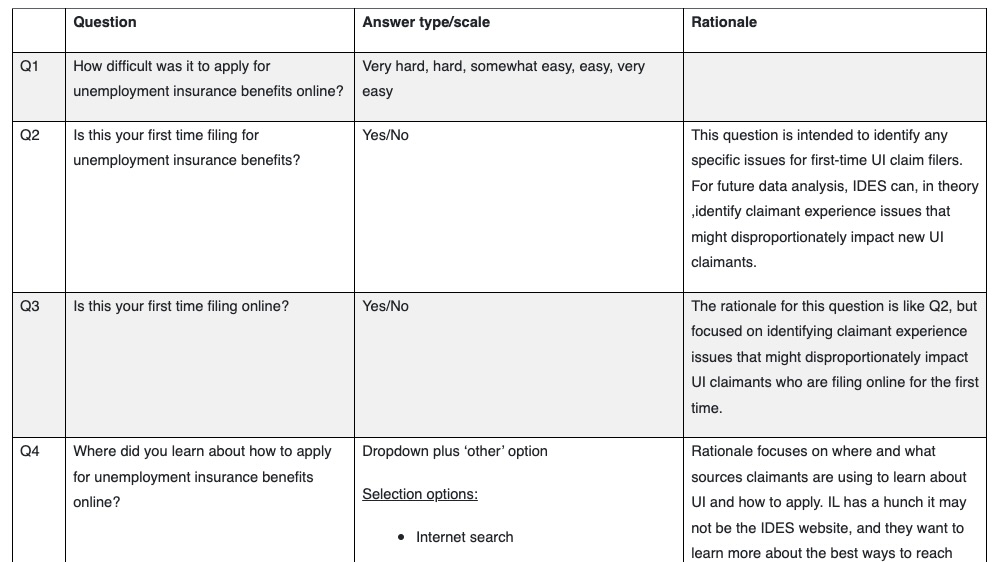
In the Fall of 2022, the USDOL Office of Unemployment Insurance Modernization (OUIM) consulted with the Illinois Department of Employment Security (IDES) to provide hands-on support with IT modernization and customer experience strategy. Primary discussions focused on making informed product, service, and business decisions based on qualitative and quantitative data— how might IDES leverage existing data streams to identify the most pressing technology issues in their unemployment insurance system, and how might IDES act upon this information in a timely and impactful manner?
The examples in this guide describe how peer-to-peer training and updated interview scripts can help connect residents to the benefits they are eligible for.
The Performance.gov team hosted a webinar featuring federal customer experience (CX) changemakers from across government and focused on the nine CX projects that aim to address pain points learned about through human-centered design research.
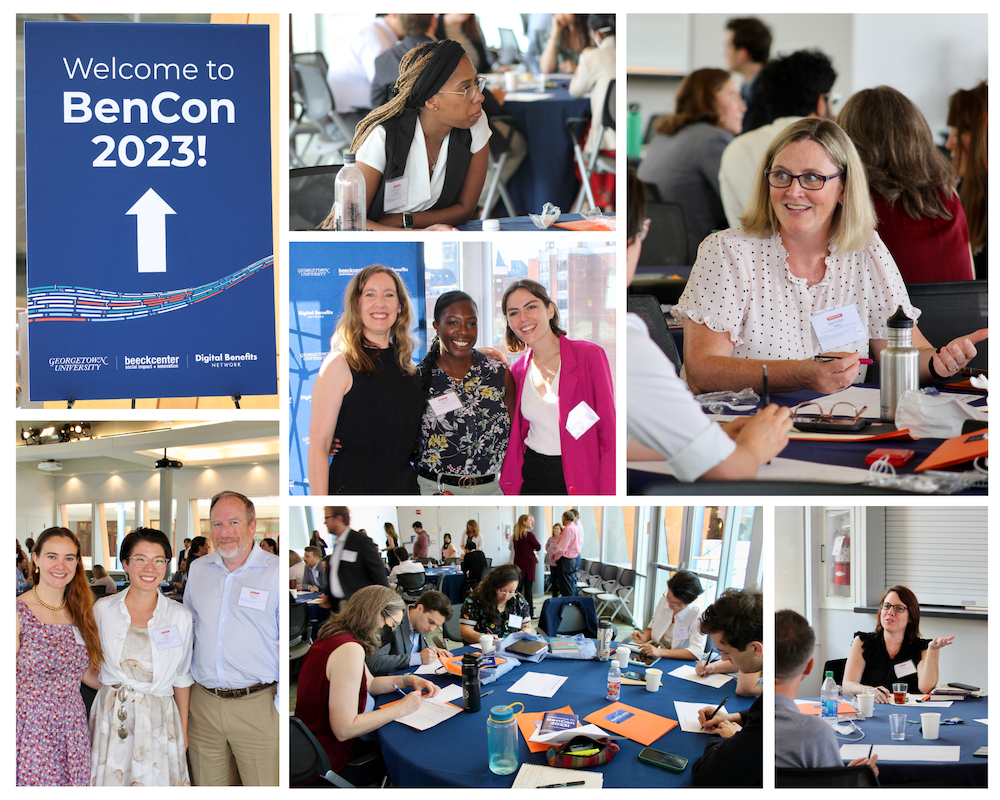
The article discusses key takeaways from BenCon 2023, highlighting the importance of creating equitable and ethical public benefits technology. It emphasizes the need for tech solutions that address systemic inequalities, ensure accessibility, and promote inclusivity for underserved communities in accessing public services.