This resource appendix is a compilation of useful resources intended as a follow-on to the DSN’s writing on theories of change for digital transformation in government. Practitioners can use these resources to DIY their ToC after reading our essays.
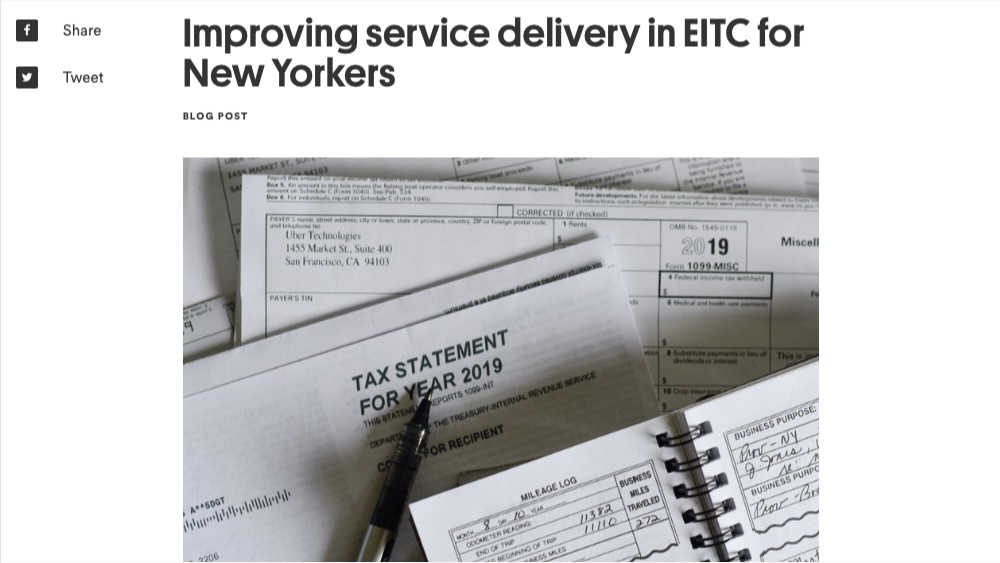
The Improving Service Delivery in EITC for New Yorkers initiative explores ways to enhance access to the Earned Income Tax Credit (EITC) through improved outreach, application processes, and service delivery.
Demand for public benefits is rising in response to continued economic pressure on vulnerable people, in addition to changes in eligibility rules for some safety net programs. This report summarizes existing benefits access efforts, studies the successes and challenges of benefits expansion efforts through a subset of in-depth case studies, and analyzes the potential for sustaining, expanding, and replicating successful efforts.
Office of the Assistant Secretary for Planning and Evaluation (ASPE)
This toolkit provides guidance and resources for state agencies to effectively implement the USDA’s Summer Electronic Benefit Transfer (EBT) program, which helps low-income families buy food during the summer months when school meals are unavailable.
This guide highlights approachable ideas for state and local public benefits agencies to improve applications, renewals, and correspondence. As outlined in this resource, even small improvements can be transformative for residents and caseworkers alike.
The report highlights that many eligible low-income children are not receiving WIC benefits during the COVID-19 pandemic, with participation rates varying significantly by state and lagging behind programs like Medicaid and SNAP.
The New Mexico Human Services Department and Department of Health, as part of the Coordinating SNAP & Nutrition Supports program, leveraged data sharing to align SNAP, Medicaid, TANF, and WIC.
American Public Human Services Association (APHSA)
This primer introduces two foundational software types that can support organizations that are committed to accessible benefits information: content management systems (CMS) and application program interfaces (APIs).
This article describes how Code for America conducted qualitative research within its GetCalFresh application by asking families to tell them about their familial, housing, and financial situations. From client messages, they gathered information regarding how to make changes to their product to keep their work people-centered.