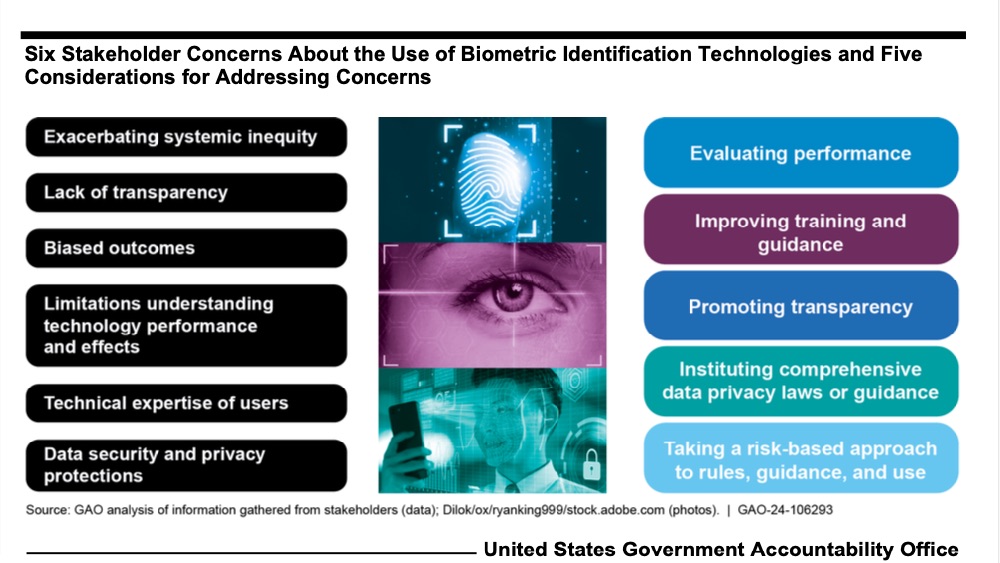
Biometric identification technologies—such as facial recognition and fingerprinting—can affect underserved communities, including low-income and minority communities. GAO interviewed academics, advocacy groups, and technology experts to find out how.
This visualized report is a first first-of-its-kind view of the state of benefits applications across the nation from a client perspective, including information on application availability online, combined benefit applications, application completion times, as well as login and identity proofing requirements.
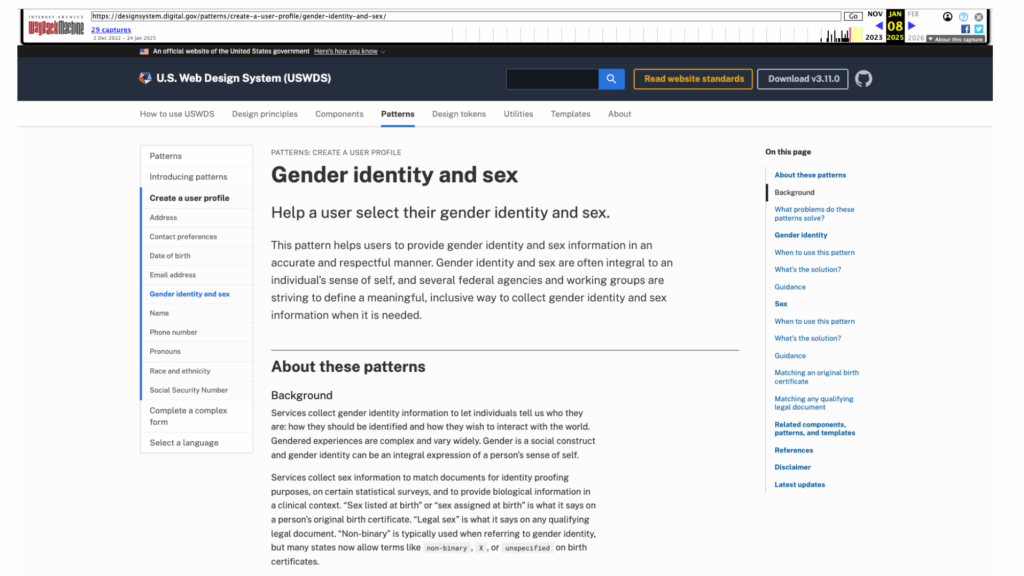
When creating a user profile, this U.S. Web Design System pattern helps users to provide gender identity and sex information in an accurate and respectful manner.
A statewide framework defining six core digital skills standards to equip North Carolina residents with the competencies needed to participate safely, confidently, and effectively in an increasingly digital world.
North Carolina Department of Information Technology (NCDIT)
This resource provides state agencies and their implementation partners with context on how and why to conduct a Digital Identity Risk Management (DIRM) process, as well as a new spreadsheet-based tool to guide agency teams through the process.
The California Employment Development Department (CA EDD) launched the EDDNext initiative to modernize benefit delivery, focusing on user-centric procurement for a new identity verification system.
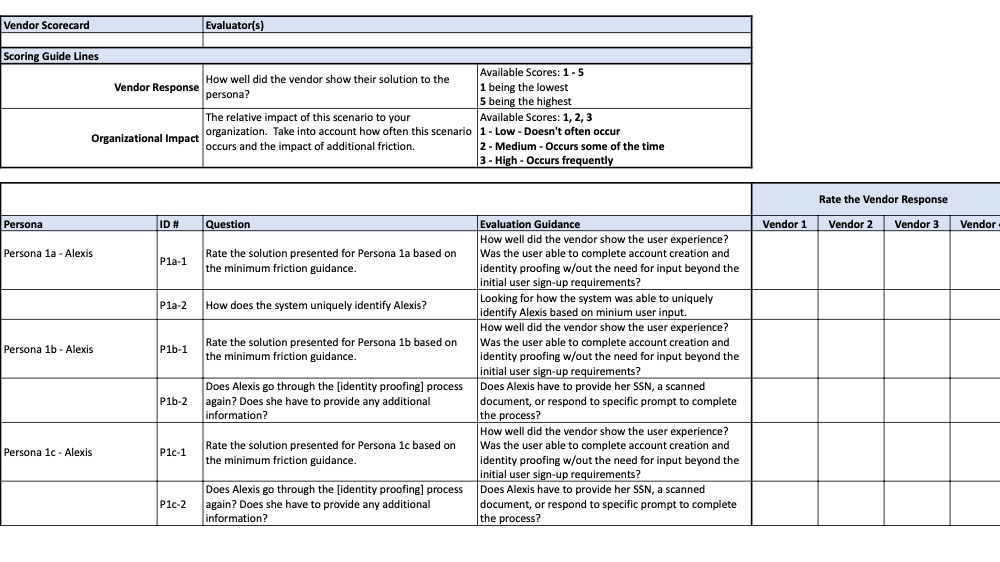
This scoring matrix from the California Employment Development Department (EDD) shows how the agency evaluated vendor proposals for a new identity proofing approach, based on vendors' ability to serve different user personas.
State of California Employment Development Department (EDD)