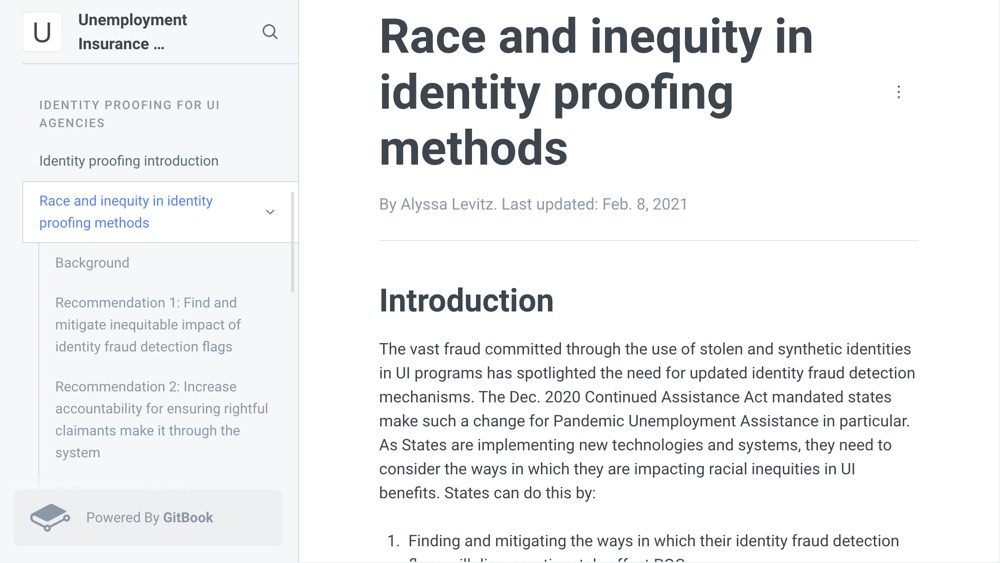
The vast fraud committed through the use of stolen and synthetic identities in UI programs has spotlighted the need for updated identity fraud detection mechanisms. As states are implementing new technologies and systems, they need to consider the ways in which they are impacting racial inequities in UI benefits.
In this panel conversation from the Better Identity Coalition’s 2022 policy forum, “Identity, Authentication, and the Road Ahead," representatives from industry and government discuss priorities for authentication and identity management.
In 2024, the Center on Budget and Policy Priorities and Digital Benefits Network led a workshop to explore key terms related to digital identity, and provide ecosystem-level context on how authentication and identity proofing may show up in the online benefits experience and impact clients. This resource links to the presentation slides.
In February 2023, the Digital Benefits Network at the Beeck Center for Social Impact + Innovation released a dataset documenting authentication and identity verification requirements that unemployment insurance (UI) applicants encounter across the United States. This resource outlines high-level observations from the data and more information about the research process.
This page includes data and observations about authentication and identity proofing steps specifically for online applications that include child care applications.
This primer is written for a non-technical audience to increase understanding of the terminology, applications, and difficulties of evaluating facial recognition technologies.