Guidance on improving how well AI systems can understand digital content. It emphasizes using machine-readable formats and applying clear content design strategies to enhance both AI processing and human accessibility
The Maryland Information Technology Master Plan 2025 lays out the state’s strategy to modernize IT, expand digital services, and strengthen infrastructure to better serve residents and government agencies.
Guidance on how state agencies should identify, assess, and manage risks associated with deploying high-risk generative AI systems under Executive Order 24-01.
A report that defines what effective “human oversight” of AI looks like in public benefits delivery and offers practical guidance for ensuring accountability, equity, and trust in algorithmic systems.
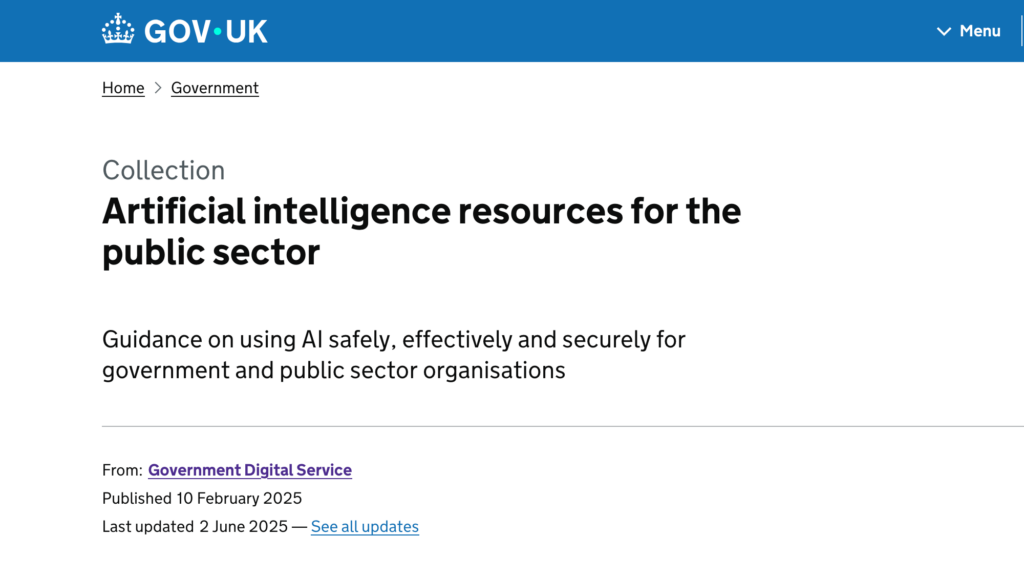
A collection that provides a comprehensive operational toolkit to help civil servants and public sector organizations deploy artificial intelligence safely, effectively, and securely.
A practical, step-by-step guide for government agencies to design, implement, and evaluate community engagement efforts around the use of artificial intelligence.
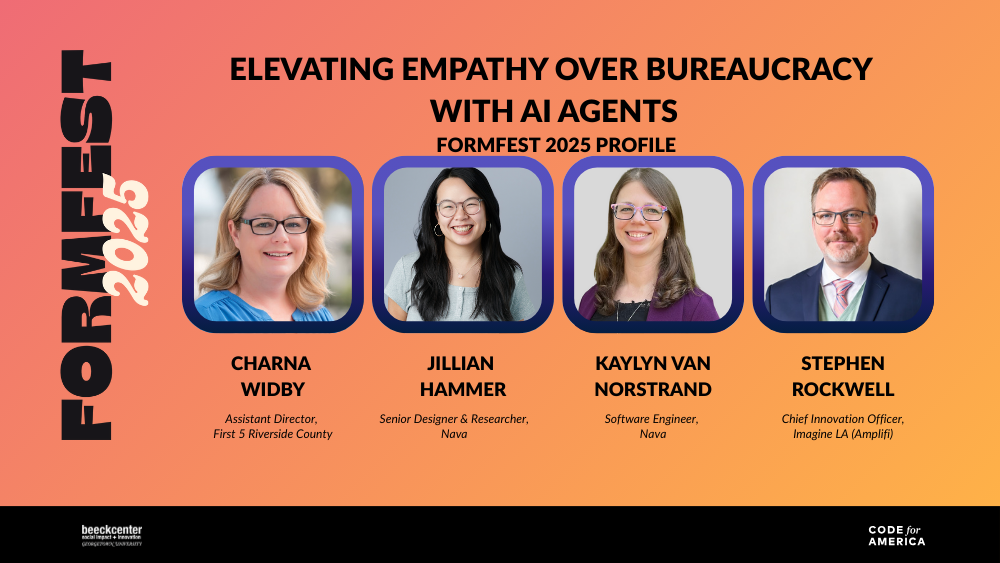
This FormFest profile highlights Riverside County’s pilot of AI-powered interviews that streamline benefit applications, reducing bureaucratic burden on families in crisis while freeing caseworkers to focus on human connection.
This internal glossary defines key terms and concepts related to automating enrollment proofs for public benefits programs to support shared understanding among product and policy teams.
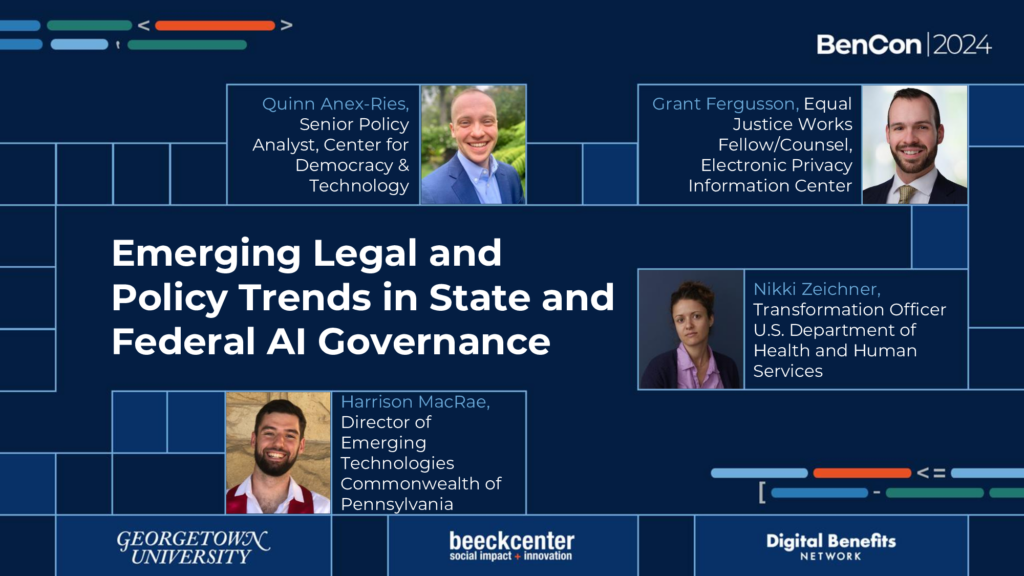
BenCon 2024 explored state and federal AI governance, highlighting the rapid increase in AI-related legislation and executive orders. Panelists emphasized the importance of experimentation, learning, and collaboration between government levels, teams, agencies, and external partners.