This report discusses the financial resilience strategies families used to manage gaps before benefits arrived, in addition to providing recommendations for how benefits can be better designed in the future to fit the financial lives of lower-income households.
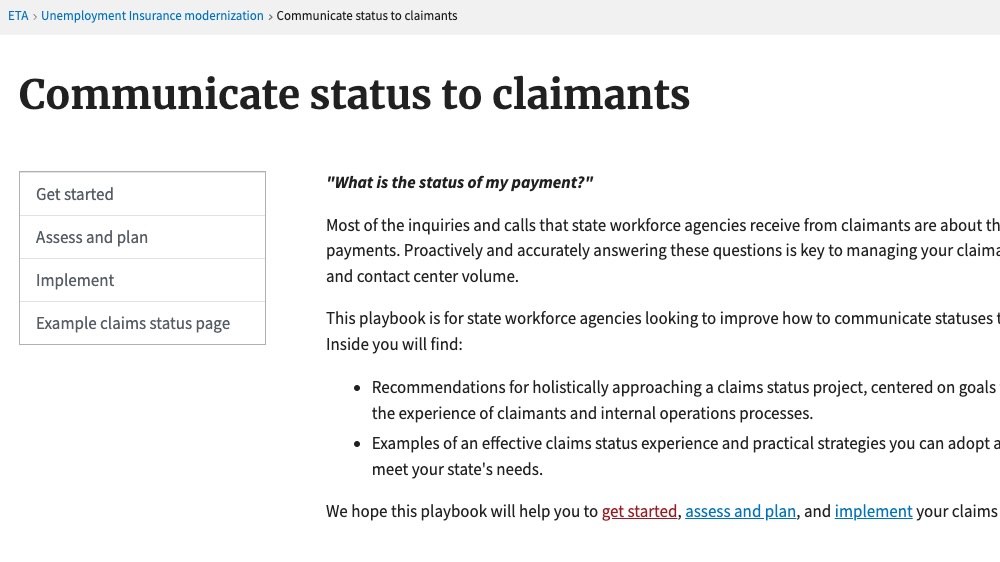
The U.S. Department of Labor provides a playbook to help state workforce agencies enhance communication with unemployment claimants by offering clear, proactive updates on claim statuses, thereby improving claimant satisfaction and reducing call center inquiries.
This resource describes how different agencies have updated their systems to increase online and mobile access to benefits information and applications, including using text messages to share benefits information with residents.
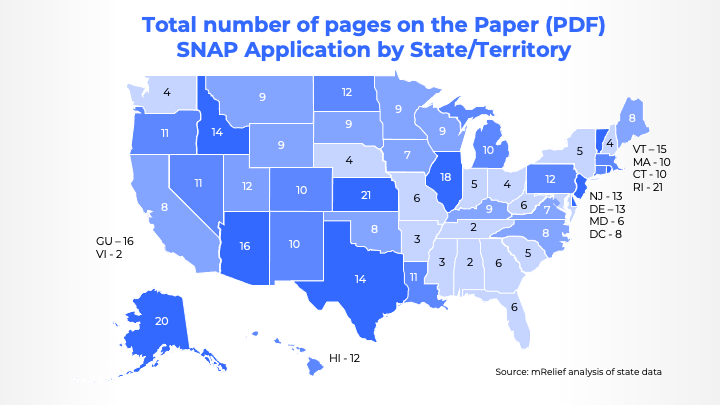
The Average Food Stamp Application is 17 Pages Long article by mRelief highlights the extensive length and complexity of Supplemental Nutrition Assistance Program (SNAP) applications, which can deter eligible individuals from applying for benefits.
This guide consolidates learning and spotlights principles, insights, and emerging practices to guide municipal leaders and public-private partnerships interested in designing basic income programs that are ethical, equitable, rigorous, informative, and consequential for local, state and national policymaking.
This playbook offers a comprehensive guide to enhancing unemployment benefits systems, focusing on claimant-centric approaches, equitable access, and actionable steps for state agencies.
Governor Kathy Hochul announced a new client feedback initiative in partnership with Code for America to improve New York's WIC program by implementing live online chat to gather input from participants, streamline enrollment, and increase access to healthy food for eligible families.
The New York State WIC program website provides access to nutritious foods, nutrition education, breastfeeding/chestfeeding support, and referrals to eligible pregnant, breastfeeding, and postpartum individuals, infants, and children up to age five.
This report explores how public benefit systems can better support young adults by addressing the barriers they face in accessing and maintaining vital services like SNAP, Medicaid, and WIC.