Delve into our exploration of the executive orders, legislation, and administrative rules and guidance that shape government digital transformation across states and territories with our database and visualization tools.
This article highlights how state unemployment insurance (UI) agencies are leveraging data to modernize systems and enhance access for unemployed workers.
This report explores how public benefit systems can better support young adults by addressing the barriers they face in accessing and maintaining vital services like SNAP, Medicaid, and WIC.
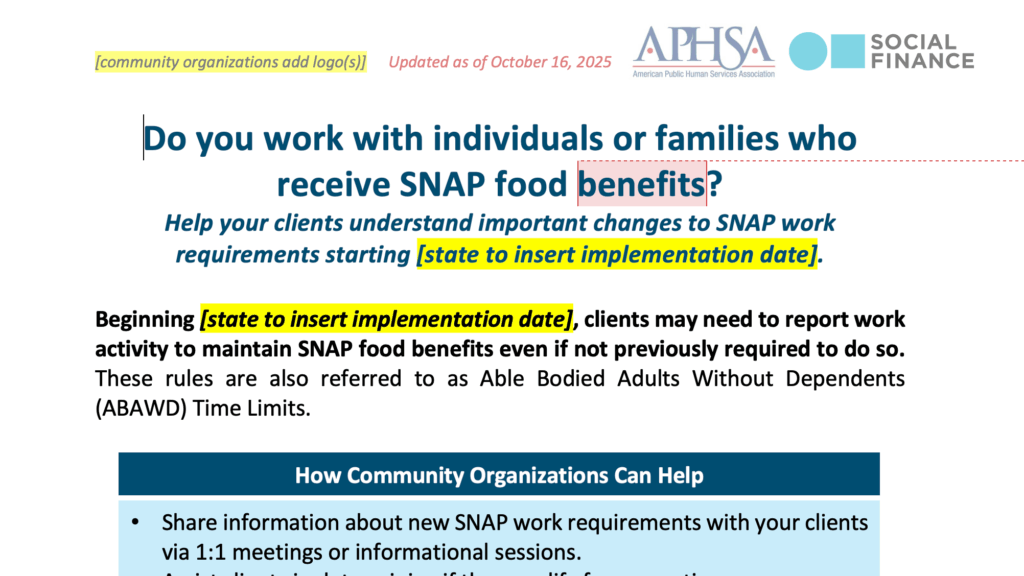
This document is a template for creating a community-based organization (CBO)-facing flyer that explains HR1 work requirements changes and how CBOs can help spread the work and screen SNAP participants and applicants.
American Public Human Services Association (APHSA)
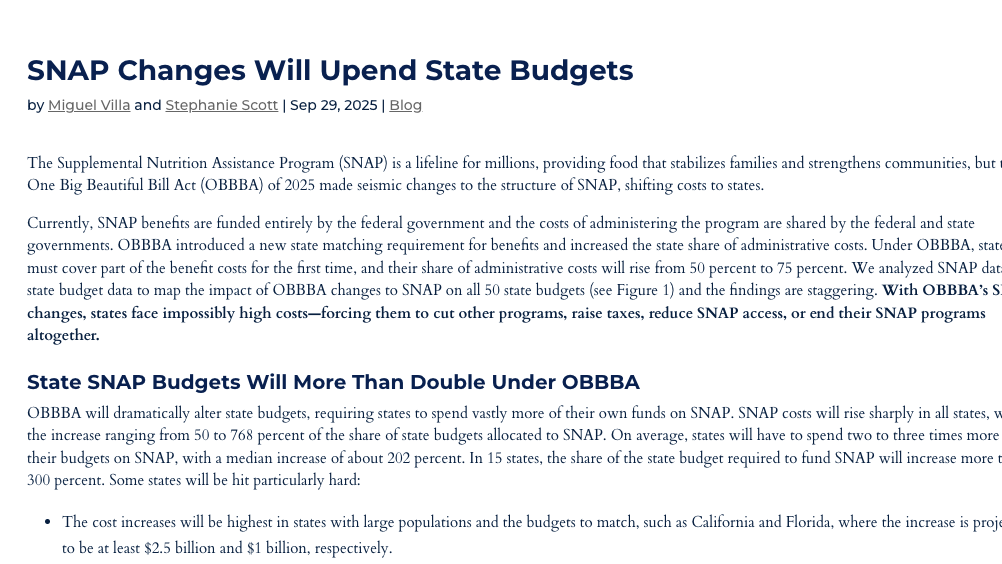
This blog analyzes how the One Big Beautiful Bill Act (OBBBA) will dramatically shift SNAP costs onto state governments, projecting massive budget increases and fiscal strain.
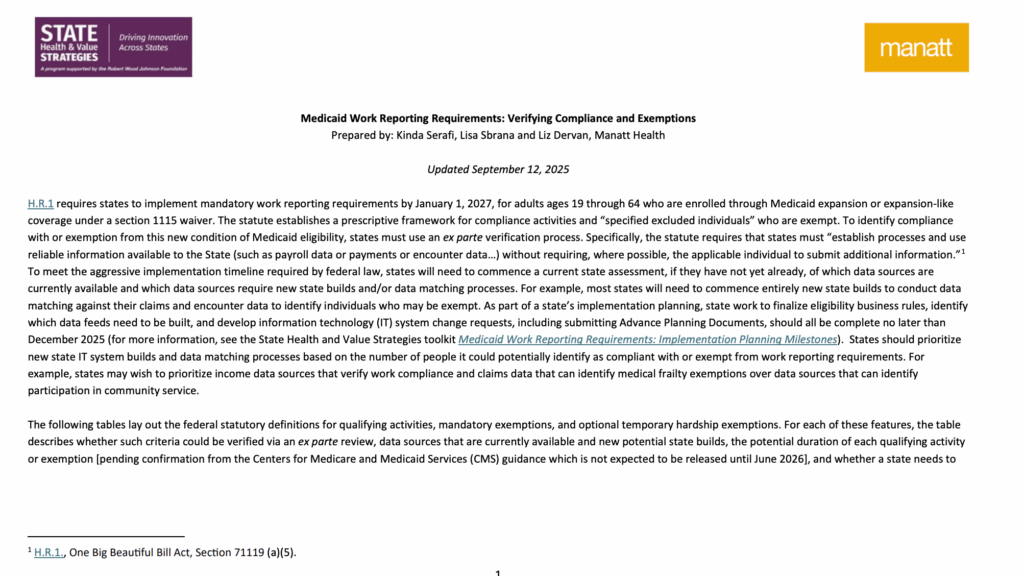
This report provides detailed guidance for states on how to verify compliance with and exemptions from Medicaid work reporting requirements established under H.R. 1.
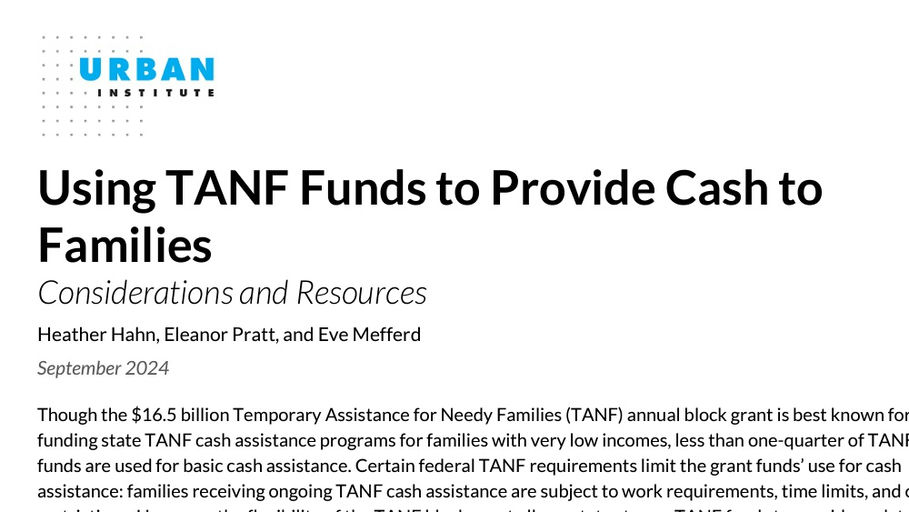
This guide outlines how states can use TANF funds to provide direct cash assistance to families, particularly through flexible mechanisms like nonrecurrent short-term benefits (NRSTs).