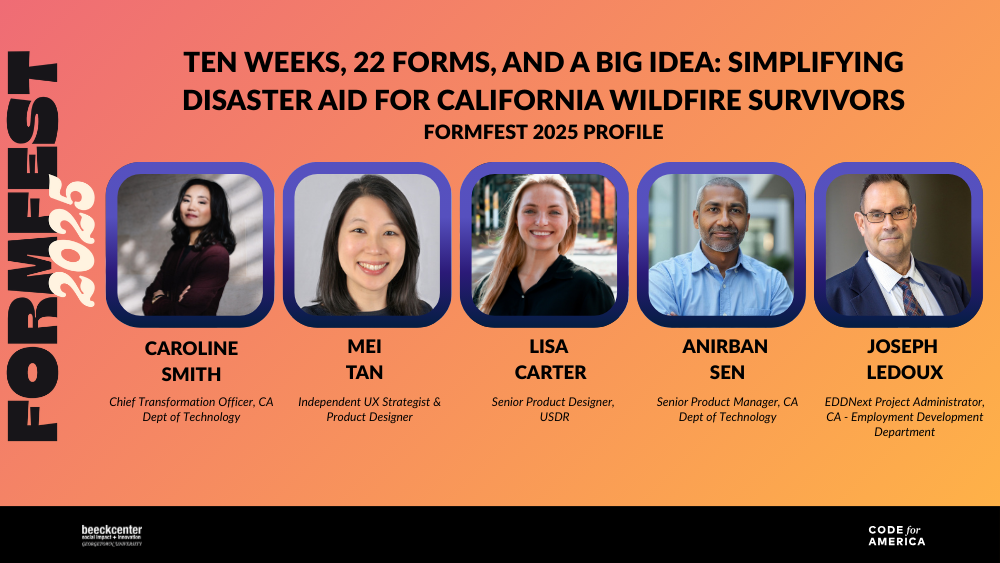
This FormFest profile describes how California rapidly simplified disaster-aid processes for wildfire survivors by auditing 22 forms across eight agencies and developing a concept for a universal eligibility form and relief portal.
The article explores the importance of participatory planning in policymaking, emphasizing how engaging impacted communities improves program design, equity, and trust in government, with a focus on early childhood education initiatives.
This report examines Pennsylvania’s recent success in responding to concerns from citizens that it took too long for a business, nonprofit or individual to receive a permit, license or certificate they had applied for.
The playbook is a comprehensive guide developed by the Maryland Department of Information Technology to assist state agencies in creating consistent, user-centered, and accessible digital services.
A case study documenting how a modular API layer was built to support a state-level paid family and medical leave program, improving interoperability, scalability, and user experience.
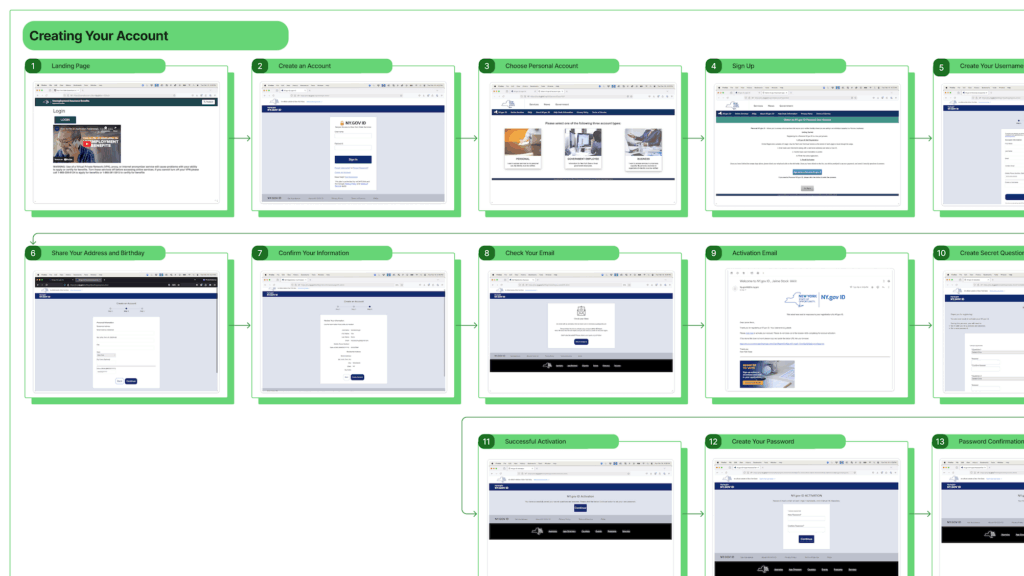
Created for use in the Digital Doorways research project, this design stimuli shows the steps of submitting an application, sharing personal information, and verifying identity for New York's online application for Unemployment Insurance.
An evaluation report assessing the performance of “Consult,” an AI-powered tool developed by the UK government’s Incubator for AI (i.AI), to analyse public consultation responses for the Scottish Government.
Government of Scotland Department for Science, Innovation and Technology (DSIT)
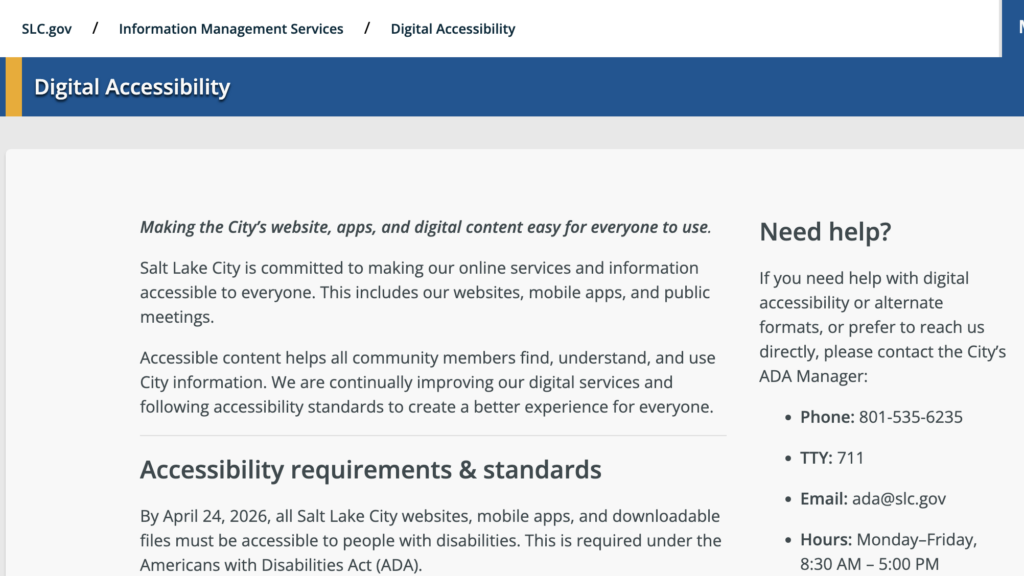
A municipal resource outlining Salt Lake City’s approach to digital accessibility, including standards, policies, and actions to ensure all residents can access online services and information.
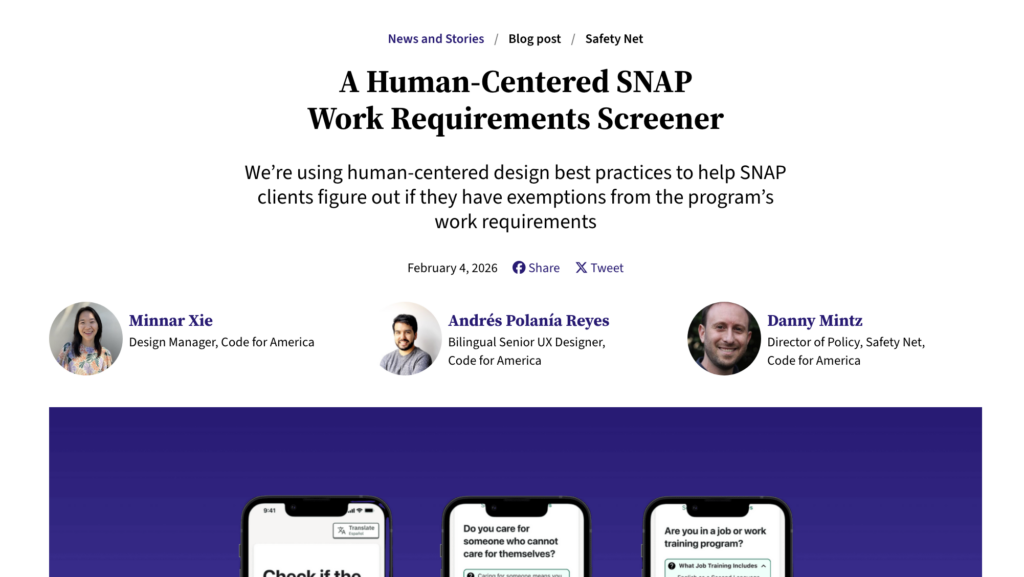
This blog post details the development of a human-centered screening tool designed to help SNAP clients identify and report exemptions from work requirements.