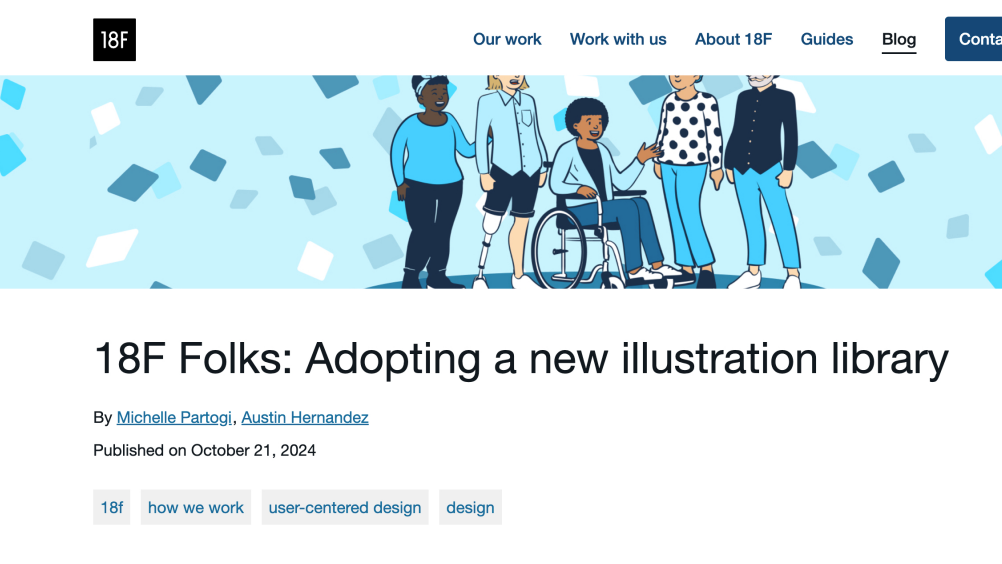
This blog describes how 18F adopted a new illustration library (“18F Folks”) based on Open Peeps, to better represent diversity, context, and human experiences in their visual communications.
This resource provides practical guidance on the core principles of digital accessibility, helping teams create digital content and services that are more usable and inclusive for people with disabilities.
The Commonwealth of Massachusetts Executive Office of Technology Services and Security (EOTSS)
This report outlines the team's achievements in enhancing state digital services through human-centered design, agile development, and cross-agency collaboration from its inception through 2024.
Colorado Governor's Office of Information Technology (OIT)
This action plan outlines Oregon’s strategic approach to adopting AI in state government, emphasizing ethical use, privacy, transparency, and workforce readiness.
This toolkit outlines actionable changes for government practitioners looking to improve the accuracy and accessibility of the questions on their forms that collect information about a user’s gender.
The AI RMF Playbook offers organizations detailed, voluntary guidance for implementing the NIST AI Risk Management Framework to map, measure, manage, and govern AI risks effectively.
National Institute of Standards and Technology (NIST)
This resource page provides comprehensive information on the state's initiatives, policies, training, and governance related to the adoption and implementation of generative AI technologies in government operations.
This report provides an overview of the task force’s work in assessing, guiding, and recommending policies for the safe, ethical, and effective use of generative AI across Alabama’s executive-branch agencies.
State of Alabama Generative Artificial Intelligence (GenAI) Task Force
This provides a comprehensive look at child well-being across the U.S., ranking states and highlighting policy recommendations to improve outcomes for children.
The report examines how AI deployment across state and local public administration such as chatbots, voice transcription, content summarization, and eligibility automation are reshaping government work.