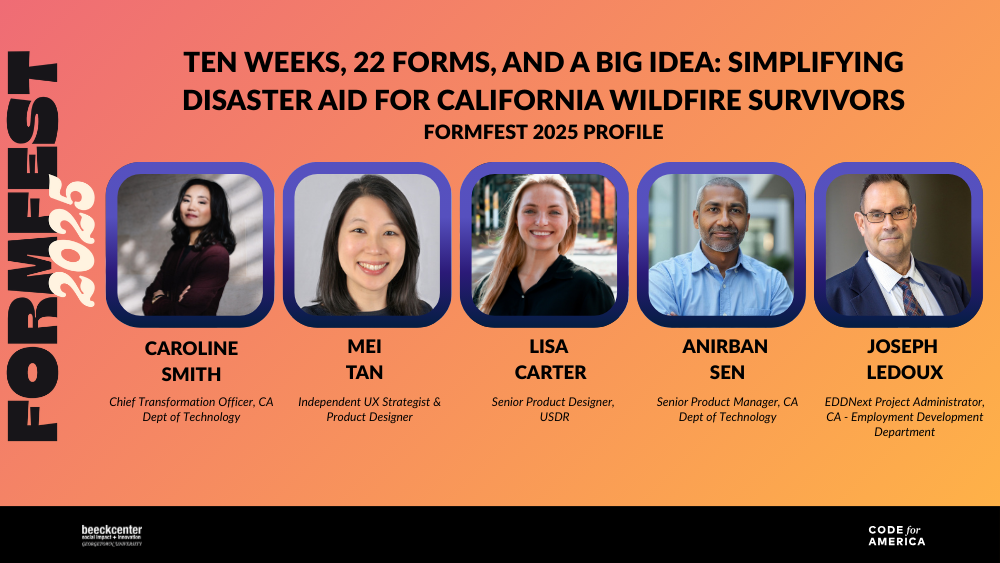
This FormFest profile describes how California rapidly simplified disaster-aid processes for wildfire survivors by auditing 22 forms across eight agencies and developing a concept for a universal eligibility form and relief portal.
To improve the .gov registrar, 18F and CISA created customer panels to gather feedback, opinions, and suggestions. Using a customer-centric approached enabled 18F and CISA to identify areas for improvement, build a product roadmap, and establish relationships with users.
Do you have good communication and customer service skills? The Governor's Office of Administration is seeking a quality engineer, code PA to join our growing and innovative Commonwealth Office of Digital Experience PA team! This position is responsible for ensuring that products meet or exceed customer expectations for quality and reliability. We want to hear from you! Apply today!
This is a job description for the role of Communications Design Fellow from the New York City Mayor's Office for Economic Opportunity (NYC Opportunity).
Your role as a Digital Service Expert will be a focus on Human-Centered Design. This role is best for someone with experience in both user experience and service design.