The New York State Office of Information Technology established guidelines for the acceptable and responsible use of Artificial Intelligence technologies by state entities.
New York State Office of Information Technology Services
This session from FormFest 2024 focuses on accessibility, featuring British Columbia’s work to improve legal form usability and tips from the Wisconsin Department of Public Instruction on making forms more accessible overall.
Learn how to use generative AI to quickly create unemployment insurance translations that are accurate, easy to understand, and tailored to your state.
This executive order establishes a statewide effort to enhance accessibility by requiring all state agencies to use clear, concise, and easily understandable language in written communications.
This report examines Pennsylvania’s recent success in responding to concerns from citizens that it took too long for a business, nonprofit or individual to receive a permit, license or certificate they had applied for.
This course provides Head Start program leaders with strategies and tools to foster inclusive environments for LGBTQIA2S+ individuals within their programs.
U.S. Department of Health and Human Services (HHS)
This report offers best practices for public agencies implementing digital identity verification, emphasizing privacy, equity, and security in the delivery of government services.
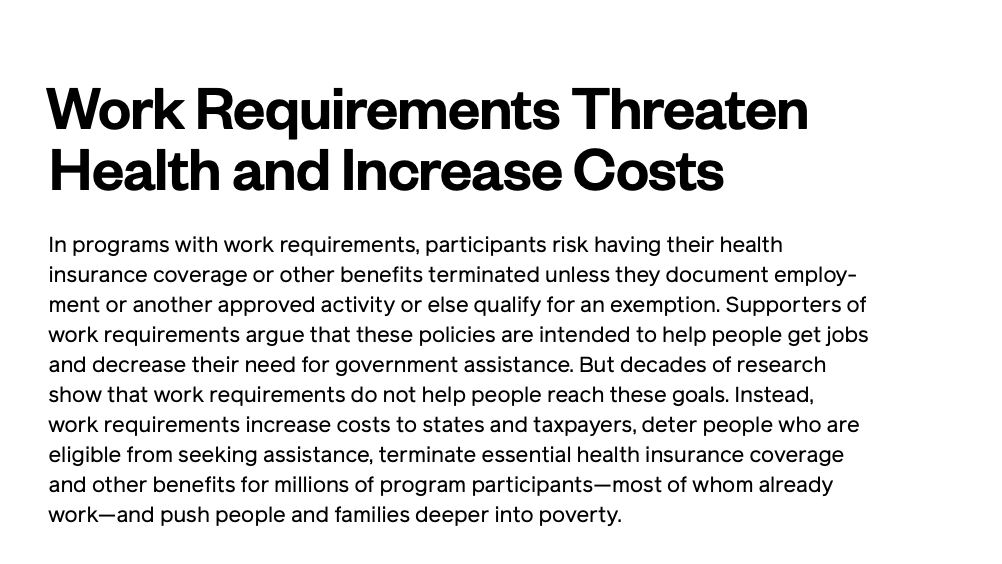
A research brief explaining how work requirements in programs like Medicaid and SNAP reduce coverage, increase administrative costs, and push eligible people deeper into poverty without improving employment outcomes.
Dana Chisnell describes work leading a team of researchers to interview people from across the US on their experiences applying for unemployment and other benefits during the pandemic.
The COVID Response Project was funded by the W.K. Kellogg Foundation to document the real-time impacts of the COVID-19 pandemic on state human services agencies and capture state perspectives on lessons learned to guide future federal policymaking and state implementation. The project was completed by the American Public Human Services Association (APHSA) in partnership with the U.S. Department of Health and Human Services, Administration for Children and Families (ACF), Office of Regional Operations. Insights from the report reflect information obtained through APHSA’s on-going support of state human services agencies’ COVID-19 response efforts as well as a series of in-depth interviews with executive leadership of the 14 state health and human services agencies in ACF’s Region 1 (New England) and Region 4 (Southeast) areas.
American Public Human Services Association (APHSA)
This brief highlights key takeaways from APHSA’s work on young families, starting with an overview of the young families work and its early years, followed by key takeaways and highlights from its final year, ending with opportunities for future work in the young families space.
American Public Human Services Association (APHSA)
Hear perspectives on topics including centering beneficiaries and workers in new ways, digital service delivery, digital identity, and automation.This video was recorded at the Digital Benefits Conference (BenCon) on June 14, 2023.