Artificial intelligence promises exciting new opportunities for the government to make policy, deliver services and engage with residents. But government procurement practices need to adapt if we are to ensure that rapidly-evolving AI tools meet intended purposes, avoid bias, and minimize risks to people, organizations, and communities. This report lays out five distinct challenges related to procuring AI in government.
18F describes modular contracting, the process of breaking up large, custom software procurements into a small constellation of smaller contracts. Modular procurement requires agile, product thinking, user-centered design, DevSecOps, and loosely-coupled architecture.
This guidebook aims to equip state and local agencies with the practical insights they need to develop a text messaging outreach program for SNAP recertification.
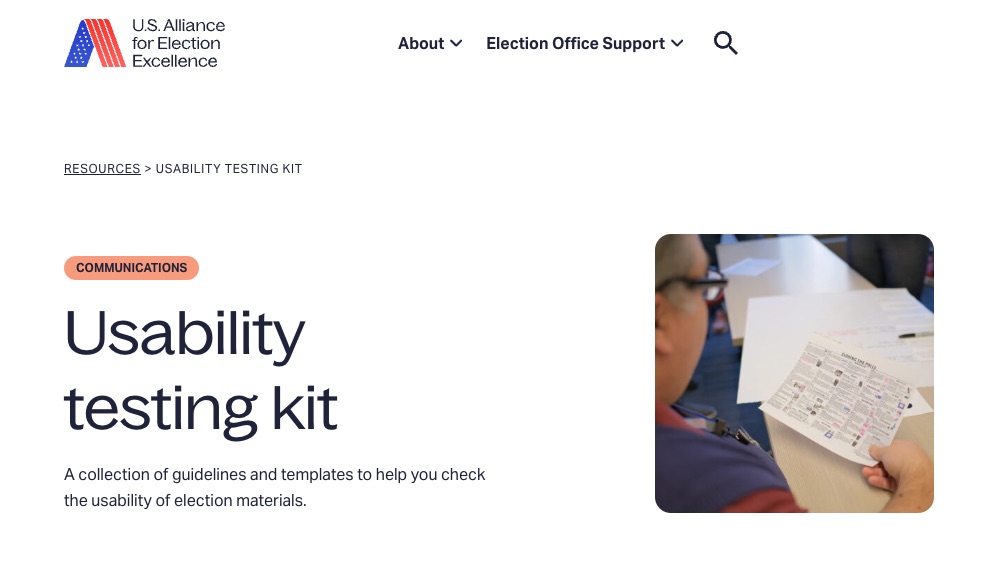
Usability tests can help teams develop products that are user-centered, accessible, and inclusive. This guide will help you create a robust plan to promote a successful usability test.
This academic paper examines how federal privacy laws restrict data collection needed for assessing racial disparities, creating a tradeoff between protecting individual privacy and enabling algorithmic fairness in government programs.
ACM Conference on Fairness, Accountability, and Transparency (ACM FAccT)
In accordance with Executive Order 13960, Promoting the Use of Trustworthy Artificial Intelligence in the Federal Government, Federal agencies began publishing their first annual inventories of artificial intelligence (AI) use cases in June 2022.
This issue brief describes the Pennsylvania case study, outlines the historical context, and offers strategies and recommendations for successfully implementing Fast Track.
Applicants to federal aid programs face numerous barriers in accessing benefits they are eligible for. The Centers for Medicaid and Medicare conducted an extensive qualitative user research study to better understand applicant experience in enrolling in public assistance programs. Based on the results, the study emphasizes the need for simplified, streamlined and less burdensome application processes.