A webinar presenting fresh data on how young adults aged 22 are faring in terms of poverty, employment, education, living arrangements, and access to public benefits.
A participant handbook that explains how a child care wage boost pilot works, including eligibility, enrollment, payments, privacy protections, and ongoing responsibilities for facilities and workers.
King County Department of Community and Human Services
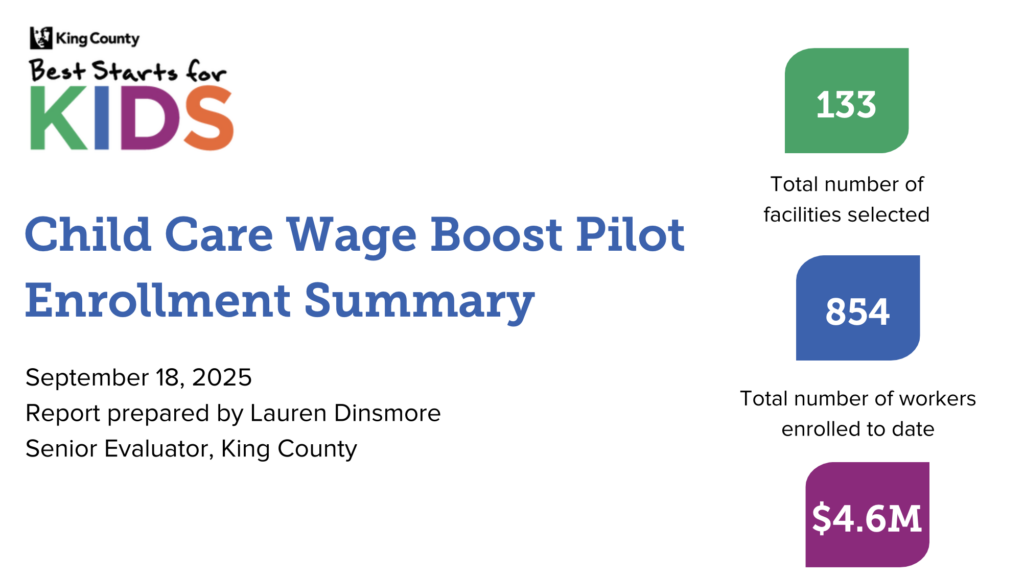
A data snapshot summarizing enrollment, participation, and early characteristics of workers and facilities participating in a child care wage boost pilot.
APHSA established a working group to identify strengths, barriers, and opportunities for better system alignment in human services for young parents and children, leading to the development of a roadmap to support meaningful systems-level changes.
American Public Human Services Association (APHSA)
This example examines Miami-Dade County's initiative to streamline digital applications for LIHEAP, aiming to improve accessibility and efficiency for residents seeking energy assistance.
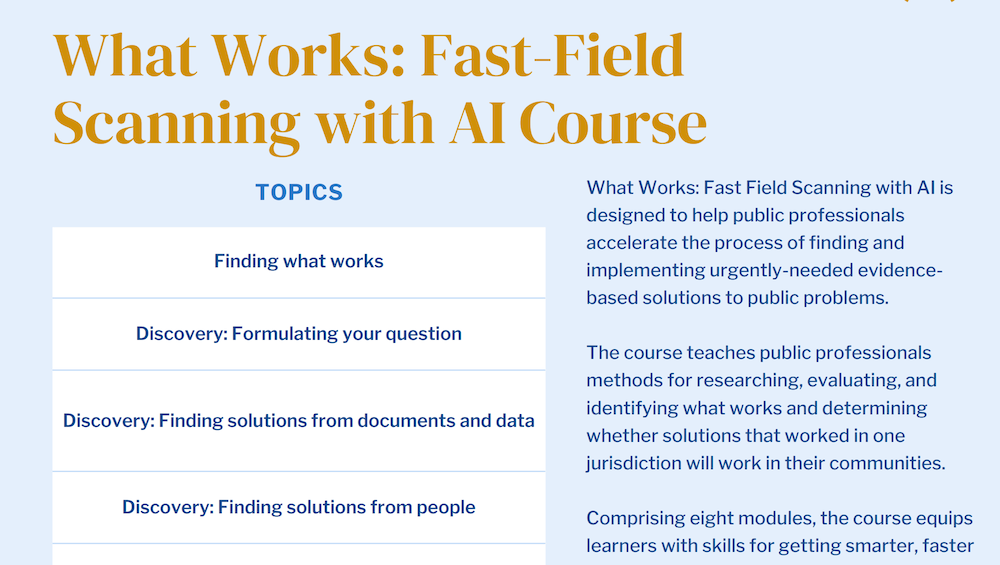
This course is designed to help public professionals accelerate the process of finding and implementing urgently-needed evidence-based solutions to public problems.
This research study analyzes the structural and budgetary layout of eleven US-based Digital Service Teams (DSTs) at the municipal, county, and state levels. In doing so, it sets out to answer the research question: “How are digital service teams structured and funded?”