A recent study challenges the common belief that income support programs like SNAP reduce employment, finding that for individuals with a work history, receiving SNAP benefits can actually increase long-term employment.
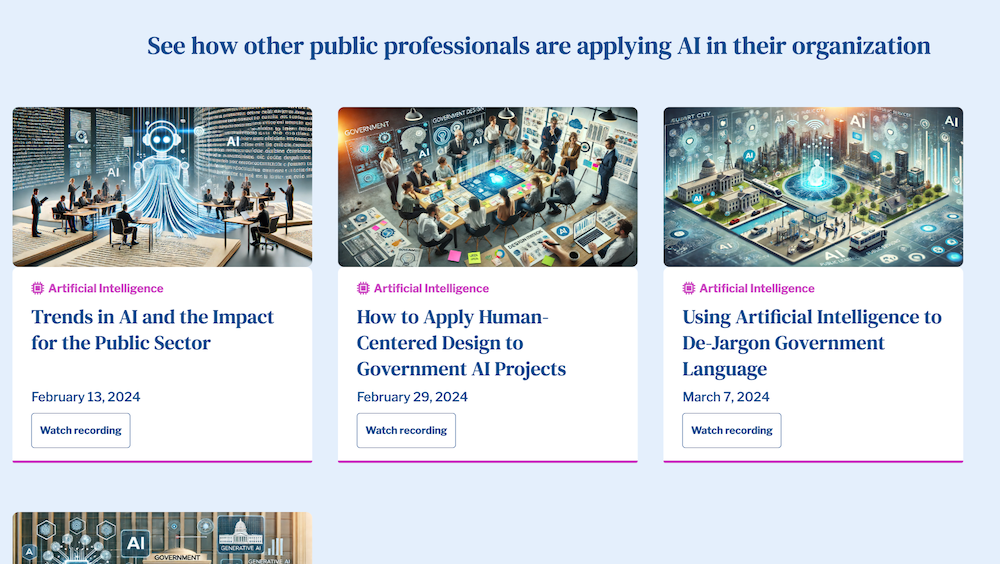
AI resources for public professionals on responsible AI use, including a course showcasing real-world applications of generative AI in public sector organizations.
The article explores the importance of participatory planning in policymaking, emphasizing how engaging impacted communities improves program design, equity, and trust in government, with a focus on early childhood education initiatives.
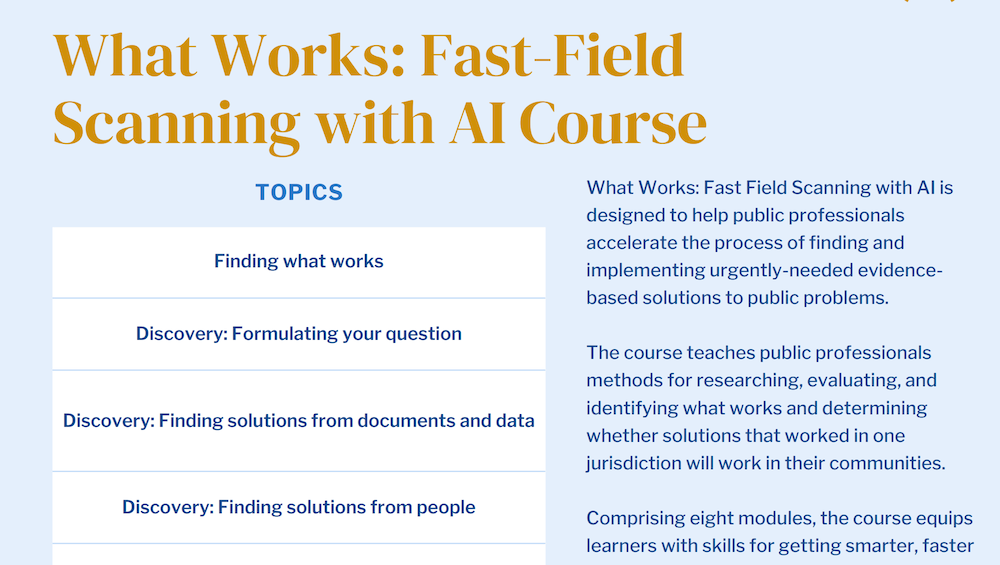
This course is designed to help public professionals accelerate the process of finding and implementing urgently-needed evidence-based solutions to public problems.
NYC's My File NYC and New Jersey's unemployment insurance system improvements demonstrate how successful digital innovations can be scaled across various programs, leveraging trust-building, open-source technology, and strategic partnerships.
A pre-launch survey brief that documents the financial, emotional, and physical well-being of a local child care workforce before the start of a wage boost pilot.
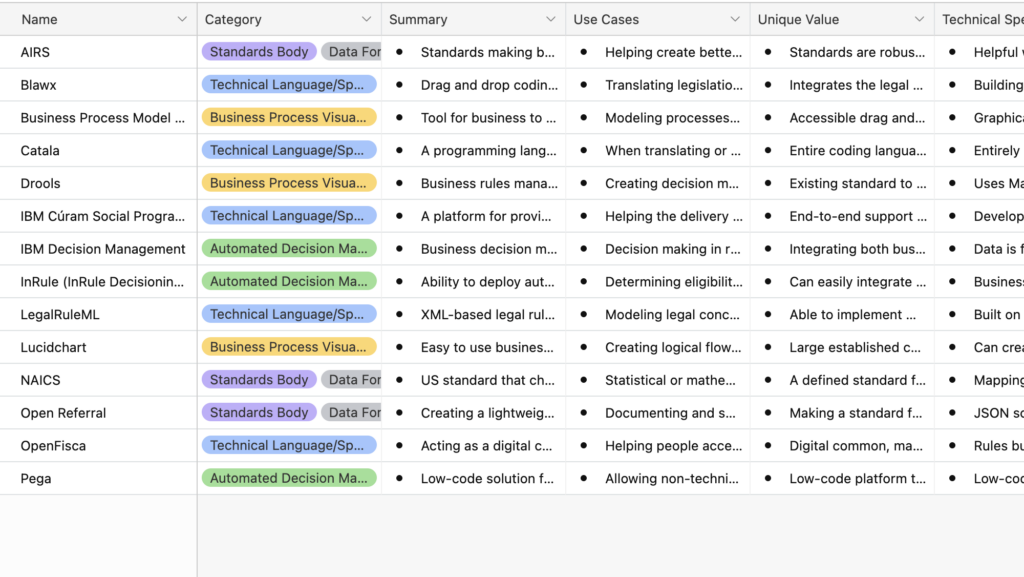
There are frameworks available that could inform the standardization of communicating rules as code for U.S. public benefits programs. The Airtable communicates the differences between the frameworks and tools. Each entry is tagged with different categories that identify the type of framework or tool it is.
In this updated primer, the DBN introduces the concept of digital identity, and provides brief snapshots of digital identity-related developments internationally and in the U.S.
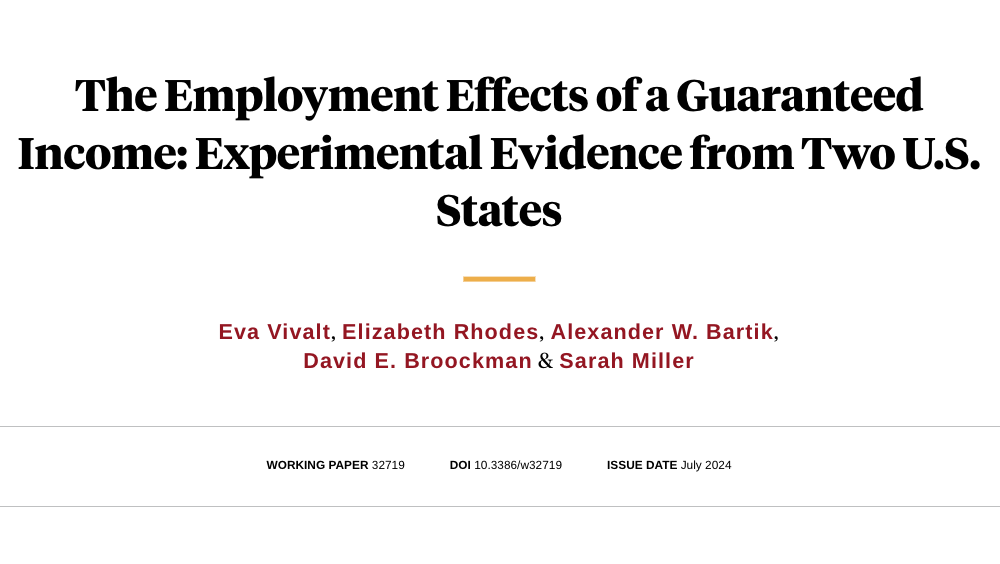
This study explores the causal impacts of income on a rich array of employment outcomes, leveraging an experiment in which 1,000 low-income individuals were randomized into receiving $1,000 per month unconditionally for three years, with a control group of 2,000 participants receiving $50/month.