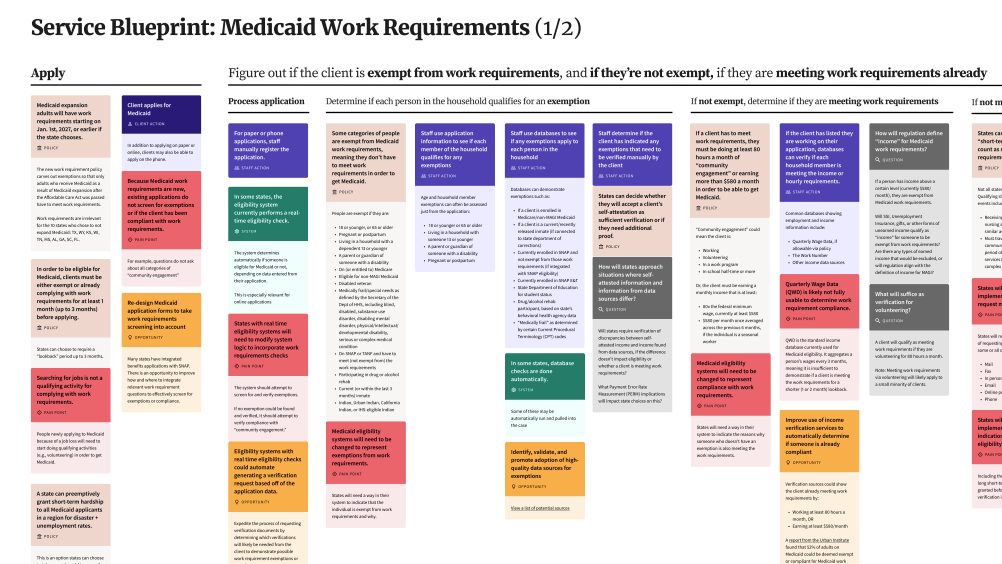
This 11x17 service blueprint visualizes every step, system, and policy decision involved in implementing Medicaid work requirements under H.R. 1—from application to renewal—identifying pain points, questions, and opportunities for states to streamline and humanize the process
This report outlines the foundational requirements and policy choices that states must consider as they prepare to implement mandatory Medicaid work reporting under H.R. 1.
This report provides detailed guidance for states on how to verify compliance with and exemptions from Medicaid work reporting requirements established under H.R. 1.
This memorandum summarizes the fiscal and programmatic impacts of Public Law 119-21 (H.R. 1 – “One Big Beautiful Bill”) on the state, detailing major provisions related to SNAP, Medicaid, higher education, taxation, and other federally funded programs.
A detailed guide outlining how states can minimize coverage losses and administrative burden while implementing new Medicaid work requirements established under the 2025 federal reconciliation law.
An in-depth report that examines how states use automated eligibility algorithms for home and community-based services (HCBS) under Medicaid and assesses their implications for access and fairness.
This publication explains the fundamentals of state IEE systems—including the technology, opportunities, risks, and stakeholders involved. It is a resource for state officials, advocates, funders, and tech partners working to implement these systems.
This resource examines the role of Medicaid in West Virginia and documents how the post-pandemic Medicaid “unwinding” process affected residents, highlighting participant experiences and the program’s importance for health and economic stability.
This blog post serves as a guide for state agencies to develop flexible and actionable metrics systems for tracking the implementation and impact of new work requirements under H.R. 1.
This discussion paper advocates for states to use the implementation of OBBBA (One Big Beautiful Bill Act) as a catalyst to build integrated, cross-agency data systems.