The New Mexico Human Services Department and Department of Health, as part of the Coordinating SNAP & Nutrition Supports program, leveraged data sharing to align SNAP, Medicaid, TANF, and WIC.
American Public Human Services Association (APHSA)
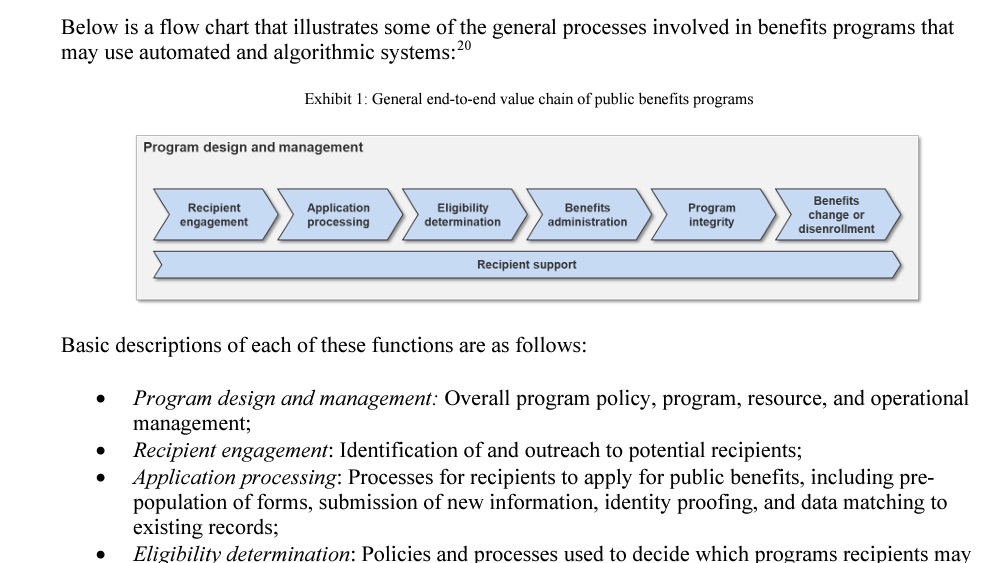
This plan promotes responsible AI use in public benefits administration by state, local, tribal, and territorial governments, aiming to enhance program effectiveness and efficiency while meeting recipient needs.
U.S. Department of Health and Human Services (HHS)
This playbook is designed to help government and other key sectors use data sharing to illuminate who is not accessing benefits, connect under-enrolled populations to vital assistance, and make the benefits system more efficient for agencies and participants alike.
This resource describes how different agencies have updated their systems to increase online and mobile access to benefits information and applications, including using text messages to share benefits information with residents.
In this presentation, team members from the North Carolina Department of Health and Human Services provide an overview of the implementation process for cross enrollment with SNAP, WIC, and Medicaid in North Carolina.
North Carolina Department of Health and Human Services
Ruling from the FCC granting the U.S. Department of Health and Human Services (HHS) to confirm that federal and state governmental agencies working in conjunction with local governments, governmental contractors, and managed care entities acting under contract with state governments may, under certain circumstances, make autodialed and prerecorded or artificial voice calls or send autodialed text messages to raise awareness of the eligibility and enrollment requirements for these governmental health care programs without violating the Telephone Consumer Protection Act (TCPA).
Digitizing public benefits policy will make the biggest impact for administrators and Americans, but only if it happens at the highest level of government.
The Center on Budget and Policy Priorities (CBPP) report discusses how reducing administrative burdens in Medicaid can enhance health outcomes and promote racial equity.
This policy brief outlines how extending postpartum Medicaid and CHIP coverage can improve maternal health outcomes, reduce disparities, and strengthen continuity of care during the critical first year after childbirth.
This crosswalk compares provisions in H.R. 1 with existing human services policies, focusing on how proposed federal work requirements could affect programs like TANF, SNAP, and Medicaid.
American Public Human Services Association (APHSA)
This event convened policy experts and state leaders to explore how states can operationalize new Medicaid work reporting mandates—covering technical, legal, and implementation challenges.