This issue brief examines how limited English proficiency creates barriers to enrolling in and accessing Medicaid and CHIP, and how states provide language access services to address these challenges.
This brief provides a framework for states to align and coordinate work requirement implementation across SNAP and Medicaid following the passage of H.R. 1.
A detailed CMS FAQ document providing federal guidance to state Medicaid and CHIP agencies on policies, procedures, and beneficiary protections following the end of the Medicaid continuous enrollment condition under the Families First Coronavirus Response Act (FFCRA).
This toolkit provides guidance to help states implement Medicaid Advisory Committees (MACs) and Beneficiary Advisory Councils (BACs) in accordance with new federal requirements designed to strengthen beneficiary input in Medicaid program oversight.
This webinar addressed the near completion of the Medicaid continuous coverage unwinding, highlighting a net decrease of almost 10.6 million enrollees, including over 4 million children, and discussed next steps for state compliance, best practices, and outreach strategies to reconnect eligible individuals who lost coverage.
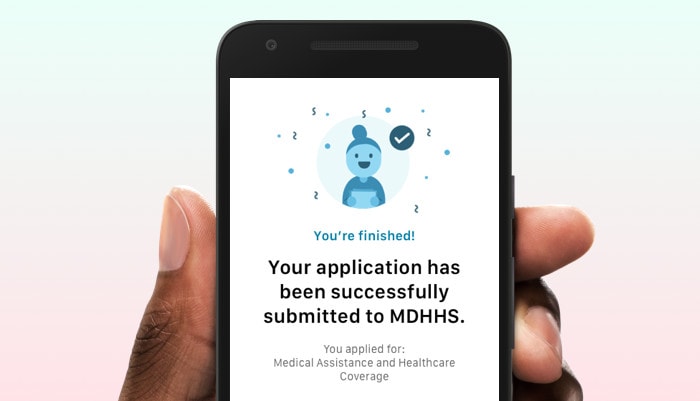
This page includes data and observations about account creation and identity proofing steps specifically for online applications that include MAGI Medicaid.
This report documents four experiments exploring if AI can be used to expedite the translation of SNAP and Medicaid policies into software code for implementation in public benefits eligibility and enrollment systems under a Rules as Code approach.
This toolkit offers strategies for advocates and state agencies to enhance the efficiency of eligibility verification processes for Medicaid and SNAP, aiming to reduce administrative burdens and improve access to benefits.
The ubiquity of mobile devices makes it imperative to build “mobile first” services, i.e. services built with the expectation that they will primarily be accessed on mobile devices. This article also outlines important considerations and suggestions for implementing mobile-first user interfaces.
This report explains how the A-87 Exception enabled states to modernize and integrate health and human services systems, improving service delivery, efficiency, and data sharing across programs.
American Public Human Services Association (APHSA)
This brief provides a summary of potential federal funding sources and programs that can be used to support programs specifically targeted towards young families. While this list is not exhaustive, it highlights major sources that can serve as a starting point for braiding and blending of funding to create comprehensive programming to serve young families.
American Public Human Services Association (APHSA)