This report analyzes how SNAP households redeemed their benefits in FY 2022, examining transaction frequency, benefit exhaustion timing, store types, online purchasing, and the effects of pandemic-related policy changes.
This blog post serves as a guide for state agencies to develop flexible and actionable metrics systems for tracking the implementation and impact of new work requirements under H.R. 1.
This discussion paper advocates for states to use the implementation of OBBBA (One Big Beautiful Bill Act) as a catalyst to build integrated, cross-agency data systems.
This webinar presentation outlines the essential communication requirements and outreach standards for states preparing for Medicaid work reporting mandates starting in 2027.
This issue brief provides a comprehensive framework for state officials to monitor and evaluate the far-reaching impacts of the H.R.1 budget reconciliation bill on the Medicaid program.
This presentation focuses on data-driven and analytic strategies for identifying and verifying medical frailty exemptions within Medicaid work requirements.
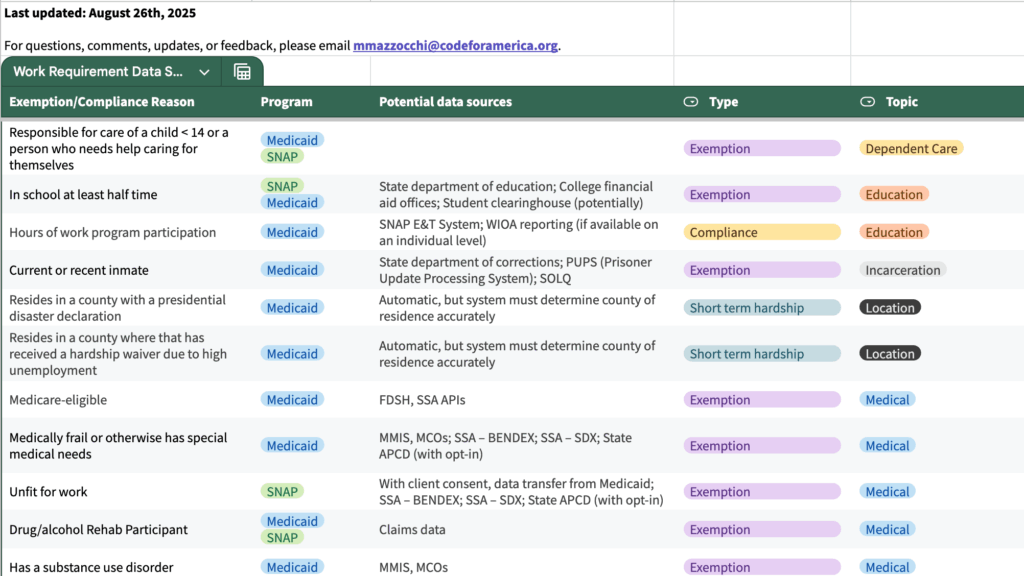
This guide explains how states can implement new Medicaid work requirements introduced by H.R. 1, focusing on minimizing harm to eligible clients while preparing for compliance by 2027.
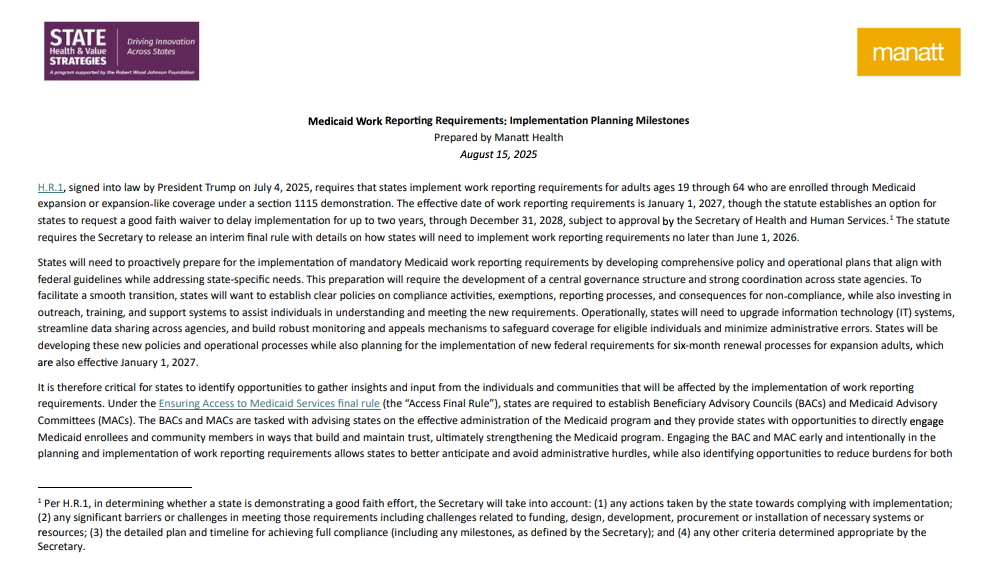
This milestone table outlines a detailed roadmap for states to implement mandatory Medicaid work reporting requirements under H.R. 1 by January 1, 2027.
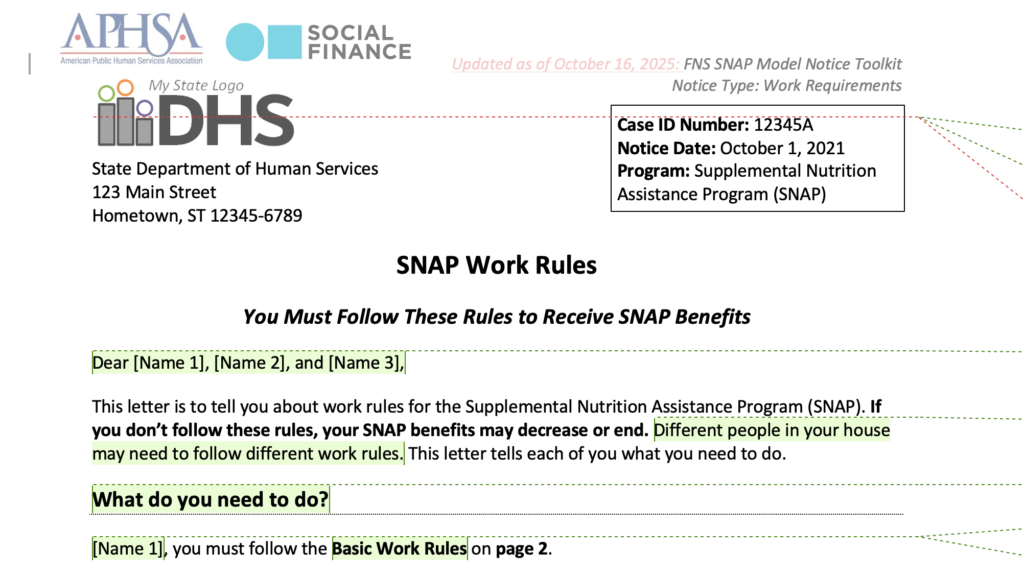
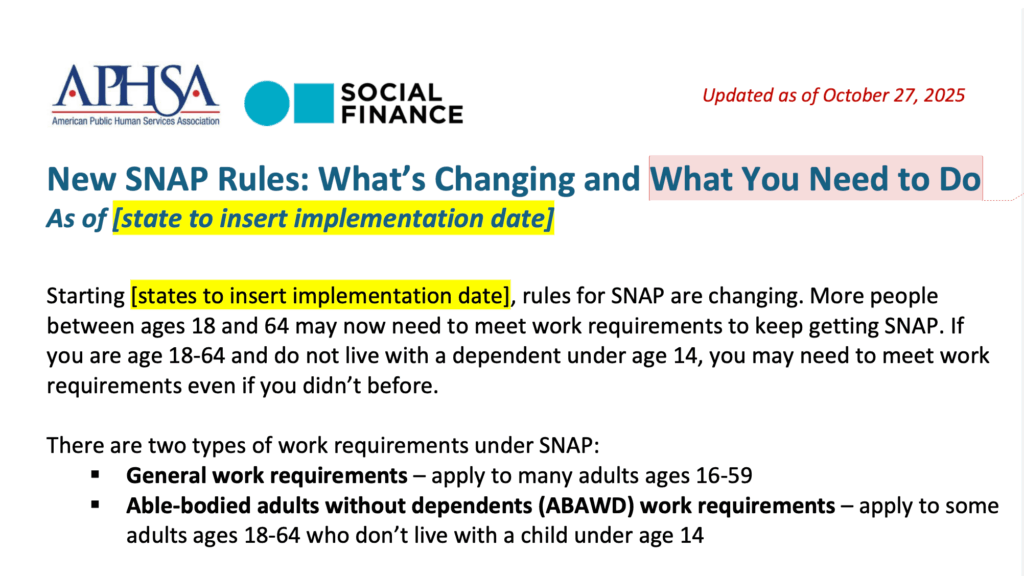
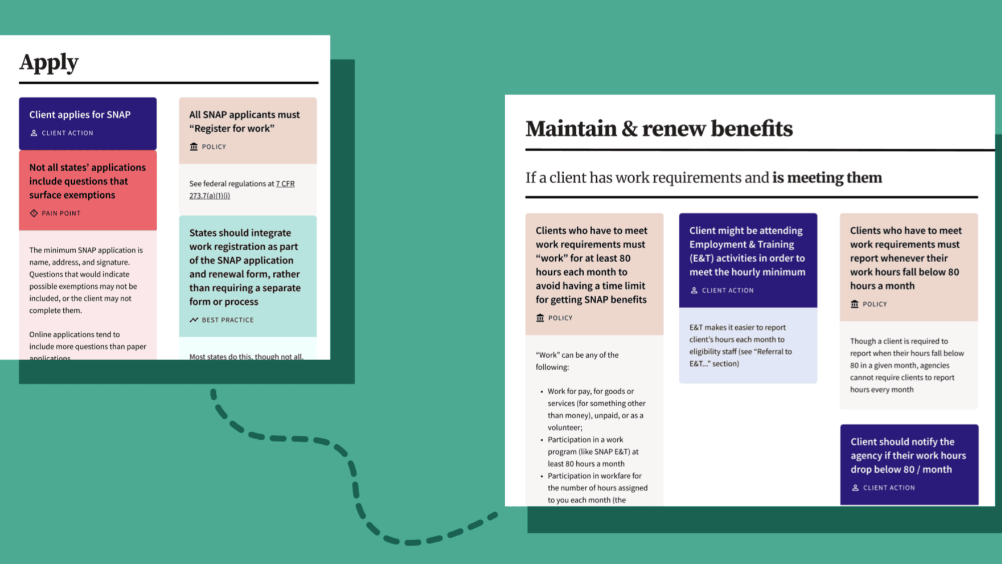
This blog presents a service blueprint that maps how expanded SNAP work requirements will affect the application, eligibility, and maintenance processes—and offers design recommendations to reduce administrative burden.