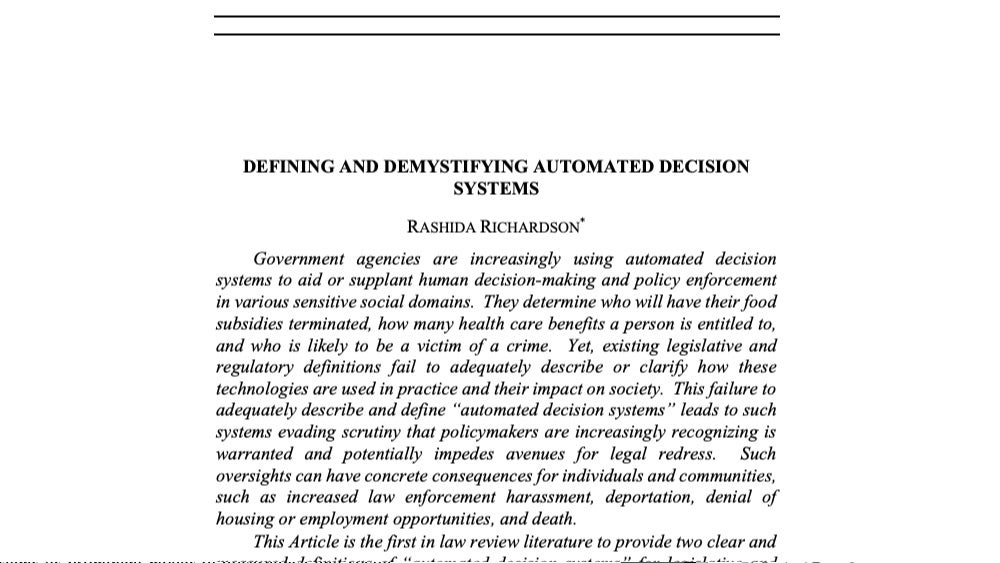
Automated decision systems (ADS) are increasingly used in government decision-making but lack clear definitions, oversight, and accountability mechanisms.
Usability tests can help teams develop products that are user-centered, accessible, and inclusive. This guide will help you create a robust plan to promote a successful usability test.
This guidebook offers an introduction to the risks of discrimination when using automated decision-making systems. This report also includes helpful definitions related to automation.
Temporary Assistance for Needy Families (TANF) leaders, policymakers, and researchers all recognize the need for TANF agencies to use the data they collect to better understand how well their programs are working and how to improve them, given the impact on the families they serve. It is often difficult, however, for agencies already stretched to capacity to prioritize and execute data use and analytics. State TANF leaders are seeking roadmaps for how to transform their organizations and become data-driven.
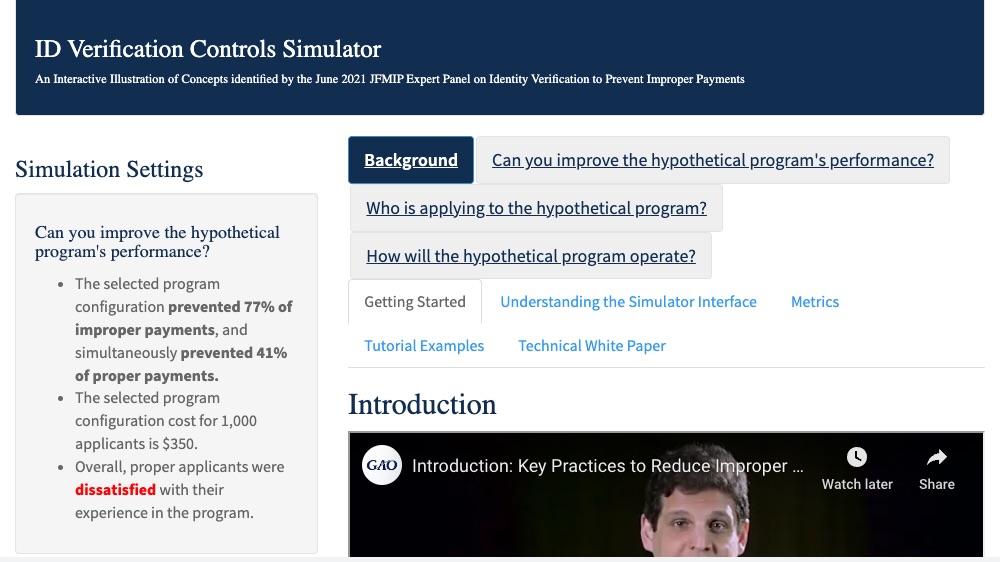
This simulator, created by the Joint Financial Management and Improvement Program (JFMIP), allows users to model program performance for a hypothetical government program, based on different identity verification decisions. The simulator illustrates concepts from the JFMIP report on payment integrity.
Joint Financial Management and Improvement Program (JFMIP)
The examples in this guide describe how peer-to-peer training and updated interview scripts can help connect residents to the benefits they are eligible for.
This post explores the lessons learned and opportunities for improvement from USDR's research on families' experiences as they navigate the child care journey.
The report examines how current remote identity proofing methods can create barriers to Medicaid enrollment and suggests improvements to ensure equitable access for all applicants.
Annual Computers, Software, and Applications Conference (COMPSAC)
Drawing on the Beeck Center’s research on government, nonprofit, academic, and private sector organizations that are working to improve access to safety net benefits, this report highlights best practices for creating accessible benefits content.
Defining a product in government digital services is crucial, as it serves as the means through which a service is delivered to the public, and understanding its attributes ensures effective and continuous improvement.