This policy blueprint outlines six actionable steps for state governments to improve digital identity infrastructure, focusing on security, equity, innovation, and privacy.
We wrapped up Rules as Code Demo Day with Max Ghenis and Nikhil Woodruff, the founders of PolicyEngine. The PolicyEngine web app computes the impact of tax and benefit policy in the US and the UK. With PolicyEngine, anyone can freely calculate their taxes and benefits under current law and customizable policy reforms, and also estimate the society-wide impacts of those reforms. Policymakers and think tanks from across the political spectrum can analyze actual policy. PolicyEngine is built atop the open source OpenFisca US and UK microsimulation models and they are building an open unified data set utilizing data from the Policy Rules Database, Current Population Survey, Survey of Consumer Finances, Consumer Expenditures, tax records, and IRS Public Use File.
This resource contains specific examples that highlight the advantages of designing reusable code components, software tools, or design formats. This guide also illustrates the possibilities for connecting new components to existing system infrastructure.
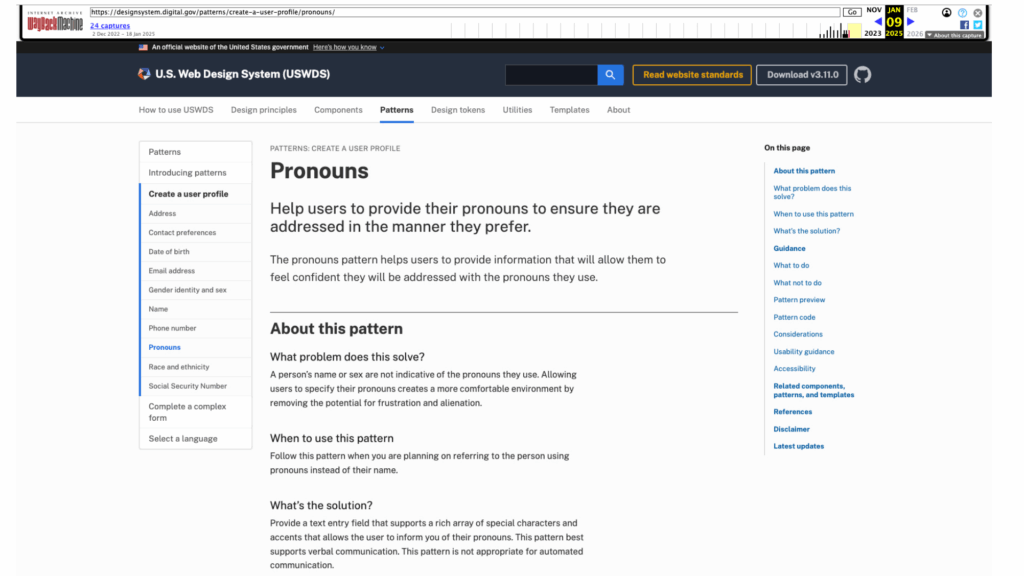
This page provides a U.S. Web Design System pattern for collecting pronoun information in user profiles in a way that respects identity, supports data standards, and promotes inclusion.
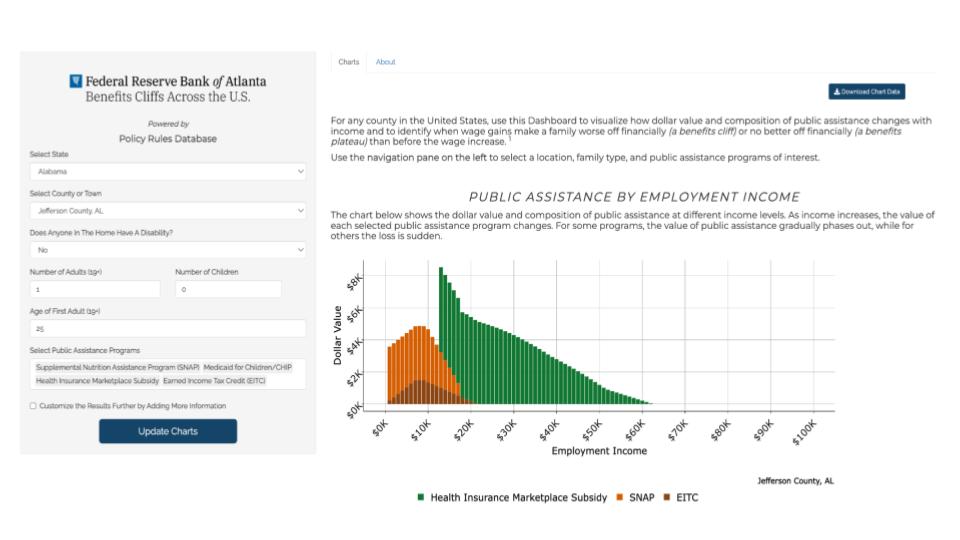
The Policy Rules Database (PRD), developed by the Federal Reserve Bank of Atlanta and the National Center for Children in Poverty, consolidates complex rules for major U.S. federal and state benefit programs and tax policies into a standardized, easy-to-use format. This database allows researchers to model public assistance impacts, simulate policy changes, and analyze benefits cliffs across various household scenarios using common rules and language across different programming platforms.
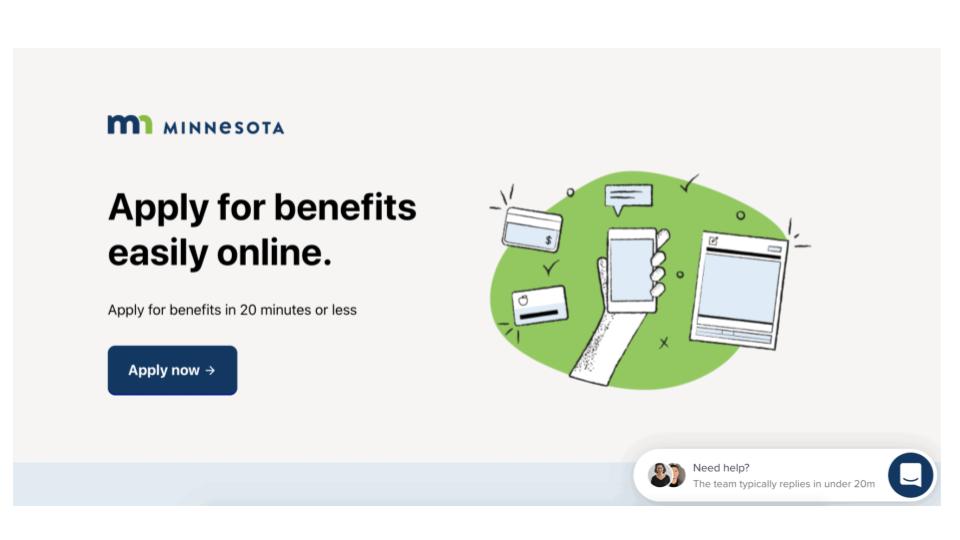
Minnesota is a good example of an organization that started small in its drive to integrate benefits programs. For instance, its recent statewide rollout of its online integrated benefit application website, MNbenefits.mn.gov, started as a pilot in 2020 with Code for America. The pilot encompassed two counties including Hennepin County, where Minneapolis is located. The pilot later expanded to four counties, then 16 and a tribal nation. The final roll out, which took 12 months to implement, included the state’s 87 counties and three tribal nations.
This strategic plan outlines Colorado's vision to enhance digital government by improving broadband access, simplifying government services, and leveraging data to create a more accessible, efficient, and responsive government for all residents.
Colorado Governor's Office of Information Technology (OIT)
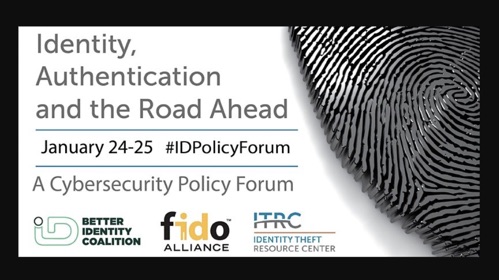
In this panel conversation from the Better Identity Coalition’s 2022 policy forum, “Identity, Authentication, and the Road Ahead," representatives from industry and government discuss priorities for authentication and identity management.
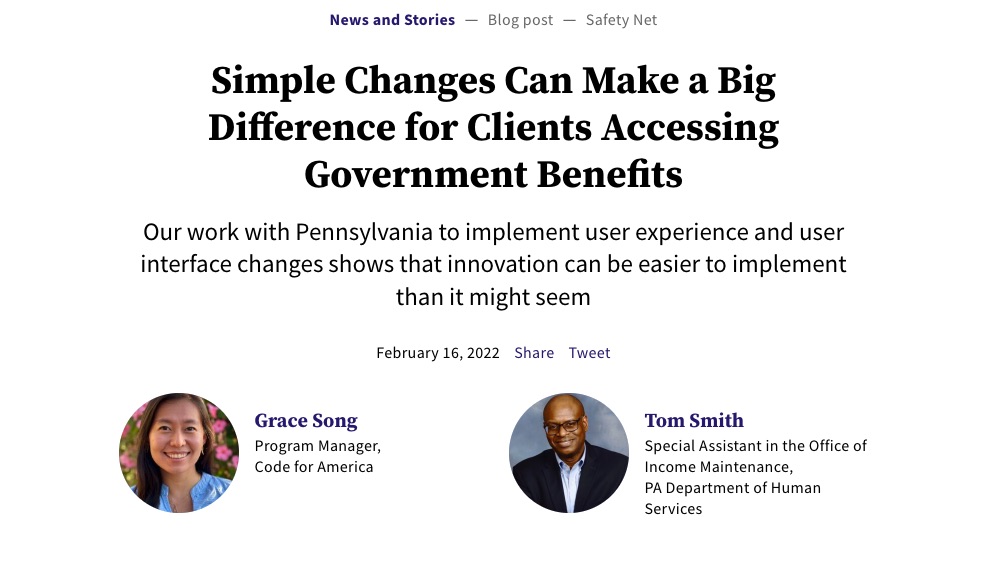
Our work with Pennsylvania to implement user experience and user interface changes shows that innovation can be easier to implement than it might seem.
In this panel conversation, presenters at the Better Identity Coalition’s 2022 policy forum “Identity, Authentication, and the Road Ahead” discuss the challenges of identity verification and access in pandemic unemployment benefits.
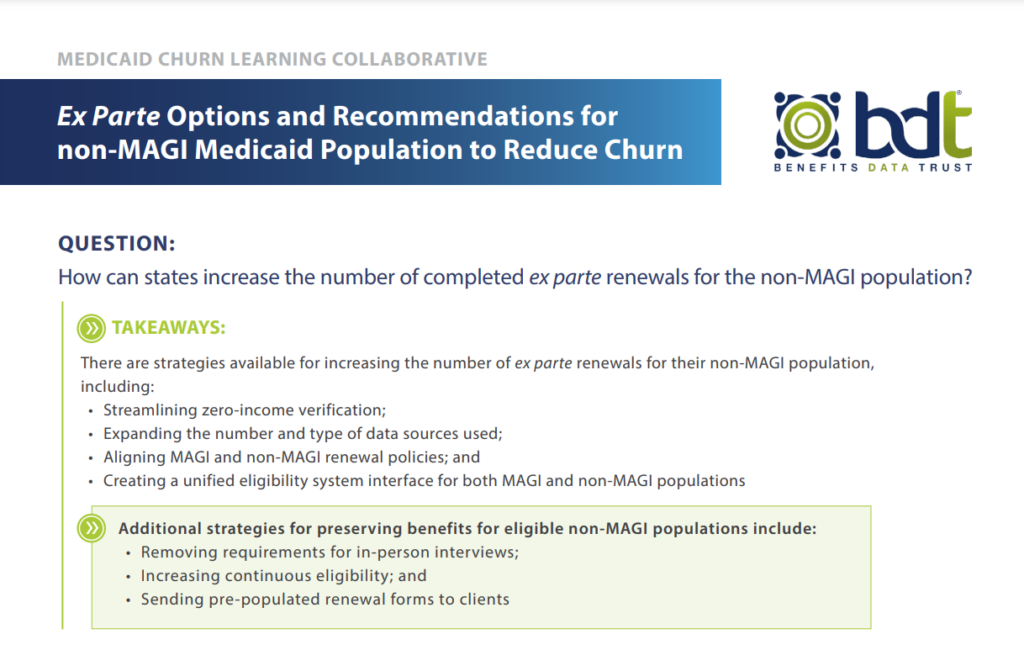
As a part of Benefit Data Trust (BDT)’s Medicaid Churn Learning Collaborative, BDT has created a memo describing policy options and state examples for Medicaid administrators to reduce churn for non-MAGI Medicaid enrollees when the federal public health emergency ends.