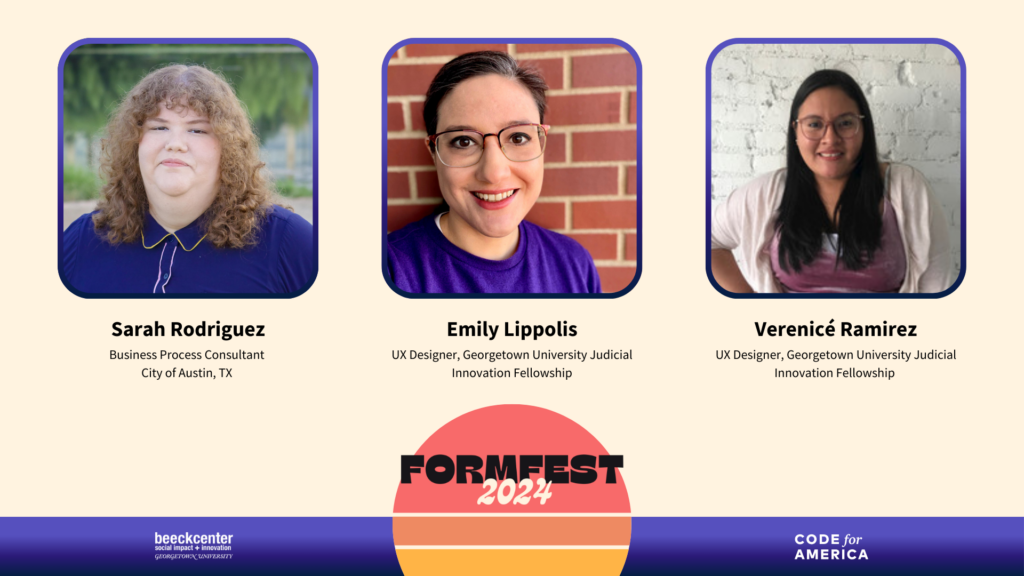
A profile on FormFest speakers Sarah Rodriguez, Emily Lippolis, and Verenice Ramirez, featuring stories about their motivations for working on public sector form innovation.
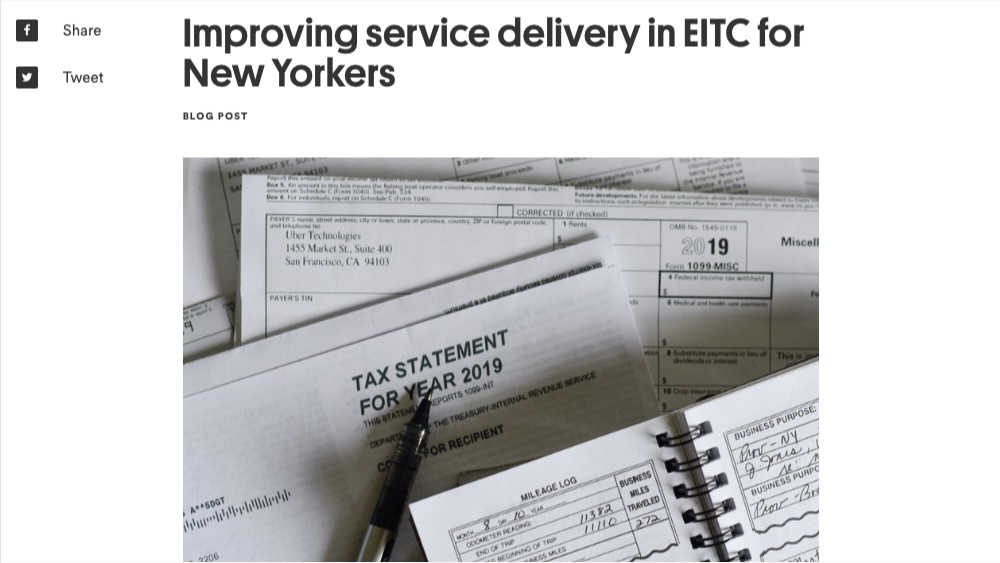
The Improving Service Delivery in EITC for New Yorkers initiative explores ways to enhance access to the Earned Income Tax Credit (EITC) through improved outreach, application processes, and service delivery.
CalAcademy is California’s public sector innovation training program, equipping state employees with modern skills like human-centered design, data analytics, and a product mindset to enhance government services.
With the extension and expansion of P-EBT during COVID and the Food and Nutrition Service releasing new guidance, states have an opportunity to effectively deliver essential resources to children and families. Code for America built this toolkit of resources to share recommendations and promising practices around the implementation of P-EBT and to support state agencies and partners tasked with the development of P-EBT programs.
Practitioner Picks is a new quarterly series designed to add fresh resources to the Digital Government Hub’s library, helping people improve government digital service delivery. Each issue spotlights resources chosen by practitioners in a specific service delivery area along with their insights on why these picks are valuable additions to the Hub. In this edition, our contributors round up resources to help bring housing services into the digital age.
This case study documents how Civilla partnered with the Michigan Department of Health and Human Services (MDHHS) to redesign and modernize online enrollment for the state’s largest benefit programs.
This toolkit provides guidance to help states implement Medicaid Advisory Committees (MACs) and Beneficiary Advisory Councils (BACs) in accordance with new federal requirements designed to strengthen beneficiary input in Medicaid program oversight.
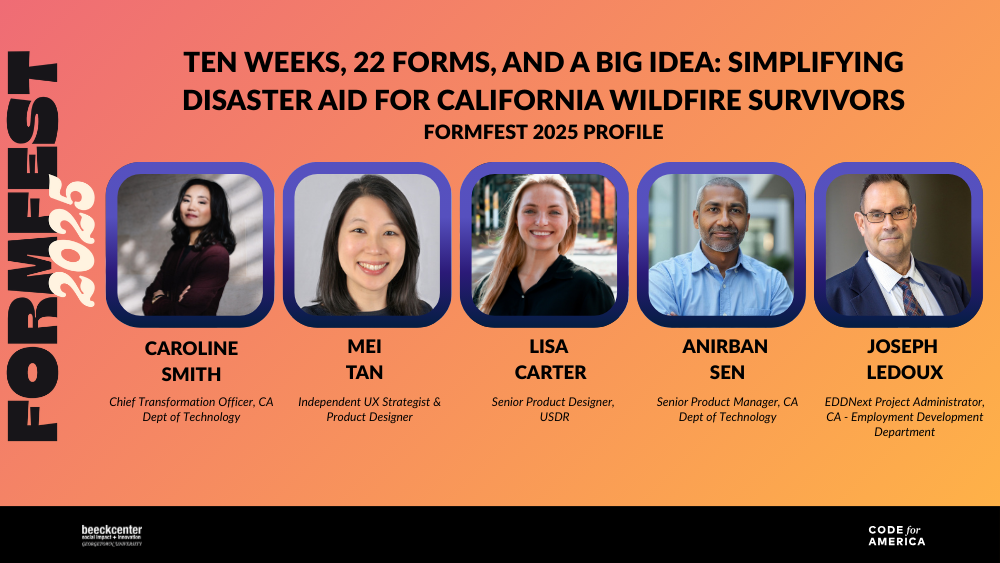
This FormFest profile describes how California rapidly simplified disaster-aid processes for wildfire survivors by auditing 22 forms across eight agencies and developing a concept for a universal eligibility form and relief portal.
A practical toolkit that helps human services agencies coordinate programs and benefits to better support whole families through aligned policies, processes, and service delivery.
This resource introduces the "Layer Cake" approach, a framework for driving behavior change in government systems and public services by addressing all layers of service delivery, from frontline staff to policymakers, with an emphasis on human-centered design and civic participation.