A case study documenting how a human-centered claimant portal was developed for the New Jersey Department of Labor (NJDOL) to modernize unemployment insurance access using agile development and API technology.
The Digital Service Network (DSN) spoke with three staff members from the Digital Transformation Team in Montgomery County Public LIbraries—Maddie Schellhardt, Raymond Bryson, and Emily Lamancusa, to learn more about the county's efforts to advance digital service delivery and inclusion
This memo provides information to child and family service agencies on improving support for intersex children, adolescents, and their families through affirming practices, resources, and partnerships.
U.S. Department of Health and Human Services (HHS)
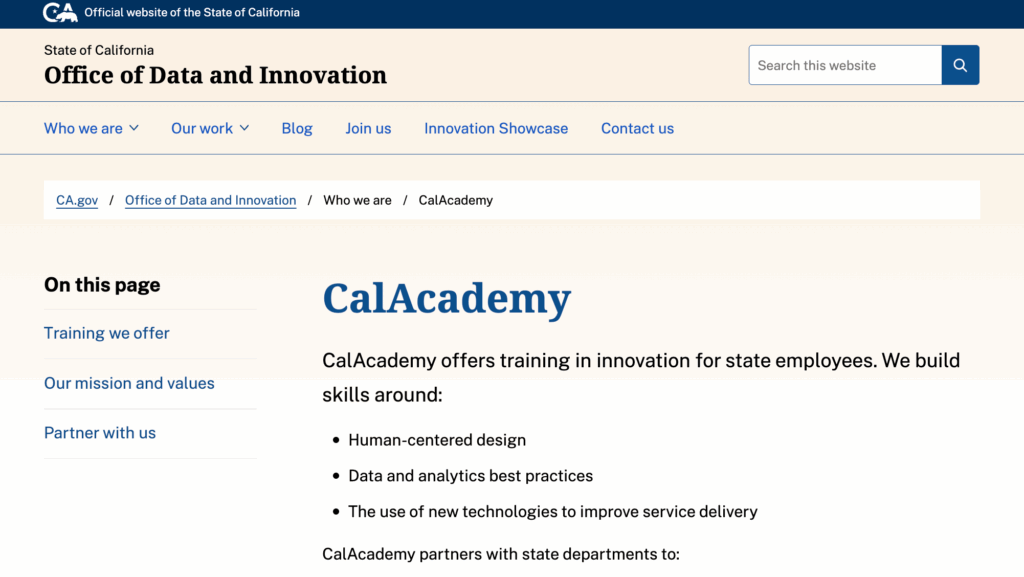
CalAcademy is California’s public sector innovation training program, equipping state employees with modern skills like human-centered design, data analytics, and a product mindset to enhance government services.
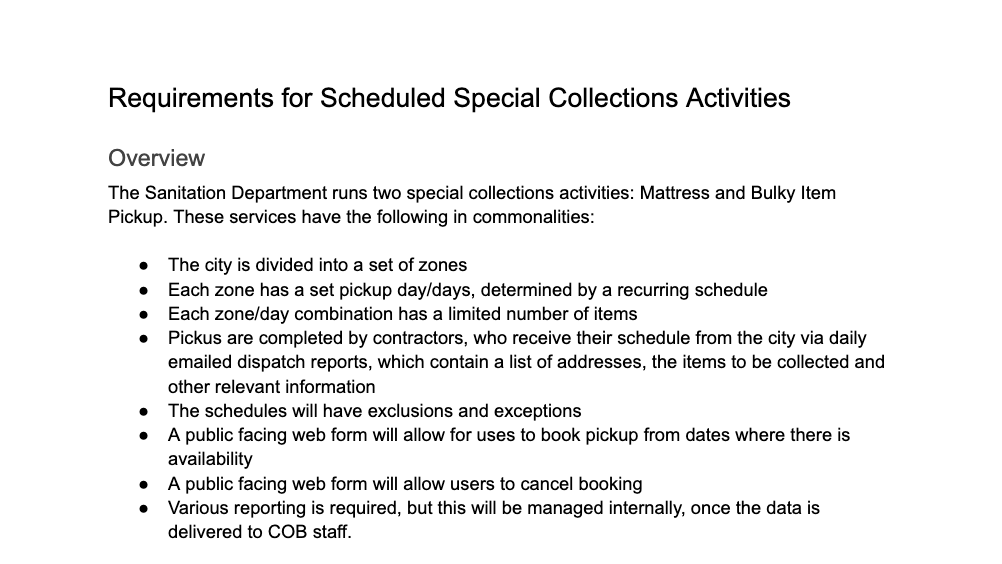
This exploratory brief outlines the City of Boston’s phased plan to build a digital system for scheduling, managing, and reporting mattress and bulky item recycling pickups.
An online hub that connects WIC agencies and their partners through a national Data Matching Community of Practice, offering quarterly virtual convenings to share best practices, case studies, and peer learning on strategies to improve WIC outreach and enrollment.
This case study explores how the City of Akron developed a community tree map to engage residents in urban forestry efforts, enabling them to identify, grow, and care for trees in their neighborhoods.
The Seattle.gov website's new Assistance and Discounts page centralizes information on city benefits and services, offering a user-friendly and consistent experience across 7,000 pages.
DSN Spotlights are short-form project profiles that feature exciting work happening across our network of digital government practitioners. Spotlights celebrate our members’ stories, lift up actionable takeaways for other practitioners, and put the resources + examples we host in the Digital Government Hub in context.
DSN Spotlights are short-form project profiles that feature exciting work happening across our network of digital government practitioners. Spotlights celebrate our members’ stories, lift up actionable takeaways for other practitioners, and put the resources + examples we host in the Digital Government Hub in context.
This page describes the agency’s investments in digital tools and services aimed at reducing friction in how people find, apply for, and maintain eligibility for federal benefits.
The portfolio page outlines federal projects focused on elevating how people interact with government services by prioritizing user needs, accessibility, equity, and consistency across agencies.