Few large government software projects are successful, as current ecosystems in place at agencies do not support agile development practices. This guide provides instructions to federal agencies on how to effectively budget for, procure, and oversee software development projects.
Clearing applicant backlogs is an important solution to the UI crisis. State governments and federal agencies could facilitate access to public benefits by collaborating to develop interoperable technology platforms that use open source software and modular design. Panelists discuss opportunities to prevent future UI crises by reimagining how governments deliver benefits to their citizens.
This research brief explores the different philosophies and implementation methods of modular procurement, including the advantages and disadvantages of each method, and the cultural and structural changes a procurement office should consider when making the switch to modular procurement.
National Association of State Procurement Officials (NASPO)
This research brief summarizes the ideas and recommendations from sessions with dozens of cross-sector stakeholders within the technology ecosystem to identify conditions for better, healthier, more secure digital ecosystems that could help guide the next generation of open protocols and platforms.
Handbook by 18F designed for executives, budget specialists, legislators, and other “non-technical” decision-makers who fund or oversee state government technology projects that receive federal funding and implement the necessary technology to support federal programs. It aids in setting projects up for success by asking the right questions, identifying the right outcomes, and equally important, empowering decision-makers with a basic knowledge of the fundamental principles of modern software design.
18F describes modular contracting, the process of breaking up large, custom software procurements into a small constellation of smaller contracts. Modular procurement requires agile, product thinking, user-centered design, DevSecOps, and loosely-coupled architecture.
The U.S. Department of Labor is working with states, territories, and the public to develop strategies to continuously improve the nation’s unemployment insurance (UI) systems.
Technology enables governments to engage in “pilot” projects to see where they are headed and course-correct along the way, as opposed to evaluating the results over the course of multiple years. Delivery-driven government utilizes technology and “pilot” projects to see institutions and processes through the eyes of users, allowing for more effective service delivery.
The Administration for Children and Families’ Office of Family Assistance (OFA) worked with 18F to replace its legacy data reporting system through product management training, user research, and an assisted acquisition.
This guide is intended to provide everything else, with a focus on the basics of UI technology projects, guidance on standards for equitable uses of technology, and strategies for how to have a positive impact on these projects.
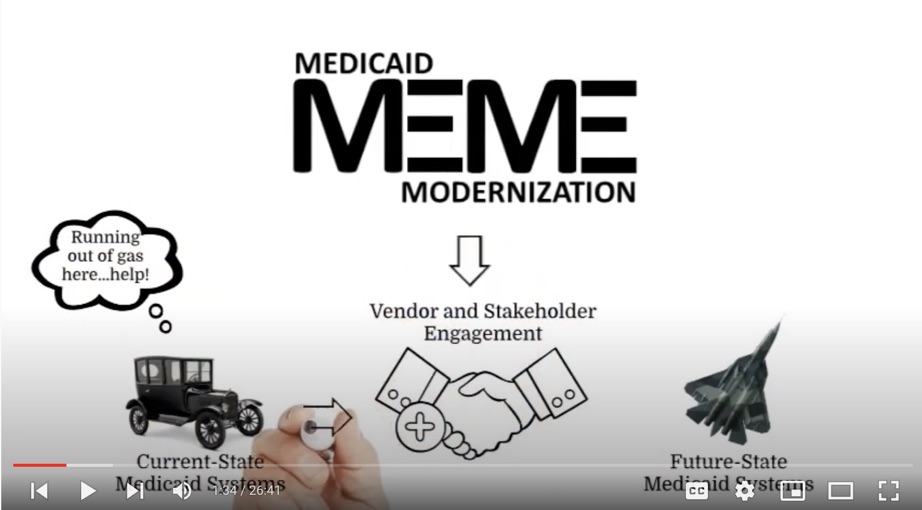
This artifact is a telestration video introducing Iowa Medicaid's Medicaid Enterprise Modernization Effort (MEME) initiative, providing vendors with background information and strategic outcome priority goals to elicit feedback from the vendor community via Request for Information (RFI).