This resource contains specific examples that highlight the advantages of designing reusable code components, software tools, or design formats. This guide also illustrates the possibilities for connecting new components to existing system infrastructure.
A primer by New America for government entities thinking about embracing open-source solutions. This report is based on interviews with experts in the field, the organization’s work on piloting open source projects with partners around the world, and a review of nearly 50 reports, documents, and resources on the creation and usage of open source software.
Few large government software projects are successful, as current ecosystems in place at agencies do not support agile development practices. This guide provides instructions to federal agencies on how to effectively budget for, procure, and oversee software development projects.
In June 2020, the state implemented an innovative and entirely virtual vendor selection process to evaluate these solutions under the direction of the Colorado Digital Service (CDS).
Technology enables governments to engage in “pilot” projects to see where they are headed and course-correct along the way, as opposed to evaluating the results over the course of multiple years. Delivery-driven government utilizes technology and “pilot” projects to see institutions and processes through the eyes of users, allowing for more effective service delivery.
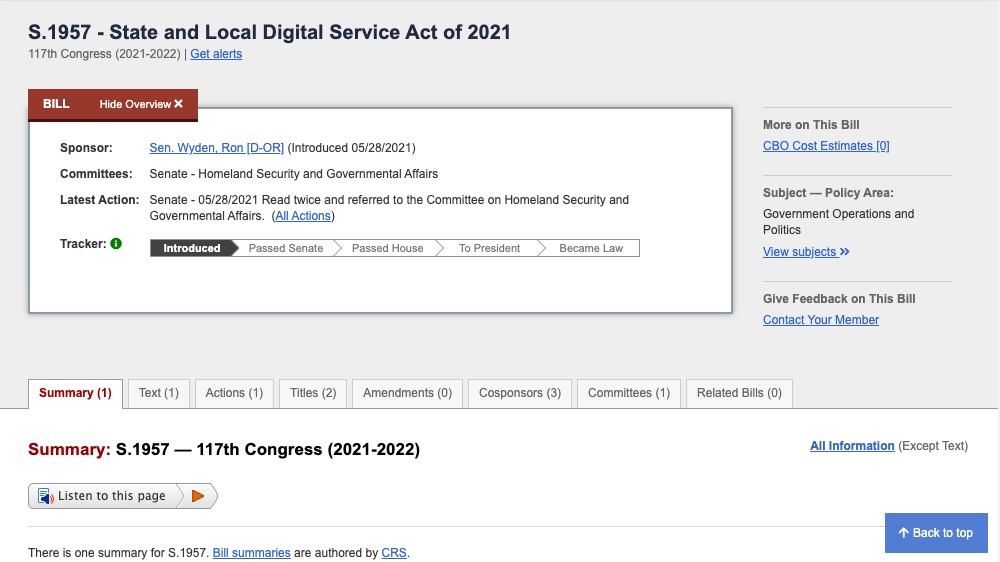
This bill provides support for the establishment of digital services in state, county, local, and tribal governments. Specifically, the bill directs the General Services Administration (GSA) to establish (1) a Digital Service Grant Program to provide grants to such governments to establish or support a digital service team, and (2) a Digital Service Planning Grant Program to provide grants to create a plan to establish a digital service team. The GSA must (1) report periodically to Congress and make publicly available on its website information regarding the grants, and (2) issue guidance to streamline the procurement of federal services and technology by states, local governments, and Indian tribes.
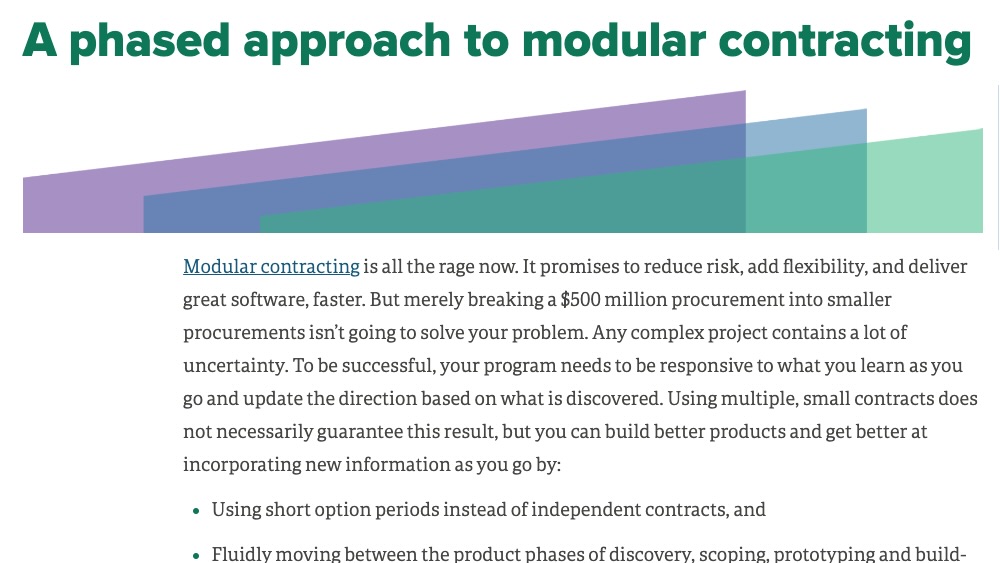
Modular contracting doesn’t just mean that you break one procurement into several pieces. This article shows you how to take a modular approach with a single contract divided up into natural break points.