Tangible tools, scoring guides and strategies to embed equity and wellbeing into your procurement process. Designed for human services with opportunities to apply these principles to other fields.
A playbook by AdHoc for agencies ready to replace enterprise software patterns with proven techniques from the world of commercial software. These plays can better equip teams with the practices that create resilient, flexible, and customer-friendly digital services.
Louisiana issued an RFI to identify solutions that can provide a technology platform for determining eligibility and managing cases across multiple human services programs.
This publication explains current state integrated eligibility and enrollment (IEE) system implementation processes, approaches, and opportunities for future processes and technologies. It is a resource for state officials, advocates, funders, and tech partners working to implement these systems.
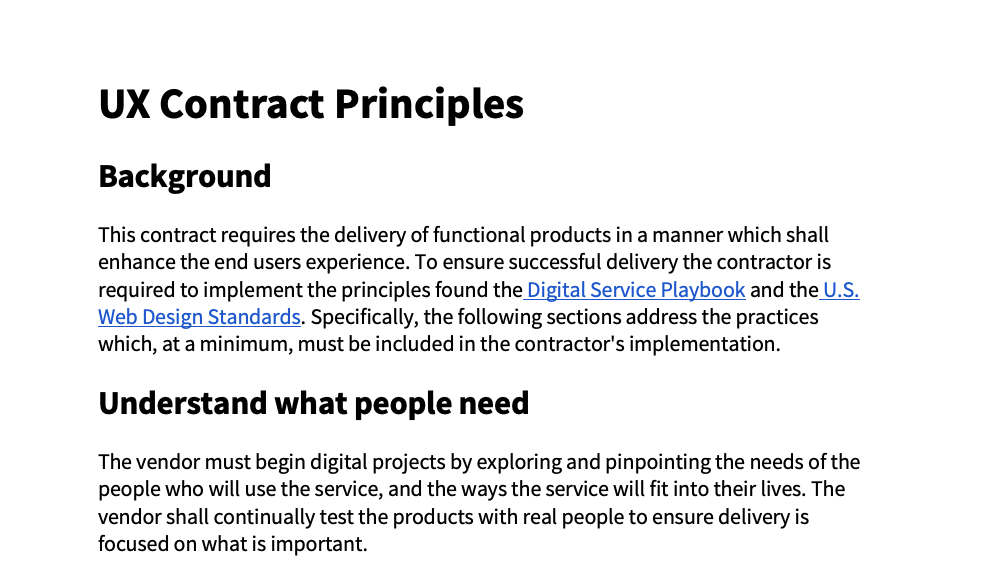
A set of contract-ready principles and requirements that define how vendors must deliver user-centered, accessible, and data-informed digital services.
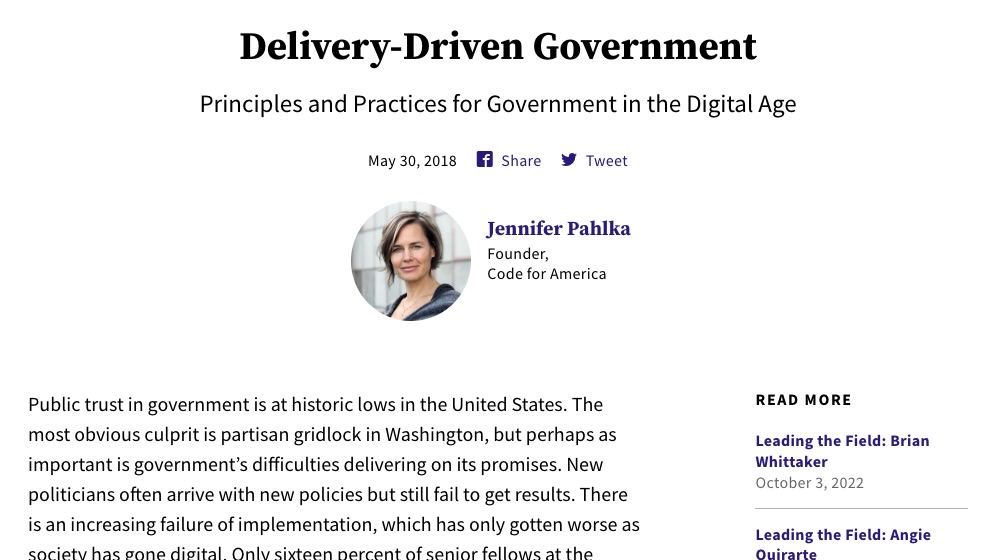
Technology enables governments to engage in “pilot” projects to see where they are headed and course-correct along the way, as opposed to evaluating the results over the course of multiple years. Delivery-driven government utilizes technology and “pilot” projects to see institutions and processes through the eyes of users, allowing for more effective service delivery.
The pandemic has shown how difficult it can be for the US to succeed with major technology projects. Various leading design thinkers discuss strategies for building more efficient and effective government technology.
This research brief explores the different philosophies and implementation methods of modular procurement, including the advantages and disadvantages of each method, and the cultural and structural changes a procurement office should consider when making the switch to modular procurement.
National Association of State Procurement Officials (NASPO)