This memo provides guidance on conducting usability testing under the Paperwork Reduction Act (PRA), clarifying when PRA approval is required, and offering strategies for quickly implementing improvements based on usability feedback for federal forms and websites.
This "Page Templates" section offers pre-built, responsive page layouts that combine various components to ensure consistent, accessible, and user-friendly experiences across Government of Canada digital services.
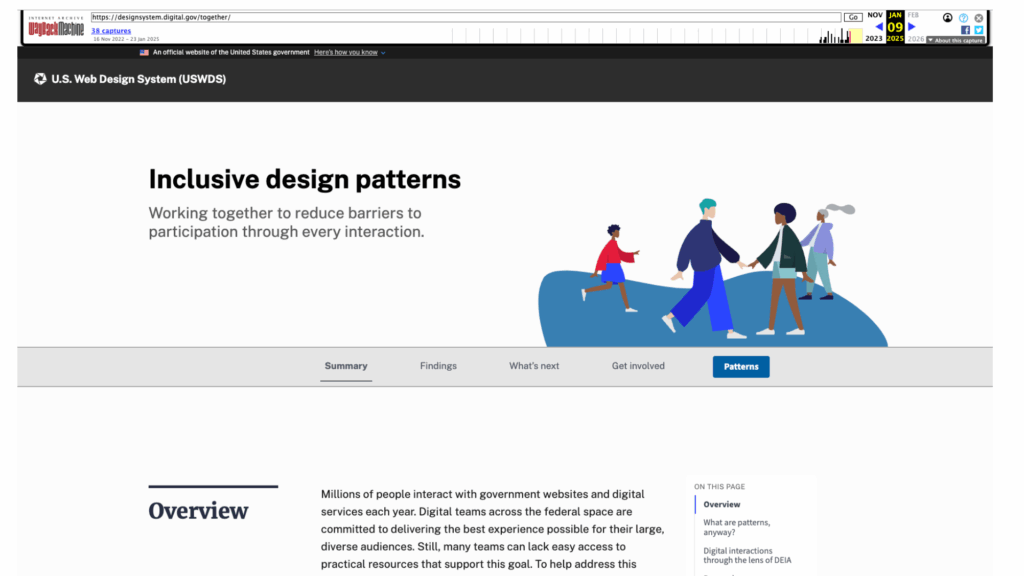
USWDS provides a new library of guidance and examples focused on key digital interactions that foster effective. inclusive, and equitable digital experiences.
This blog recaps a conversation with Richard Pope, author of Platformland, on how public sector digital services must evolve to reduce administrative burden, enable easier service creation, and foster transparency and democratic participation.
The playbook is a comprehensive guide developed by the Maryland Department of Information Technology to assist state agencies in creating consistent, user-centered, and accessible digital services.
This case study details the development of a document extraction prototype to streamline benefits application processing through automated data capture and classification.
This article explores how integrating behavioral science into public administration can improve government effectiveness, equity, and trust by redesigning public services with human behavior in mind.
A web-based platform that provides design principles, accessible UI components, and guidance to help teams across the UK government create consistent, user-centered digital services.