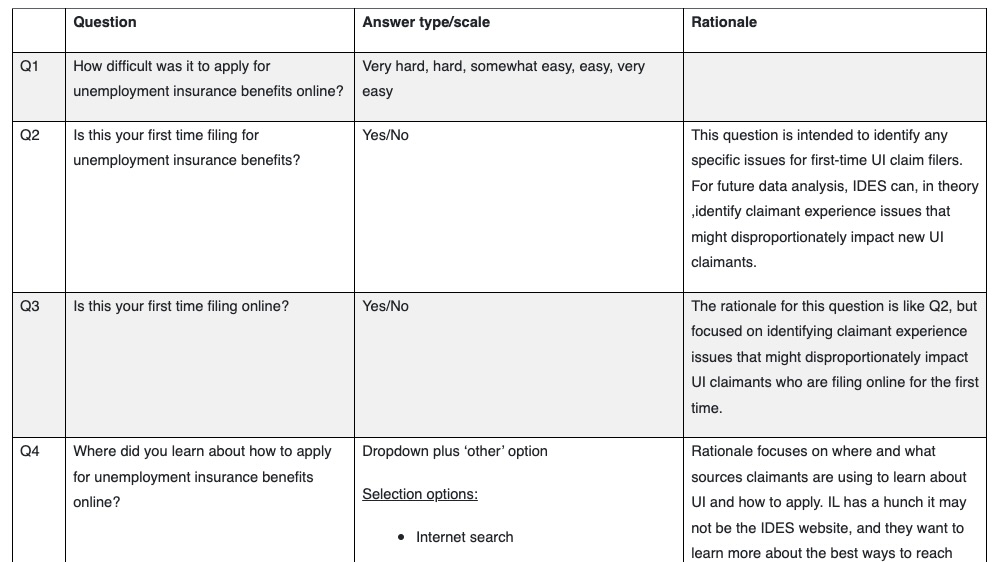
In the Fall of 2022, the USDOL Office of Unemployment Insurance Modernization (OUIM) consulted with the Illinois Department of Employment Security (IDES) to provide hands-on support with IT modernization and customer experience strategy. Primary discussions focused on making informed product, service, and business decisions based on qualitative and quantitative data— how might IDES leverage existing data streams to identify the most pressing technology issues in their unemployment insurance system, and how might IDES act upon this information in a timely and impactful manner?
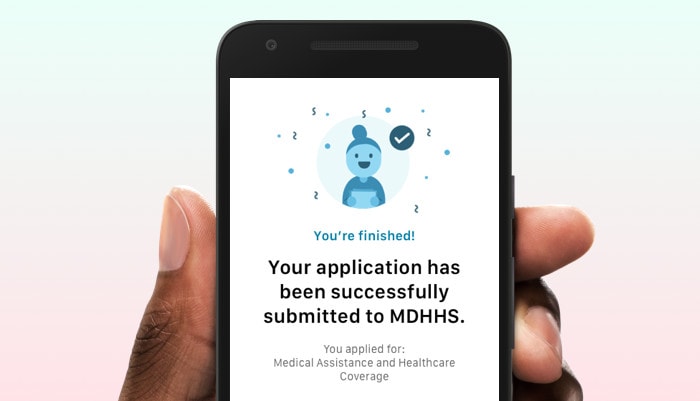
The ubiquity of mobile devices makes it imperative to build “mobile first” services, i.e. services built with the expectation that they will primarily be accessed on mobile devices. This article also outlines important considerations and suggestions for implementing mobile-first user interfaces.
This research used observational research with unemployment insurance (UI) claimants to identify pain points in the application process and inform customer experience improvements.
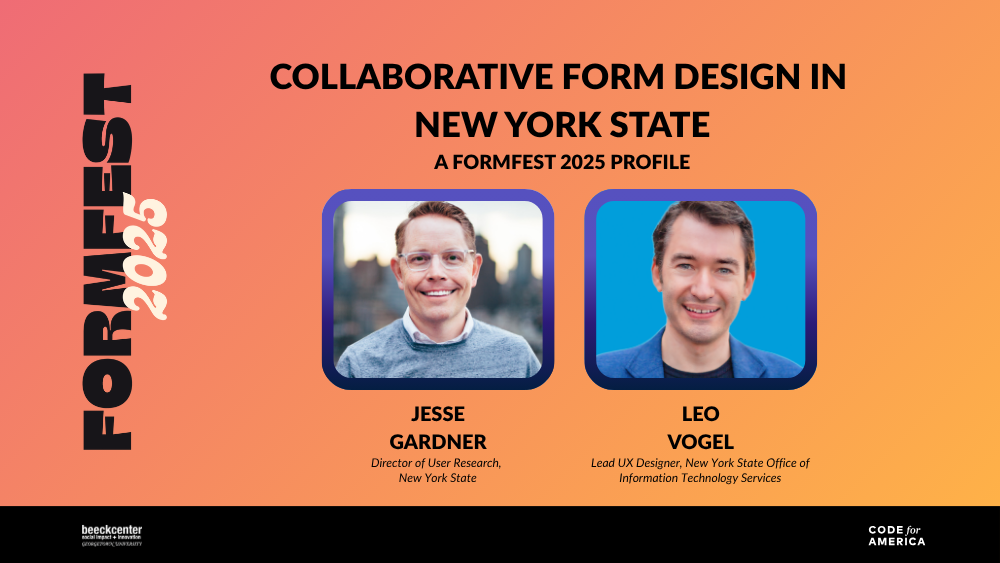
A FormFest profile highlighting how New York State’s design and technology teams are reimagining form creation through collaborative, human-centered design methods that simplify processes and expand participation.
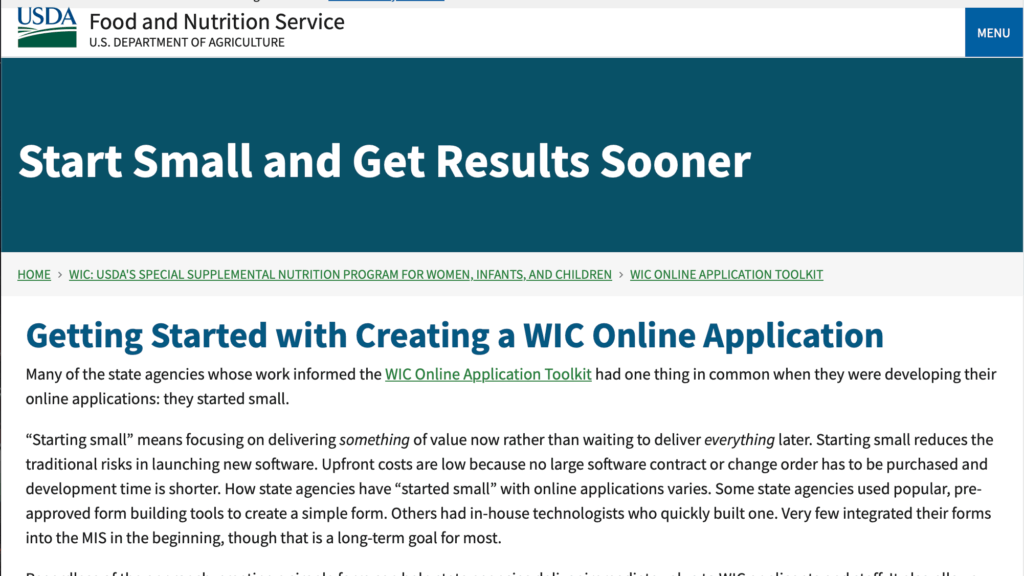
The “Start Small” approach encourages agencies to begin with targeted, manageable improvements in their WIC application process before expanding changes more broadly, fostering easier implementation and measurable early successes.