This session from FormFest 2024 focused on how to help people get the assistance they need from the U.S. Department of Health and Human Services’ work on the Low Income Home Energy Assistance Program (LIHEAP) and the Maryland Social Services Administration’s work to improve welfare support for kinship caregivers.
The article explores the importance of participatory planning in policymaking, emphasizing how engaging impacted communities improves program design, equity, and trust in government, with a focus on early childhood education initiatives.
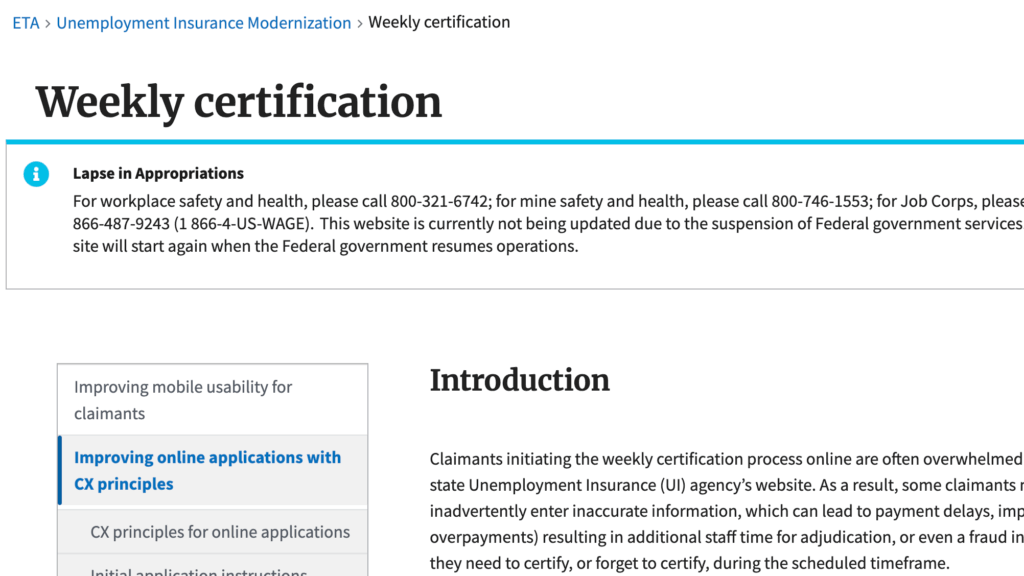
This resource provides guidance and best practices for the weekly or bi-weekly certification process that claimants must complete to maintain eligibility for unemployment insurance (UI) benefits.
This report examines Pennsylvania’s recent success in responding to concerns from citizens that it took too long for a business, nonprofit or individual to receive a permit, license or certificate they had applied for.
An event recap from one of FormFest 2024's closing main stage session featuring speakers from the City of Portland, Oregon and New York City, New York.
The portfolio page outlines federal projects focused on elevating how people interact with government services by prioritizing user needs, accessibility, equity, and consistency across agencies.
The playbook is a comprehensive guide developed by the Maryland Department of Information Technology to assist state agencies in creating consistent, user-centered, and accessible digital services.
DSN Spotlights celebrate our members’ stories, lift up actionable takeaways for other practitioners, and put the examples we host in the Digital Government Hub in context. Submit a proposal by May 31, 2025 to be featured in our series as part of our open call for submissions.
This blog post shares five key service design lessons from U.K. experts Lou Downe and Sarah Drummond, offering practical guidance for building more connected, user-centered government services in British Columbia.
The Digital Benefits Network at the Beeck Center for Social Impact + Innovation at Georgetown University and Public Policy Lab co-hosted a webinar presenting breaking research on beneficiary experiences with digital identity processes in public benefits.