This report offers best practices for public agencies implementing digital identity verification, emphasizing privacy, equity, and security in the delivery of government services.
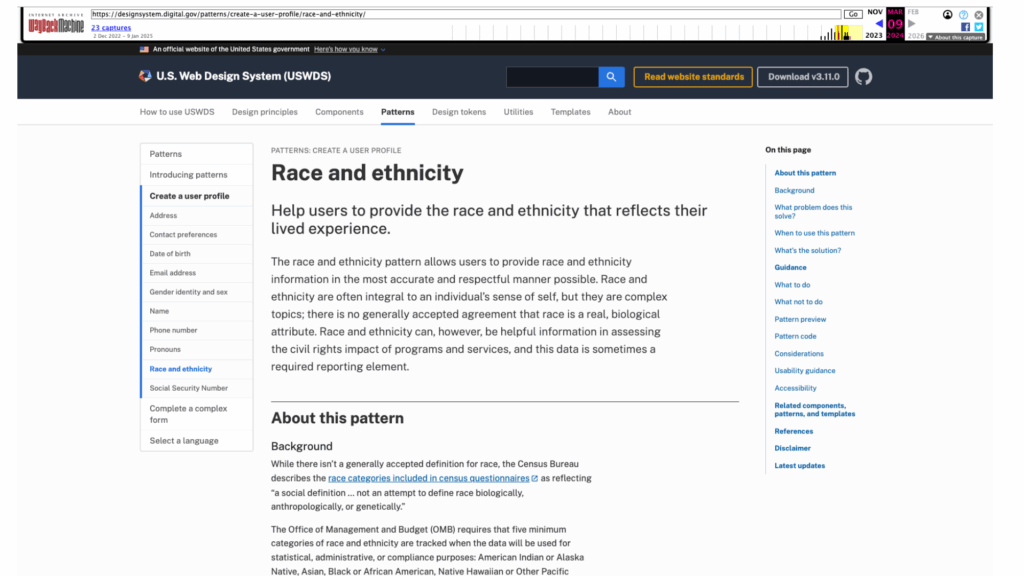
This page provides a U.S. Web Design System pattern for collecting race and ethnicity information in user profiles in a way that respects identity, supports data standards, and promotes inclusion.
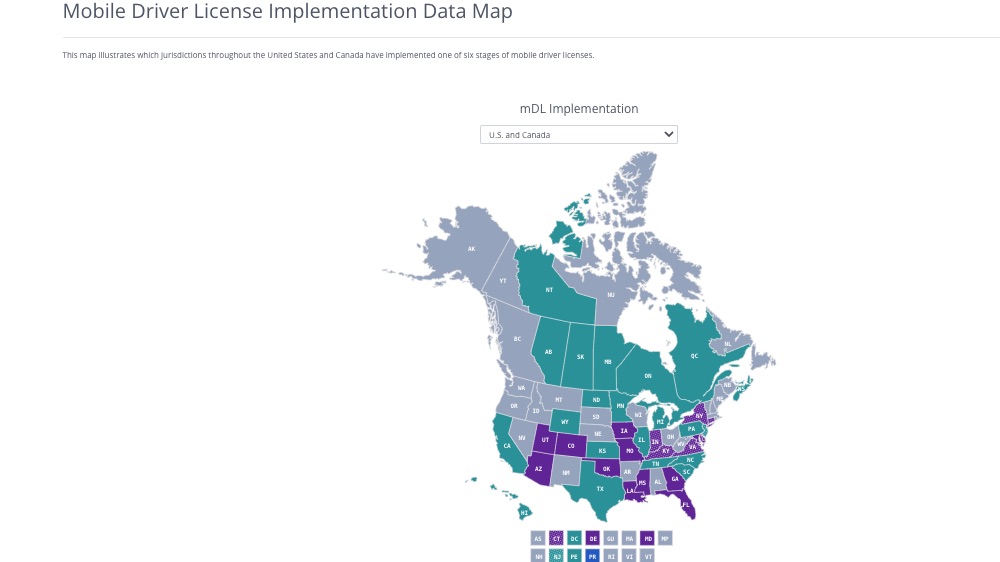
This report analyzes the rise of digital driver’s licenses (DDLs) and warns that, without strong safeguards, they could threaten privacy, civil liberties, and equitable access to identification.
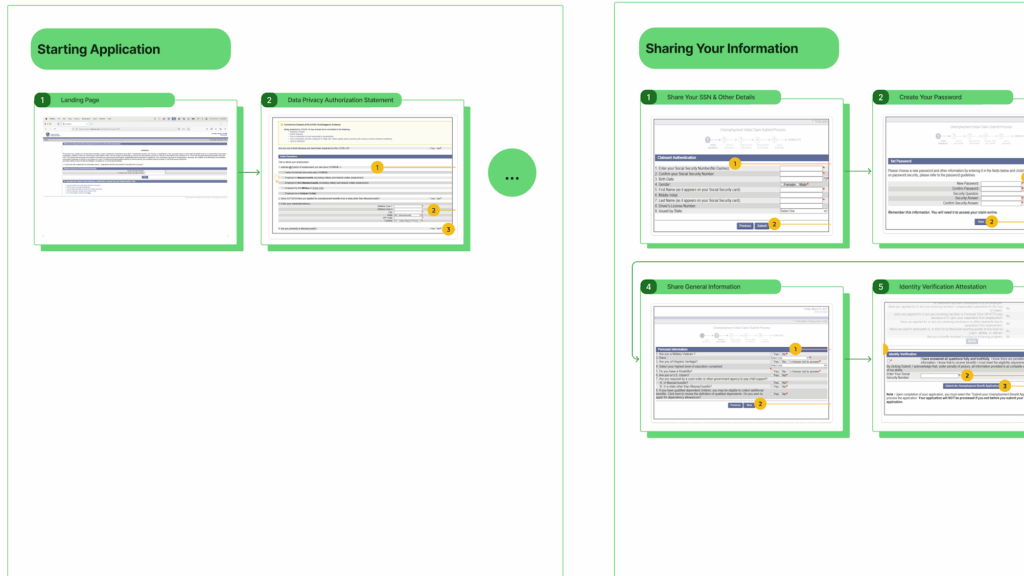
Created for use in the Digital Doorways research project, this design stimuli shows the steps of submitting an application, sharing personal information, and verifying identity for Massachusetts' online application for Unemployment Insurance.
This policy report offers recommendations for improving digital identity practices in the United States, emphasizing the role of government in creating secure, accessible digital identity resources.
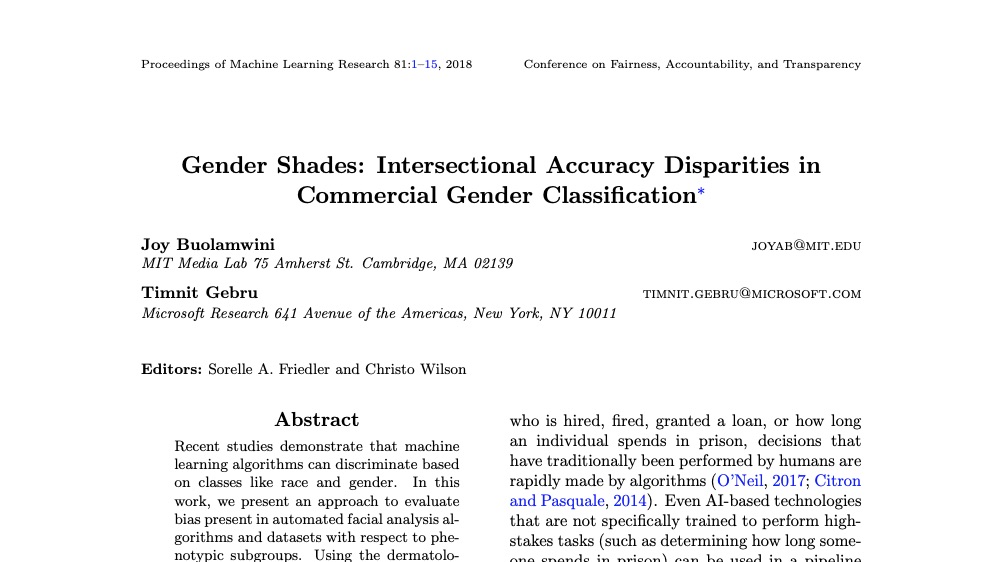
Recent studies demonstrate that machine learning algorithms can discriminate based on classes like race and gender. This academic study presents an approach to evaluate bias present in automated facial analysis algorithms and datasets.
In this webinar, the Center on Budget and Policy Priorities and the Digital Benefits Network explored key terms related to digital identity, and provided ecosystem-level context on how authentication and identity proofing may show up in the online benefits experience and impact clients.
This article discusses the challenges of today’s centralized identity management and investigates current developments regarding verifiable credentials and digital wallets.
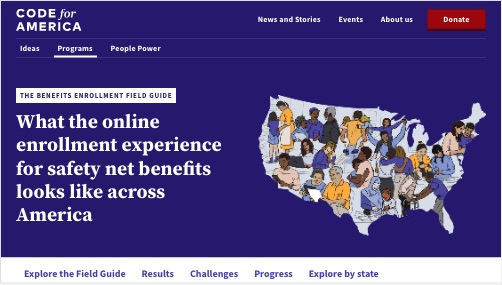
The Benefits Enrollment Field Guide looks at the landscape of America’s safety net benefits experience in 2023 and tracks the differences from our 2019 assessment based on expanded evaluation criteria. It also highlights successful paths to equitable, human-centered experiences. It examines online enrollment for Modified Adjusted Gross Income (MAGI) Medicaid, SNAP, TANF, the Child Care Assistance Program (CCAP), and WIC.
This report provides specific actions the federal government could take to reduce identity fraud and establish a whole-of-government victim redress approach.
This page includes data and observations about authentication and identity proofing steps specifically for online applications that include child care applications.