This video, produced after the completion of the TDC Pilot, features staff members from the California, Colorado, Minnesota, and Virginia TANF agencies reflecting on their challenges, accomplishments, and general experiences during the pilot.
U.S. Department of Health and Human Services (HHS)
“Interoperability” refers to systems’ ability to interact with each other to share data so that a customer is connected with as many benefits as possible in an efficient way. The Affordable Care Act (ACA) was originally intended to be interoperable, but this has not occurred yet. Promoting interoperability in the ACA is imperative, as it would help alleviate food insecurity through automatic benefits enrollment.
This toolkit provides individuals and organizations with guidance, drawn from learning and experience, on how to use administrative and other data to inform program improvements. It collects concrete strategies and practitioner-tested tools designed to advance these efforts. These materials were developed in pilot projects with local Temporary Assistance for Needy Families (TANF) agencies as part of the TANF Data Collaborative (TDC).
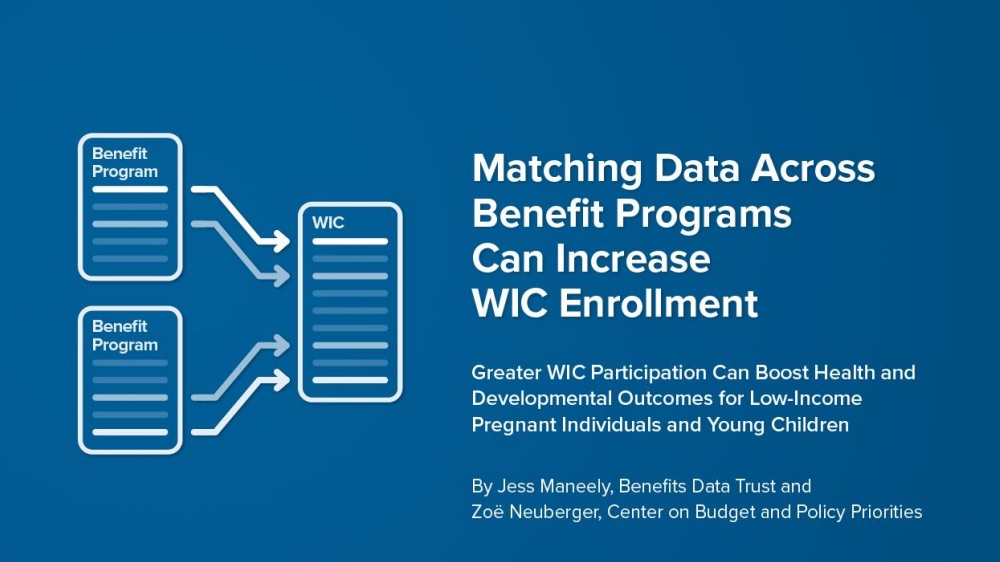
This case study highlights how states used data sharing and targeted outreach to boost WIC enrollment among Medicaid and SNAP participants, improving program reach and reducing disparities.
This tip sheet provides guidance for child welfare and social service agencies on how to effectively and respectfully collect SOGIE (Sexual Orientation, Gender Identity, and Expression) data.
U.S. Department of Health and Human Services (HHS)
This toolkit provides guidance to protect participant confidentiality in human services research and evaluation, including legal frameworks, risk assessment strategies, and best practices.
U.S. Department of Health and Human Services (HHS)
A statewide framework to improve data literacy among Oregon public sector employees by identifying core competencies, learning goals, and implementation strategies across various roles and skill levels.
This report reviews global AI governance tools, highlighting their importance in ensuring trustworthy AI, while identifying gaps and risks in their effectiveness, and offering recommendations to improve their development, oversight, and integration into policy frameworks.
This assessment aims to help states gain a comprehensive understanding of their successes and shortcomings in their data strategies and enhance their strategic and tactical plans.