This article examines how Chile’s SUSESO is balancing cost-focused procurement criteria with ethical AI concerns in its medical claims automation process.
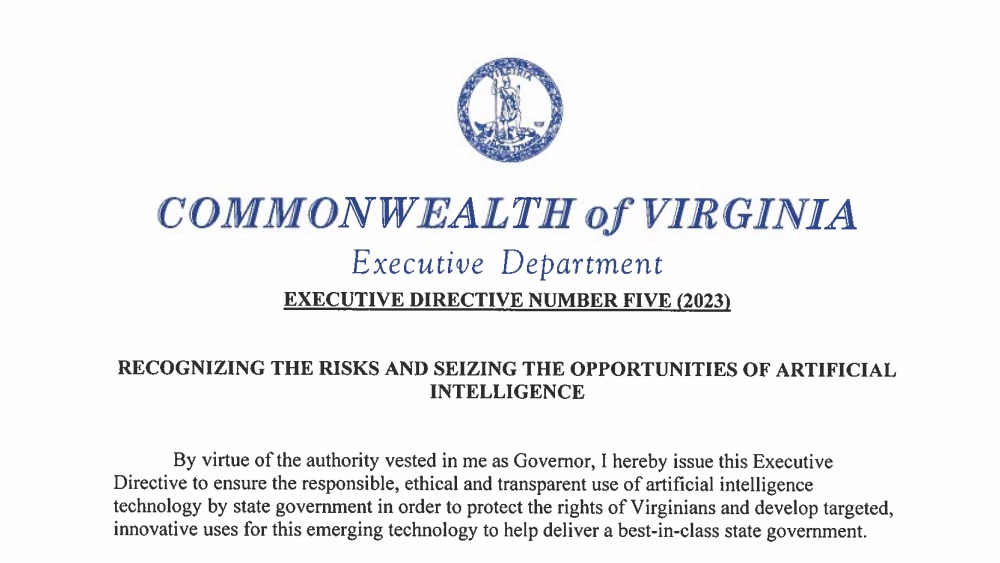
The Commonwealth of Virginia's Executive Order Number Five (2023): Recognizing The Risks And Seizing The Opportunities Of Artificial Intellignece to ensure responsible, ethical, and transparent use of artificial intelligence (AI) technology by state government.
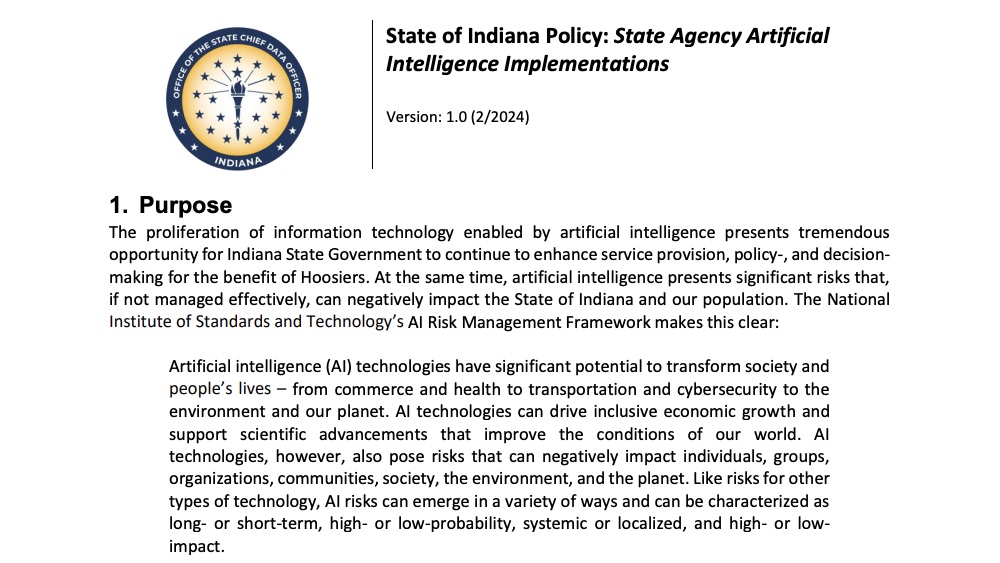
The state of Indiana developed a policy framework for the ethical and efficient use of artificial intelligence (AI) within state agencies. The policy adopts the National Institute of Standards and Technology’s AI Risk Management Framework to manage potential risks effectively. It also details the applicability of the actions undertaken by the Office of the Chief Data Officer (OCDO) to enable the deployment of trustworthy AI systems.
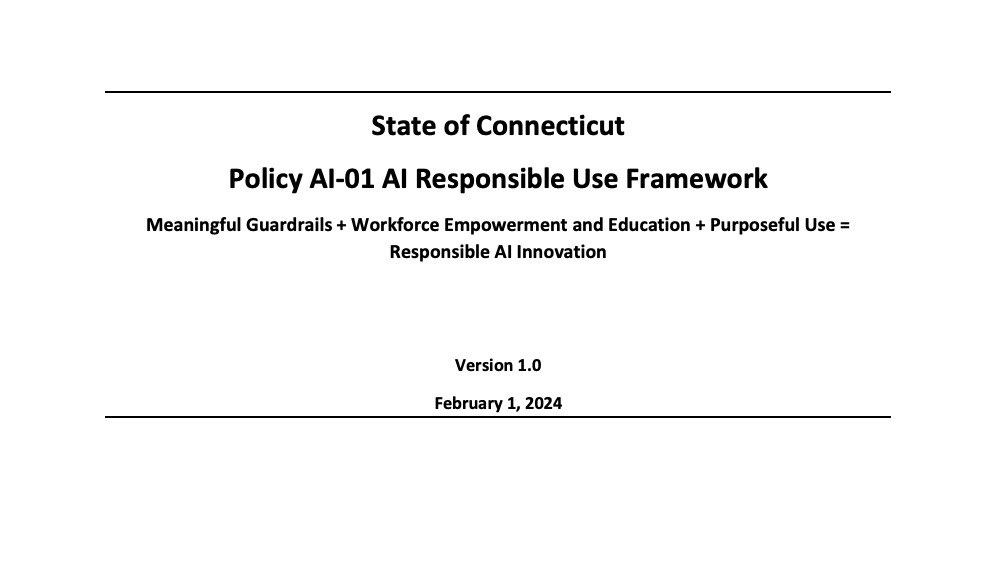
The State of Connecticut's policy on Artificial Intelligence (AI) Responsible Use establishes a comprehensive framework for the ethical utilization of artificial intelligence in the Connecticut state government.
These principles and best practices for AI developers and employers to center the well-being of workers in the development and deployment of AI in the workplace and to value workers as the essential resources they are.
This article explores how AI and Rules as Code are turning law into automated systems, including how governance focused on transparency, explainability, and risk management can ensure these digital legal frameworks stay reliable and fair.
In accordance with Executive Order 13960, Promoting the Use of Trustworthy Artificial Intelligence in the Federal Government, Federal agencies began publishing their first annual inventories of artificial intelligence (AI) use cases in June 2022.