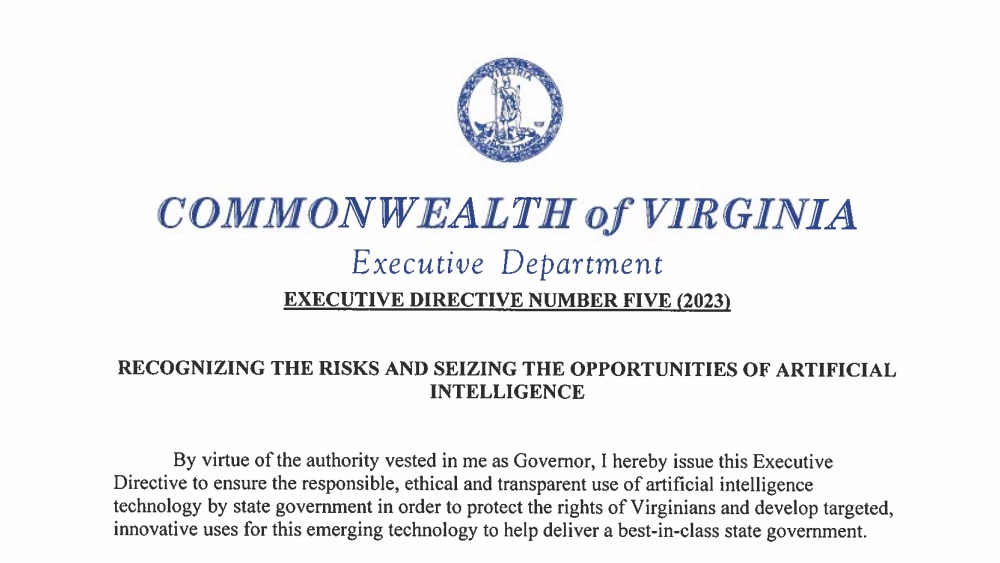
The Commonwealth of Virginia's Executive Order Number Five (2023): Recognizing The Risks And Seizing The Opportunities Of Artificial Intellignece to ensure responsible, ethical, and transparent use of artificial intelligence (AI) technology by state government.
This resource helps individuals with aligning their work with the needs of the communities they wish to serve, while reducing the likelihood of harms and risks those communities may face due to the development and deployment of AI technologies.
A comprehensive series of workshops and courses designed to equip public sector professionals with the knowledge and skills to responsibly integrate AI technologies into government operations.
In accordance with Executive Order 13960, Promoting the Use of Trustworthy Artificial Intelligence in the Federal Government, Federal agencies began publishing their first annual inventories of artificial intelligence (AI) use cases in June 2022.
This guide, directed at poverty lawyers, explains automated decision-making systems so lawyers and advocates can better identify the source of their clients' problems and advocate on their behalf. Relevant for practitioners, this report covers key questions around automated decision-making systems.
Government agencies adopting generative AI tools seems inevitable at this point. But there is more than one possible future for how agencies use generative AI to simplify complex government information.
The AI Insights publication series from the UK Government’s Government Digital Service (GDS) provides technical guidance to help public sector organisations understand, implement, and manage artificial intelligence systems safely and effectively.