This publication shares ten ways states can improve start-to-finish customer experience for unemployment insurance claimants. These approaches can increase overall equitable access and system integrity for UI administration.
Public procurement in state governments can be slow and inefficient, but artificial intelligence (AI) offers a solution by automating tasks, improving decision-making, and addressing workforce gaps, as highlighted in a joint brief by NASCIO and NASPO.
National Association of State Chief Information Officers (NASCIO)
This article emphasizes the need for local leaders to prioritize disability equity in advancing upward mobility, addressing systemic barriers that hinder disabled individuals' escape from poverty.
The Digital Benefit Network's Digital Identity Community of Practice held a session to hear considerations from civil rights technologists and human-centered design practitioners on ways to ensure program security while simultaneously promoting equity, enabling accessibility, and minimizing bias.
This Guide to Artificial Intelligence provides a strategic framework for the ethical and responsible implementation of GenA technologies in state operations.
Colorado Governor's Office of Information Technology (OIT)
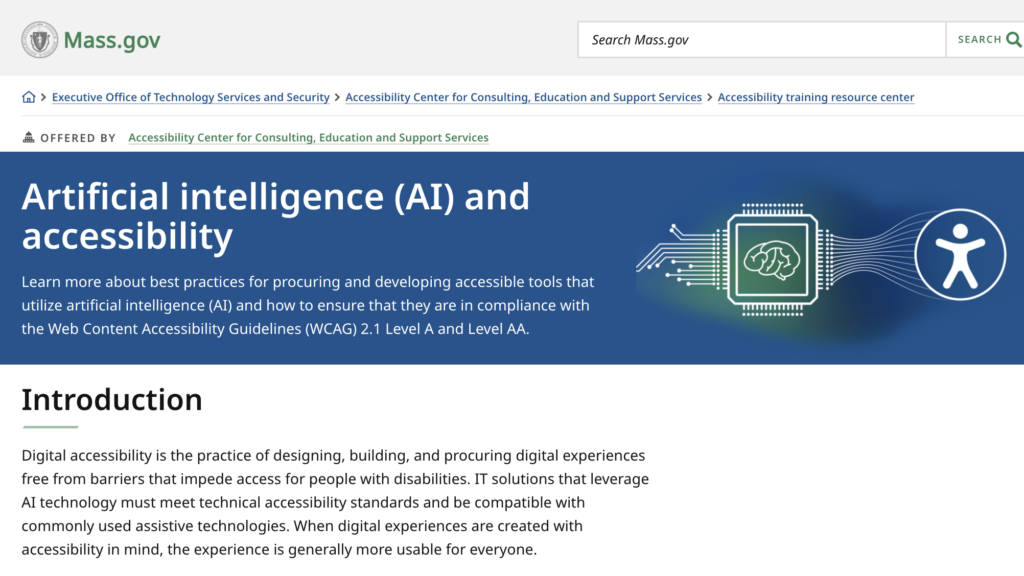
Best practices for procuring and developing accessible tools that utilize artificial intelligence (AI) and how to ensure that they are in compliance with the Web Content Accessibility Guidelines (WCAG) 2.1 Level A and Level AA.
The Commonwealth of Massachusetts Executive Office of Technology Services and Security (EOTSS)
This article shares insights from Minnesota-based focus groups, revealing that low-income women navigating unemployment insurance often face confusion and uncertainty around eligibility, complex administrative processes, and additional challenges related to childcare, housing stability, and mistrust of benefit systems.
A web-based platform that provides design principles, accessible UI components, and guidance to help teams across the UK government create consistent, user-centered digital services.
Practitioner Picks is a quarterly series designed to add fresh resources to the Digital Government Hub’s library, helping people improve government digital service delivery. Each issue spotlights resources chosen by practitioners in a specific service delivery area along with their insights on why these picks are valuable additions to the Hub.
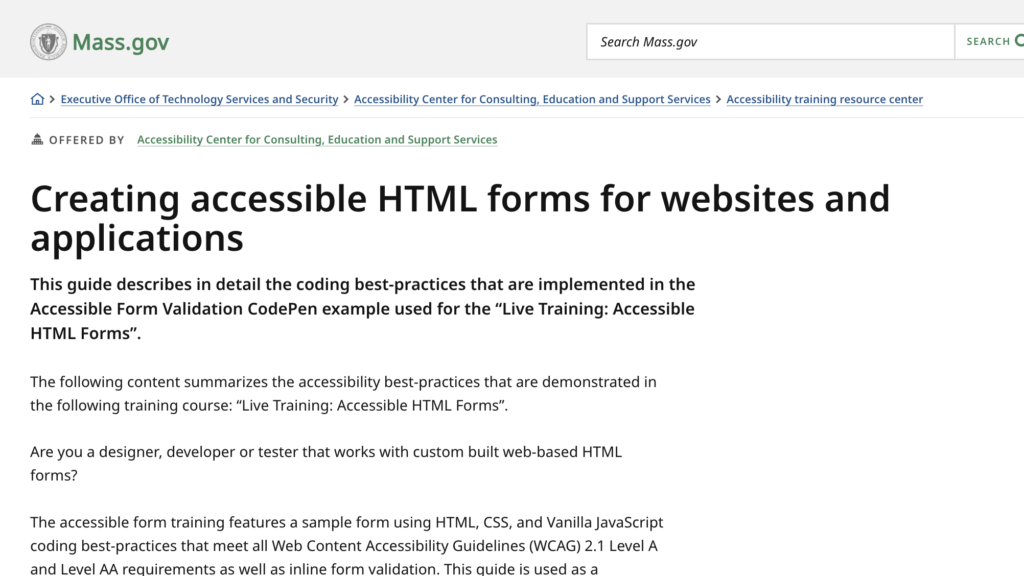
A practical guidance document that explains how to design, code, and test HTML web forms so they are accessible to all users, including people with disabilities.
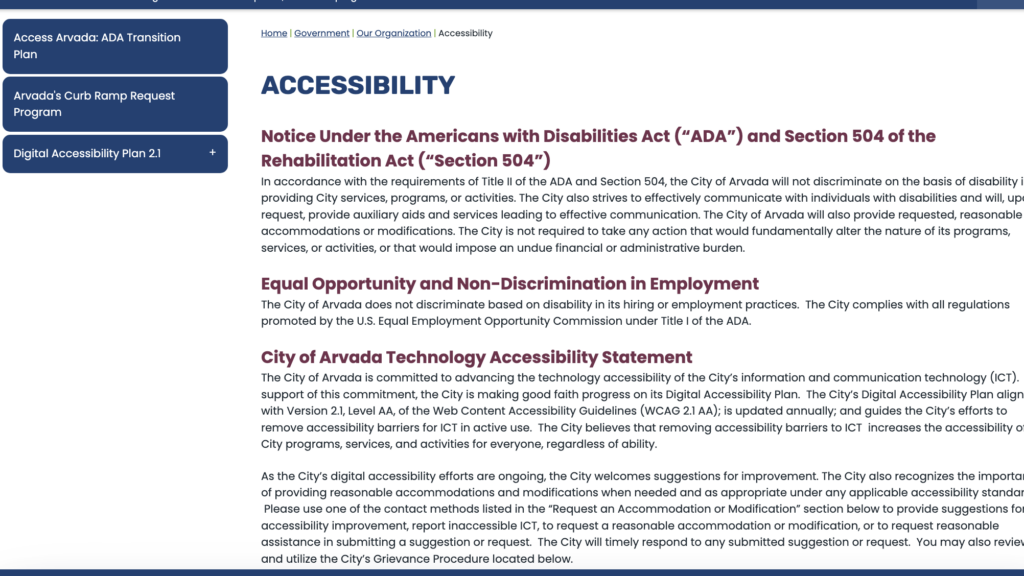
This accessibility webpage outlines the City of Arvada’s commitment to making its digital services, programs, and information accessible to people with disabilities.